





Вы здесь
Tashkent Museum in 1884.
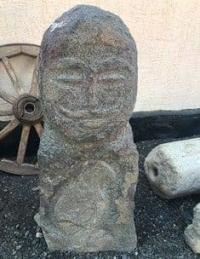
History of Tashkent Museums.
"In the city of Tashkent, this house of science preserves the memory of times and serves the enlightenment of society."
Museums of Turkestan Region.
The word "Tashkent" has become a household word and a slur for several years now, serving as a nickname for a Turkestan resident.
Perhaps this nickname is deserved to some extent by the Turkestanis, but only to a certain extent, as many of them are not averse to Europeanism, civilization, and progress. Let's take public education, for example; it undoubtedly still has some shortcomings and shortcomings, but considering the region's short existence and its remoteness from the center of the state, one must agree that public education in the region is in a tolerable state.
(For example, in Tashkent, with a Russian population of 7,000, the number of students in educational institutions reaches 800.) We have two gymnasiums, a teachers' seminary, vocational schools, and dozens of district and primary schools. In addition, we also have a museum.
We recently had the opportunity to explore the museum in detail, and in this note, we would like to share with our readers the impressions we received during our tour of this institution. The museum has the following departments: dendrology, mineralogy, ornithology, agriculture, and ethnography.
The dendrology department is the most comprehensive and best organized of the others. The mineralogical department, although replete with a wide variety of rocks, ores, fossils, and the like, is distinguished by a chaotic collection, devoid of any order or system.
Many specimens are unnamed, while others are named, as they say, at random. This department also contains a fine collection of minerals collected in the Semirechye region by Lieutenant General Kolpakovsky. Among the department's rarities are the seal from Kok-Tash (a fragment from Timur's throne), as well as jasper, topaz, and marble.
The ornithological department contains up to 200 species of birds (from the Turkestan region). Unfortunately, the stuffed birds are very poorly made; some are severely damaged by moths and broken, while others have faded, which can be attributed to the sloppiness and incompetence of the museum's overseers.
The agricultural department is quite good, particularly the collection of local seeds assembled by Mr. Krause. Unfortunately, the department is seriously lacking in artifacts made from certain plants. This same department also houses nine models of indigenous agricultural implements, including two Russian harrows and a Russian plow.
The largest and richest department is the ethnographic one, but it is also the most ugly and chaotic. What isn't here? The first thing that catches the eye are the Russian and indigenous weapons, along with Chinese clothing, Vereshchagin albums, piles of indigenous copper coins, Morozov calicoes, harnesses, teas, a Chinese pharmacy, and a portable pontoon boat invented by K. P. Kaufman.
Only 1,000 rubles are allocated for the museum's maintenance annually, a very insignificant sum. Many expeditions were organized in the Turkestan region at government expense, and the people who took part in these expeditions - our local scholars, the Severtsov, the Maevs, the Oshanin, the Fedchenko, the Kuns, and others - provided material for the Tashkent Museum.
The museum, when we visited it, was located somewhere outside the city, and very few knew of its existence. Moreover, as the reader has already seen, the museum was in complete disarray; there weren't even any inventories or catalogs. M. G. Chernyaev brought this institution to his attention, and now a new, spacious building in the city center has been allocated for the museum.
The departments are being reorganized, errors in nomenclature and classification are being corrected, and catalogs and inventories are being compiled. The museum's grand opening is scheduled for December 6th. It will house part of the abolished public library and reading room.
We hope that society itself recognizes the usefulness of this scholarly institution, which provides visual and diverse material for observation, for the purpose of acquiring qualifications in various branches of science and crafts, an exhibition of local industrial and craft works, and a repository of many rarities.
We note that until now, some residents of the region, such as Mr. Krause, Oshanin, and others, have been very sympathetic to this institution and supported it as much as they could. What is difficult for the administration is sometimes very easy for society.
As a small curiosity of our museum, we would like to point out the following unique fact, which eloquently demonstrates that even our scientists are sometimes not averse to courting and currying favor with the powers that be. The museum's various sections contain numerous stones, amphibians, birds, and other objects discovered for the first time in our region and previously unknown to science.
All these animals and minerals They appear with the original name "Kaufmani" appended; thus, one can find "rana Kaufmani," "pulex Kaufmani," "alauda Kaufmani," etc. Foreigners will think this is some scientist who discovered new species.
Authority:
Turkestan Tourist. "Eastern Review," No. 4, 1884. Author of article not indicated.