




Вы здесь
Photographer and ethnographer Samuil Martynovich Dudin.
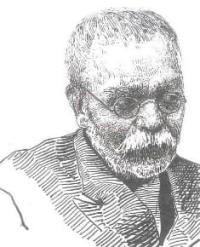
Photographs by S.M. Dudin.
"Upon arrival in Samarkand, I settled in a native town near the bazaar to be closer to it and accustom the Sarts to my responsibilities. My preliminary acquaintance with Turkestan allowed me to make my first purchases of utensils, household furnishings, and other Sarts' goods immediately upon arrival in Samarkand, directly at the bazaar and from artisans. To avoid making mistakes in choosing items, namely, to acquire only typical examples, I did not purchase many items at once, but rather familiarized myself with them first by visiting bazaars on different days and the workshops of different artisans. I was also prompted to do this by the fact that not all household items can be found at the bazaars and from artisans. Some of them appear seasonally; others—not frequently sought after and therefore produced in limited quantities—simply had to be waited for to appear before being acquired. Along with acquiring such items, I also became acquainted with objects that had long since disappeared from the market but were nonetheless still preserved in Sart households. These objects, representing examples of earlier production and everyday life, naturally fascinated me more than the ethnography one could buy at the market. Given the near-impossibility of entering Sart homes, or at least the most important half of them, this exploration had to be pursued in two ways: by questioning merchants and other Sarts and by searching among the junk of various artisans' workshops and from antique dealers. An attempt to acquire information on this matter by reviewing local museums in Samarkand and Tashkent was unsuccessful.
Report by S.M. Dudin on his trips to Central Asia in 1900-1902.
Ethnographic tours in Central Asia.
Samuil Martynovich Dudin was a leading Russian specialist in scientific photography, an archaeologist, ethnographer, geographer, artist, and a distinguished expert in Eastern art, particularly Central Asian ceramics and carpets. He was also a museum professional who founded the Ethnography Department of the Russian Museum (EM) and the Museum of Anthropology and Ethnography (MAE) of the Russian Academy of Sciences.
His collections of artifacts, photographs, and drawings constitute one of the world's finest collections of Central Asian ethnography, and his paintings are housed at the Academy of Arts, as well as in museums in Russia and Ukraine. Samuil Martynovich Dudin was born in 1863 in Rivne, Yelisavetgrad district, Kherson region. His father, Martyn Tikhonovich Dudin, was a quartermaster in the Kazan Dragoon Regiment and, after retiring, a rural teacher.
From childhood, Samuil showed a talent for drawing and was completely captivated by it. After finishing school, he entered the Elisavetgrad Zemstvo Real School. In his final year (1884), he was arrested for participating in a Narodnaya Volya (People's Will) circle, and after three years of imprisonment, he was exiled to Selenginsk in the Transbaikal Region.
There, under the direction of the Main Geophysical Observatory, S.M. Dudin organized a weather station, collected geological and Russian folklore collections, and made ethnographic sketches of the Buryat people. Some of these materials- - drawings of ancient graves from the Selenginsk area - he donated in 1888 to the Museum of the East Siberian Branch of the Russian Geographical Society. In exile, Dudin met G.N. Potanin, a scholar and public figure who took a keen interest in the fate of exiled revolutionaries.
From March 1889, S.M. Dudin was allowed to reside in Troitskosavsk (now Kyakhta) under strict police surveillance. His stay in this town largely determined Samuil Martynovich's future. It was here that photography, the ethnographic museum, and scientific societies entered his life - the three pillars on which his entire professional career rested.
Troitskosavsk, a border town, historically developed a unique cultural environment. Prosperous tea merchants fostered the development of commercial and educational institutions, and the town's vibrant atmosphere was shaped by the passage of trade caravans, diplomatic missions, and scientific expeditions.
Political exiles, whose activities were connected with the study and development of the region, played an important role in the town's cultural life. One of them was N.A. Charushin, who owned a photography studio. He put photography to the service of science: in 1889, Charushin took part in G.N. Potanin's Mongolian expedition, producing some excellent photographs.
Fortunately, S.M. Dudin became an employee of this photo studio, where he not only acquired photography skills but was also involved in creating a photographic chronicle of the region. He subsequently will provide the Museum of Anthropology and Ethnography with a collection (No. 1697) assembled together with N.A. Charushin in the vicinity of Troitskosavsk.
On the initiative of P.S. Mikhno and A.N. Charushin, to whom S.M. Dudin provided all possible assistance, an ethnographic museum and library were established in Troitskosavsk. In 1891, Academician V.V. Radlov arrived in Troitskosavsk on his way to the Orkhon River valley to study ancient Turkic runic monuments.
On the recommendation of G.N. Potanin, S.M. Dudin was included in the expedition as a draftsman and photographer. The expedition members described the monuments, sketched general plans of the ruins and their individual fragments, and made engravings of the inscriptions.
The collected material required careful processing, so V.V. Radlov suggested that S.M. Dudin was ordered to move to St. Petersburg to prepare the monuments for publication. While still on the expedition, he began lobbying for the talented young man's admission to the Academy of Arts.
According to some sources, thanks to the intervention of G.N. Potanin, S.M. Dudin was granted amnesty. In the fall of 1891, he began studying painting in I.E. Repin's class. Police surveillance of the student was maintained. The first issue of the "Collected Works of the Orkhon Expedition" was published in 1892. V.V. Radlov, highly appreciating Dudin's work in preparing the images, noted in the preface to this edition that "the rapid compilation of the 64 plates now published was possible only because the Academy placed S.M. Dudin's labor force at my complete disposal throughout the current winter" (Works of the Orkhon Expedition. Preface).
In 1893, S.M. Dudin made his first trip to Central Asia. Together with V.V. Bartold, then a graduate of St. Petersburg University, he was sent by the Academy of Sciences on an archaeological expedition to explore antiquities in the Chu and Ili river valleys.
Since V.V. Bartold broke his leg early in the trip and was forced to remain in Aulie-Ata, the expedition's responsibilities fell to S.M. Dudin. He circled Lake Issyk-Kul alone, documenting the location and condition of monuments (fortresses, graves, petroglyphs, etc.), and collecting information about them.
Bartold later acknowledged that his report was largely based on data collected by Samuil Martynovich. Samarkand, an important transit point on the journey, made a huge impression on Dudin. He was struck by the beauty of the architectural structures of the era of Emir Timur and from that time onward became zealous in their recording, study, popularization, and preservation.
According to V.V. Bartold, in 1893, Dudin did not yet show much interest in the ethnographic heritage of Central Asia. Samuil Martynovich gained his first experience in assembling an ethnographic collection in 1894, when, at the request of V.V. Radlov, then director of the MAE, he was sent to Ukraine as a freelancer.
The choice of the Ukrainian theme was undoubtedly due to Dudin's familiarity with the language, mentality, and way of life of the Ukrainians. The result of this trip was a large photographic collection (MAE 1402), as well as a collection of items including utensils, clothing, women's jewelry, interior design items, and embroidery samples (MAE 5327).
In the summer of 1895, S.M. Dudin took part in the historical and architectural expedition led by N.I. Veselovsky. Its main objective was to produce drawings, sketches, and photographs of Samarkand's architectural monuments—the Bibi-Khanym Mosque and the Gur-Emir Mausoleum.
Dudin's responsible attitude toward his duties is evidenced by the following lines from his letter to V.V. Radlov: "Before photographing, I wash those areas that are difficult to photograph due to the dust and dirt accumulated on the tiles and mosaics.
I do this wherever my ladder reaches" (SPbF ARAS. F. 148. Op. 1. Item 50. Sheet 41 rev.). Based on the expedition materials, the album "Mosques of Samarkand. Issue 1: Gur-Emir" was published in 1905. In 1897, Samuil Martynovich graduated from the Academy of Arts.
Along with his artist's title, he received a scholarship to travel to France, which he did in 1898. However, European painting didn't particularly captivate him, and in one of his letters to Ilya Repin, he expressed a penchant for Eastern art. However, European museums sparked a great interest in the artist - he visited Berlin, Dresden, Munich, Vienna, and Amsterdam. He was particularly impressed by an exhibition of ethnographic costume in Amsterdam, which he described with great interest:
"The costumes are superbly put together, and the mannequins they are worn on are, for the most part, beautifully executed. Looking at them, I thought, 'It would be wonderful to exhibit the costumes of your museum in a similar manner - what a crowd the museum would attract!'" (SPbF ARAS. F. 177. Op. 2. Item 102. Sheets 5–5 rev.).
Apparently, Samuil Martynovich could no longer imagine himself outside the museum field. In 1899, S.M. Dudin undertook another collecting trip on behalf of the MAE. This time, he was sent to the eastern regions of Kazakhstan. A special program for collecting items was drawn up by V.V. Radlov, who had an intimate knowledge of Kazakh life.
Mater He developed into a master of ethnographic photography, as evidenced by his collection (MAE 1199). St. Petersburg art critic A. Uspensky characterizes Dudin's creative style as a photographer: "Dudin's best photographs are structured as a whole, but are somehow slightly 'disrupted' by a random movement and a sudden angle of the unsuspecting 'sitter'. Carefully composed and slightly 'spoiled' by an accidental reportage, the photograph conveys a sense of involvement in the space of an everyday, ordinary situation: scenes of trade at a city market, children's games in the steppe, a barber shaving a client's head...
Such immersion evokes a precious sensation, which I would call a sense of 'local time,' when the space of the photograph allows for the representation of the fourth dimension, i.e. "to convey a living, moving history" (Uspensky, 2016. URL: http://rezvan.kz wp-content›uploads› 2016.03).
The 1899 expedition also formed a collection of objects (MAE 493). The following three years – 1900-1902 – marked the peak of S.M. Dudin's collecting activity, but also, to a certain extent, its culmination. During this time, he made three trips to Central Asia to assemble the collection of the newly established Ethnographic Department of the Russian Museum of Emperor Alexander III.
These trips were unprecedented in Russia in terms of the breadth of the territory covered by the collections, as well as the length of time the collector was given to assemble the object and photographic collections. The results of these trips were also unprecedented – approximately 5,000 objects and 2,000 photographs, comprehensively characterizing the traditional culture of the peoples of Central Asia.
The idea for the first trip arose in early 1900, when the creation of an Ethnographic Department was still being discussed at the state level. At that time, the geopolitical significance of Central Asia was constantly growing, and interest in the region's cultural heritage was also great. V.V. Radlov, one of the initiators of the EO, proposed that S.M. Dudin prepare a collection program. It was submitted for review to the august administrator of the Russian Museum, Grand Duke Georgy Mikhailovich, and was immediately approved.
The Grand Duke personally requested the Emir of Bukhara to assist S.M. Dudin in collecting items in the territory of the Emirate of Bukhara, to which he received his consent:
"...I hasten to inform you that, reverently honoring the memory of the Great Monarch and considering it my sacred duty to sympathize with everything connected with the unforgettable Name of Emperor Alexander III, I am especially pleased to provide Mr. Dudin with all possible assistance in successfully fulfilling, within the boundaries of my domains, the task you have entrusted to him."
<...> Seyid Abdul Ahad, Emir of Bukhara. April 2, 1900" (RGIA. F. 530. Op. 1. D. 518. L. 2-2ob.).
From the military department, S.M. Dudin received the necessary topographic maps and an open letter requesting government assistance in carrying out the expedition's tasks. Dudin meticulously prepared the photographic equipment purchased in Germany, as well as special pack boxes for the equipment and laboratory equipment.
The film would be developed en route to promptly detect any defects or inaccuracies in the exposure. According to the adopted program, primary attention was paid to the ethnography of the Sarts - the official name at the time for the Uzbek- and Tajik-speaking sedentary population of the lowland oases, particularly the urban population.
It was believed that they shaped the cultural identity of the region. The route passed through the cities of Samarkand, Bukhara, Jizzakh, Ura-Tyube, Khujand, Kokand, Margilan, and Namangan; on the return journey, it was Namangan, Jizzakh, and Tashkent.
Rural villages were planned to be explored along the way. On March 18, 1900, S.M. Dudin departed for Samarkand. Adapting to the urban environment was challenging, as despite written instructions from the Minister of War, the local administration was slow to accommodate the collector or provide assistance in fulfilling the museum's mission.
Dudin had no experience acquiring objects for collections from the sedentary population of Central Asia, and access to urban homes was denied to a European. Therefore, he did not immediately begin collecting objects. Instead, he began studying the market for antiques and new items, developed tactics for interacting with antique dealers, understood the frequency of movement of items through the local bazaars, and assessed the prices of the items he was interested in. As he became acquainted with the merchant class, the collector received assistance in learning about Sarts' domestic life and acquiring objects from everyday settings.
In Samarkand, S.M. Dudin collected not only objects but also crumbling ceramic tiles from palaces and religious medieval buildings. The local authorities neglected the restoration of architectural masterpieces, and the tiles became easy prey for merchants who sold these valuable artifacts to anyone, including abroad.
Under these circumstances, S.M. Dudin considered the acquisition of the tiles for the museum justified. However, the 1900 collection, in his opinion, was "insignificant scraps, purely of a Kunstkamera nature" (OR RNB). The next most important task of the trip was to create a photo album characterizing the cultural landscape and everyday life of the people of Central Asia.
S.M. Dudin, having assessed the region's multifaceted culture on site, wrote in a letter to I.I. Tolstoy that it was impossible "to get by with 4-500 negatives; far more than 1,000 must be produced, and to ensure that the work is not haphazard, it must be carried out according to a strictly thought-out and detailed program" (OR RNB. F. 781. D. 889 (1900). L. 4).
Samuil Martynovich began developing this program while the trip was underway. The 1900 trip resulted in the acquisition of 2,526 highly artistic exhibits, which immediately made the ES Central Asian collection one of the richest in the world. The exhibition of these acquisitions made a highly favorable impression on Grand Duke Georgy Mikhailovich.
The decision to continue collecting, not only from the Sarts but also from other Central Asian peoples, was quickly made. The 1901 route spanned the entire region, from the Caspian coast to East Turkestan. The principles of collecting remained unchanged: acquiring typical objects, including those characterizing the ornamental richness of a given culture.
In April and May, the collector acquired artifacts from the Teke Turkmen in the Ahal and Merv oases (REM col. 12, photo coll. 40), as well as from the Saryk Turkmen in the vicinity of Takhta Bazar (REM col. 13, photo coll. 41). The collections included the finest examples of women's silver jewelry, carpets, costume components, and horse and camel trappings from the wedding caravan.
Dudin had a particular interest in Turkmen carpets, eventually becoming a keen connoisseur of the subject. At the end of May, S.M. Dudin reached Samarkand. He now felt at home there. His assistant, the artist N.I. Tkachenko, sketched architectural details, while Dudin photographed and acquired items.
Soon, the expedition departed for Bukhara to request assistance on the section of the route through the mountainous regions of the Bukhara Emirate. In Bukhara, Dudin acquired copper and clay pottery of various types; collecting tiles, however, was strictly prohibited by the local authorities.
The route through the Bukhara domains passed through the towns of Shakhrisabz, Yakkabag, Baysun, Karatag, Faizabad, and Karategin, where the travelers were very warmly received. The collection of food from the Uzbeks along the way was not entirely successful due to their wary attitude toward the expedition. In contrast, Dudin quickly assembled a collection (REM 19) among the mountain Tajiks of Karategin, a significant portion of which consisted of turned wooden vessels and molded utensils crafted by women using archaic techniques.
The collector represented costume with iconic items - a robe made of homemade cloth, a wedding face curtain, knitted patterned stockings, and others. A month later, S.M. Dudin arrived in the Alay Valley, where he planned to assemble a Kyrgyz collection.
He based his expectation of an abundance of material on the fact that in the summer, nomadic clan groups would gather on the rich pastures of the mountain valleys. The only drawback he saw in summer collections was the absence of some of the household goods left behind by the Kyrgyz during wintering.
Thanks to the hospitality of the locals, Dudin was able to view approximately 500 yurts, further demonstrating his meticulous selection process. Collection No. 14 (REM) includes embroidered wall bags, patterned yurt sashes, rugs and carpet items, embossed leather utensils, and an embroidered bridal horse harness, typical of the southern Kyrgyz.
A unique women's mourning costume remains the only one in museum collections in the Russian Federation. Items of men's and women's clothing, women's jewelry, and a group of musical instruments are also of great value. After leaving the Alay Valley, S.M. Dudin and an assistant sent the collected items to Samarkand, while he himself headed to Kashgar, a city in East Turkestan under Qing rule.
With the assistance of N.F. Petrovsky, the Russian consul in Kashgar, Dudin assembled a collection in just two weeks, which remains the only one of its kind in the Museum (REM 16). It included items of men's and women's clothing, jewelry, dervish paraphernalia, various utensils, and other rarities.
The collection was complemented by an equally valuable photographic collection (REM 45). On the return journey, S.M. Dudin crossed the dangerous Terek-Davan Pass, which lies on the shortest route to Osh, from where the collector traveled to Samarkand.
There, he cast architectural fragments of the Shahi-Zinda and collected crumbling tiles, mosaics, and molded and carved bricks. Two months - September and October - were devoted to creating the Samarkand series of photographs. The collector considered the Samarkand way of life to be the most typical for Central Asia.
In the morning, he took his camera and wandered the city streets in search of an interesting subject for a photograph, avoiding, however, the slightest framing of the shot. The Samarkand Photo Collection (REM 48), comprising approximately 400 photographs, comprehensively characterizes the urban environment and its inhabitants, the citizens' occupations and leisure activities, and religious life.
In 1902, a third trip was undertaken, the purpose of which was to fill gaps in the photographic collections, acquire photographs from mountain Tajiks and Kazakhs, and make casts of the sculptural decorations of Samarkand buildings. In early May, S.M. Dudin traveled to Samarkand, then to Tashkent, and then through the Chirchik, Talas, and Pskem river valleys, and the Tuprakbel Pass, to the Maidantal Valley.
There, he collected items for the collection from a group of northern Kyrgyz, acquiring from them yurt structural elements, interior items, carpets, and leather utensils (REM 34). In the Syr Darya region, S.M. Dudin assembled a collection from southern groups of Kazakhs (REM 33), reflecting the influence of the neighboring Sart population on their culture.
The final stage of the five-month 1902 trip was a visit to the Fergana Valley, where occasional acquisitions were made. In 1903, Dudin was busy registering collections and compiling reports. The following year, 1904, proved unsuccessful for S.M. Dudin as a collector.
He was invited by the EO to form collections from the population of the South Caucasus, but this time he had only two months and a more modest purchasing budget. Already in Tiflis, while visiting the ethnographic department of the city museum, Samuil Martynovich concluded that "despite the motley mix of tribes in Transcaucasia, many household items are the same for all of them" (AREM. F. 1. Op. 2. D. 246. L. 23ob.).
Drawing on his experience in Central Asia, Dudin decided to begin collecting in large cities, but encountering the phenomenon of the Caucasian city, where the "ethnic" was subordinated to the "urban," he was unable to develop a collection strategy.
Moreover, the quality of the objects in the bazaars of Tiflis and Erivan seemed unworthy of a museum collection. Having determined that typical objects identifying a particular ethnic culture should be sought in the hinterlands, Samuil Martynovich decided to ask the local administration for a guide/guard, but received no assistance.
Under such difficult circumstances, the collector decided to cut short his journey for the following reasons: "To approach the matter formally, that is, to collect 'what was possible under the given conditions,' would have been unpleasant and undesirable to me, and I could not do what could be done with the resources, time, and circumstances in which and under which I found myself" (AREM. F.1. Op.2. D. 246. L. 24ob.).
Samuil Martynovich did not undertake any more large-scale ethnographic collecting expeditions. That same year, 1904, Dudin began compiling an album of drawings of Kazakh and Kyrgyz ornamentation, which he later presented to the Academy of Arts.
In March 1906, he submitted 57 plates, and in April 1907, 60 plates of ornamentation. In 1905, on assignment from the Russian Committee for the Study of East and Central Asia, S.M. Dudin worked in Samarkand on the excavations of the Shah-i-Zinda mausoleum, collecting ancient Central Asian ceramics for the MAE and EO, and taking photographs and sketches of architectural monuments. In 1912, S.M. Dudin donated to the museum a large collection of negatives (more than 260 units) of general views and details of the Shah-i-Zinda mausoleums (MAE 1966).
In 1907, Samuil Martynovich accompanied V.V. Radlova traveled to museums in Northern Europe and Germany, where he made sketches and designs for museum furniture. In 1908, Dudin again traveled to Samarkand on behalf of the Russian Committee, with an open list for the collection of facing tiles and their removal "to prevent the plunder of decorative ornaments that had fallen from the walls of various buildings during the recent earthquake..." (Izvestiya RKSVA 1909, p. 3).
However, by this time, local monument protection agencies had already been established in Samarkand, which opposed the removal of the tiles. During the 1908 trip, Dudin acquired ceramic objects for the EO (REM 1435) and the MAE (MAE 2696), as well as a photographic collection of Samarkand (MAE 1447).
The name S.M. Dudin is closely associated with the history of the two Russian Turkestan Expeditions (1909–1910; 1914-1915), organized by the Russian Committee for the Study of Central and East Asia and led by S.F. Oldenburg. During the First Expedition to the Turpan Oasis, Dudin made drawings of the buildings and caves of Buddhist temple complexes, tracings of fragments of sculptures and frescoes, and photographs of the sites.
In 1910, he donated to the MAE a huge collection of stereo negatives (over 600) taken en route to Turpan (MAE 2181), as well as a collection of negatives on the ethnography of the Kazakhs, taken along the route from Semipalatinsk to Chuguchak (MAE 2114).
The main objective of the Second Turkestan Expedition was to study the Caves of the Thousand Buddhas near Dunhuang in Gansu Province. This time, Dudin was tasked with describing the wall paintings, including their color palette. The artist accomplished this task brilliantly.
The significance of his unique descriptions is difficult to overestimate, as both the Swedish and French expeditions that had worked in Dunhuang two or three years earlier had produced only black-and-white records. Between expeditions in 1911, S.M. Dudin was appointed to the MAE staff, heading the images and photographs department and the model workshops.
He also served as secretary of the museum council. All this work was done free of charge. At the request of Prince A. gratitude. After the introduction of new staffing at the Institute of the Academy of Sciences, he was elected to the position of photographer, this time with a salary.
In the early 1910s, Samuil Martynovich tirelessly continued to process his expedition materials. Thus, in 1913, he donated to the MAE, firstly, two collections of photographs he had taken in 1894 of carved doors of palaces and mosques in Central Asia (MAE 2124, 2828), and secondly, negatives (MAE 2123) and photographic prints (MAE 2832) of Uzbek, Turkmen, and Afghan carpet designs.
Later, in 1915, he photographed his drawings of Kazakh and Kyrgyz ornaments, previously donated to the Academy of Arts (MAE 2450, 2530). On January 1, 1914, S.M. Dudin was awarded the Imperial Favor for his combined expeditionary and collecting activities.
He also received a commendation and a medal in memory of the 300th anniversary of the reign of the House of Romanov. By the Imperial Order of the Civil Department dated June 28, 1914, he was confirmed in the rank of Collegiate Secretary with the title of artist and nominated for the rank of Titular Secretary (Soboleva. 2014, p. 270).
In 1914, S.M. Dudin was appointed scholarly curator of the newly created Department of Antiquities of Eastern and Western Turkestan, which received Buddhist monuments brought from China. As a result, he shouldered the extensive work of describing, compiling accounting documentation, and exhibiting these artifacts.
The first issue of the Government Gazette for 1917 reported that the Minister of Public Education, by order of the Civil Department dated January 1, 1917, appointed him the curator of the Department of Antiquities of Eastern and Western Turkestan.
Samuil Dudin, collegiate secretary and photographer of the Museum of Anthropology and Ethnography at the Academy of Sciences, was awarded the Order of St. Stanislav, 3rd degree, for his distinguished service (SPbF ARAS. F. 4. Op. 2 – 1917. Item 41. Sheet 1).
Samuil Martynovich endured the social upheavals of 1917 and the hardships of the Civil War steadfastly, remaining faithful to the museum field. He participated in decorating Petrograd for the first anniversary of the October Revolution and also created the panels "Before October 25, 1917" and "After October 25, 1917" for the Petrograd Soviet of Workers' and Soldiers' Deputies.
In 1918, after the death of V.V. Radlov, the Radlov Circle was established in his memory, bringing together leading orientalists from Petrograd and Leningrad. S.M. Dudin became the life and soul of this circle and its permanent secretary. In January 1922, he presented a report on Radlov's work in the Orkhon Expedition of 1891.
In 1919, S.M. Dudin became a research fellow at the Russian Academy of the History of Material Culture, where, from 1921, he also served as secretary of the permanent Turkestan Commission. At the same time, Samuil Martynovich began teaching at the Geographical Institute, passing on his accumulated knowledge and experience to the younger generation.
After the Institute merged with the Geography Faculty of Leningrad State University (1925), Dudin became a senior assistant in the Department of Drawing and Photography. He continued to maintain ties with the Academy of Arts: for example, in 1924, he lectured on "Folk Art of Siberia," "On Carpets," "Chinese Art," and "On Painting Technique (Chinese)."
For many years, S.M. Dudin was a member of the A.I. Kuindzhi, founded in 1908. In particular, he created and managed the Society's library. Already in the early years of Soviet power, S.M. Dudin was in demand as an expert on the applied arts of the peoples of Central Asia.
Thus, in 1920-1921, the State Expert Commission engaged him to work on the inventory of state treasures, and later, the Vneshtorg and Gostorg organizations invited him as a consultant to select and evaluate large quantities of carpets destined for export.
In the 1920s, on his own initiative, S.M. Dudin ordered reagents from abroad for the MAE's photography department (the last batch was sent by the Swiss company Apotela in June 1929), which were purchased through the Trade Mission of the USSR Academy of Sciences in Berlin. After S.M.'s death, this practice ceased with Dudin (SPbF ARAS. F. 142. Op. 1-1930. Item 12. Sheet 69).
Samuil Martynovich died suddenly in July 1929 while in the village of Sablino in the Leningrad Region, where he was supervising student internships. An open meeting of the Radlov Circle on December 12, 1929, was dedicated to his memory. Representatives of the State Academy of the History of Material Culture, the Ethnographic Department of the Russian Museum, and the A.I. Kuindzhi Society participated.
S.F. Oldenburg, assessing S.M. Dudin's role as a collector, emphasized: "It would not be an exaggeration to say that decisive research on many areas and issues of Central Asian material culture cannot be conducted at the present time without the materials of Samuil Martynovich" (Oldenburg. 1930, p. 353). Such an impressive result of S.M. Dudin's scientific and collecting work was due, first and foremost, to his organizational skills, his ability to conduct his work clearly and systematically, guided by a high sense of responsibility for the work he was doing.
In 2012, the Russian Ethnographic Museum opened an exhibition, "Artistic Textiles of the Peoples of Central Asia in the 150th Anniversary of the Birth of the outstanding collector." The exhibition "S.M. Dudin's Collections," which featured masterpieces of applied art from the peoples of Central Asia and Kazakhstan.
Archival Materials. Samuil Martynovich Dudin.
AGE. F. 76. Op. 1. Item 1. – S.M. Dudin.
AIIMK RAS. 1892. F. 1. Op. 1. No. 187. – On the assignment of S.M. Dudin, a student of the Imperial Academy of Arts, to the Syrdarya and Semirechye regions. October 26, 1892 – March 8, 1893.
AREM. F. 1. Op. 2. D. 245. – Correspondence regarding the artist S.M. Dudin's assignments to Central Asia to collect ethnographic material, certificate, travel plans and routes, and S.M. Dudin's reports. February 22 – August 23, 1900
AREM. F. 1. Op. 2. D. 246. – Correspondence with the artist S. M. Dudin about the gathering and organization of the collection on the ethnography of the peoples of Central Asia and the Caucasus; collection inventories.
AREM. F. 1. Op. 2. D. 247. – Reports by S. M. Dudin, artist and photographer, on his trips to Central Asia in 1900–1902 to study the work and life of local residents.
OR RNB. F. 781. D. 889 (1900). L. 4. – Tolstoy, I. I.
RGIA. F. 733. Op. 145. Item 124. – On business trips. March 13, 1907
RGIA. F. 789. Op. 11. Item 164. – Dudin, Samuil Martynovich. 1891.
RGIA. F. 791. Op. 1. Item 3. – Materials for the history of the Society for Mutual Assistance of Russian Artists: Board reports for 1917 and 1922–1930, brief overviews of activities for 1909–1917 and 1909–1924; lists of members and information about them; letters from Society members to I.E. Repin; administrative reports and documents on other issues. 1913–1930.
SPbB ARAS. F. 1. Op. 1a. Item 158. L. 409. – Drafts and copies of the minutes of the Conference of the Academy of Sciences. Minutes of 1911
SPbF ARAS. F. 4. Op. 2 (Vol. 73). Item 62. Sheet 11. 1915 – Administrative and Economic Administration of the Leningrad Institutions of the USSR Academy of Sciences. Records. On petitioning for the Highest Awards for Service Distinction
and Monetary Awards (1975–1914).
SPbF ARAS. F. 4. Op. 2 (Vol. 73). Item 63. Sheets 38, 40. – On Promotion to Ranks and Confirmation in Such Ranks (1995-1914).
SPbF ARAS. F. 4. Op. 2 (Vol. 72). Item 74. L. 21–22, 32. – Administrative and Economic Directorate of the Leningrad Institutions of the USSR Academy of Sciences. Records. On the Application for the Highest Awards of the Academy for Non-Service Distinctions.
SPbF ARAS. F. 142. Op. 1. Item 45. – Materials from the Museum's Anniversary Report. [Report on the Museum's Activities from 1889 to 1913], 1913.
SPbF ARAS. F. 148. Op. 1. Item 50. – Letters from Scholars on the Financing of Individual Trips, on the Purchase of Collections, and Preliminary Work Reports. January 13 – December 22, 1908.
SPbF ARAS. F. 148. Op. 1. Item 51. – Letters from the Ministry of Foreign Affairs regarding the Committee's funding. Preliminary reports on the work of Russian scientists and requests from National Committees to organize expeditions to the Caucasus, Amur Region, and Turkestan. January 16 – December 24, 1908.
SPbF ARAS. F. 148. Op. 1. Item 53. – Letters from the Ministry of Foreign Affairs regarding the Committee's funding and expeditions to Eastern Turkestan. Preliminary reports on the work of Russian and foreign scientists. January 14 – December 29, 1909.
SPbF ARAS. F. 148. Op. 1. Item 83. – Letters from the Ministry of Foreign Affairs regarding funding and preliminary reports on the work of Russian and foreign scientists. January 10 – December 29, 1914. Letters from scholars on the organization and financing of expeditions to Altai, Pamir, Korea, Transbaikalia, Siberia, Central Asia, and Turkey. February 11 – October 31, 1914.
SPbB ARAS. F. 177. Op. 2. Item 102. – Samuil Martynovich Dudin, photographer, artist. Priluki, Paris, Samarkand. 1894, 1896, 1902.
Publications by S.M. Dudin
S.M. Dudin. Woodcarving among the Kyrgyz. Zodchiy. 1905. No. 1. pp. 6-9.
S.M. Dudin. Report on work at the Shah-i-Zinda mausoleums in Samarkand. Izvestia RKSVA. 1906, No. 6, pp. 26–34.
Dudin, S.M. Report on a Trip to Samarkand. Izvestia RKSVA. 1910, No. 10, pp. 26–34.
Dudin, S.M. Ornamentation and Current State of Ancient Samarkand Mosques. Izvestia of the Imperial Archaeological Commission. 1910, Issue 6, pp. 49–73.
Dudin, S.M. Architectural Monuments of Chinese Turkestan (from Travel Notes). Architectural and Artistic Weekly. 1916, No. 6, pp. 75-80, No. 10, pp. 127-132, No. 19, pp. 218-220, No. 22, pp. 241-246, No. 28, pp. 292-296, No. 31, pp. 315-321.
Dudin, S.M. Architectural Monuments of Chinese Turkestan (from Travel Notes). Pg.: State Printing House, 1916. – 104 pp.: ill.; 24.
Dudin, S.M. Carpets of Central Asia. Capital and Estate. 1917, Nos. 77-78. pp. 10-14.
Dudin, S.M. Mural Painting and Sculpture Techniques in Ancient Buddhist Caves and Temples of Western China // MAE Collection. Pg.: RAS Printing House, 1918. Vol. 5. Issue 1. pp. 21-92.
Dudin, S.M. Photography in Ethnographic Trips. Kazan Museum Bulletin. 1921, Nos. 1-2. pp. 31-51.
Dudin, S.M. Photography on Research Trips. Local History. 1923, No. 1, pp. 31-46.
Dudin, S.M. Photography on Research Trips. Local History. 1923, No. 2, pp. 134-146.
Dudin, S.M. Kirghiz Ornament. The East. 1925, Vol. 5, pp. 120-172.
Dudin, S.M. On the Technique of Making Tiled Mosaics in Central Asia. Izvestiya RAIMK. Leningrad, 1925, Vol. IV, pp. 183-204.
Dudin, S.M. Carpet Products of Central Asia. MAE Collection. Leningrad, Publishing House of the USSR Academy of Sciences, 1928, Vol. 7, pp. 71-166.
Dudin, S.M. Diary of a Trip to Dun Huang. Eastern Turkestan and Mongolia: A History of Exploration in the Late XIXth – First Third of the XXth Century. Volume IV: Materials of the Russian Turkestan Expeditions of 1909-1910 and 1914-1915 by Academician S.F. Oldenburg. Edited by M.D. Bukharin, V.S. Myasnikov, and I.V. Tunkina. Moscow: Indrik, 2020, pp. 318-364.
Dudin, S.M. Dudin's Report on Trips to Central Asia in 1900-1902. Text preparation, introduction, and notes by T.G. Emelyanenko. Moscow: Marjani Foundation, 2021, 564 pp.

Authority:
L.F. Popova, Head of the Department of Ethnography of the Caucasus, Central Asia, and Kazakhstan.
https://ethnomuseum.ru/collections/collectors/dudin-samuil-martynovich/