




Вы здесь
V.I. Lipsky on the Kyrgyz.
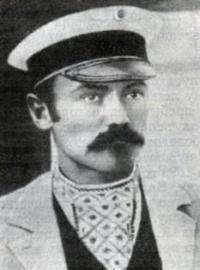
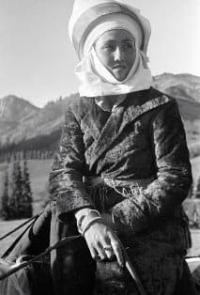
Kyrgyz Hospitality.
"The steppe knows no barriers, it knows no strict division of land into plots; the steppe itself is a unifying element, forcing all who live on it to be considered, to a greater or lesser extent, members of a single family."
A.N. Kharuzin. "Kyrgyz of Bukey Horde (An Anthropological and Ethnological Essay)." 1889.
Kyrgyz as a Nation.
In conclusion, I cannot help but briefly mention the tribe that inhabits all these interesting places I visited and whose hospitality I enjoyed. Throughout almost my entire journey, I encountered Kyrgyz (excluding, of course, Tashkent, Andijan, and cities in general).
I recall with particular pleasure interesting places like Susamyr, Dalashik, Asy, the syrty, the Naryn flower gardens, and Chatyrkul - all magnificent, often high-altitude places, serving as nomadic camps for a charming Kyrgyz tribe, which, in my opinion, deserves more detailed acquaintance and study.
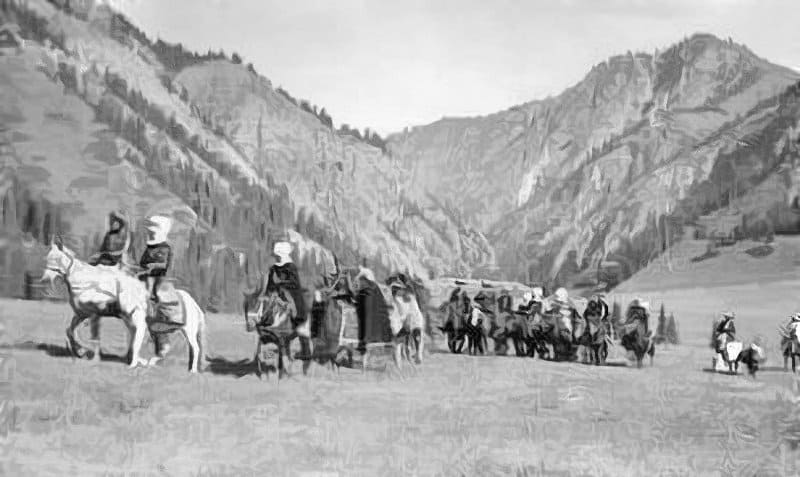
This tribe is close to nature, capable of culture, vibrant, alien to Muslim inertia and deadness. There is something gypsy-like in their nature, yet also poetic. A love of travel and a certain restlessness are characteristic of this tribe. They have no permanent settlements. In summer and winter, life is spent in yurts.
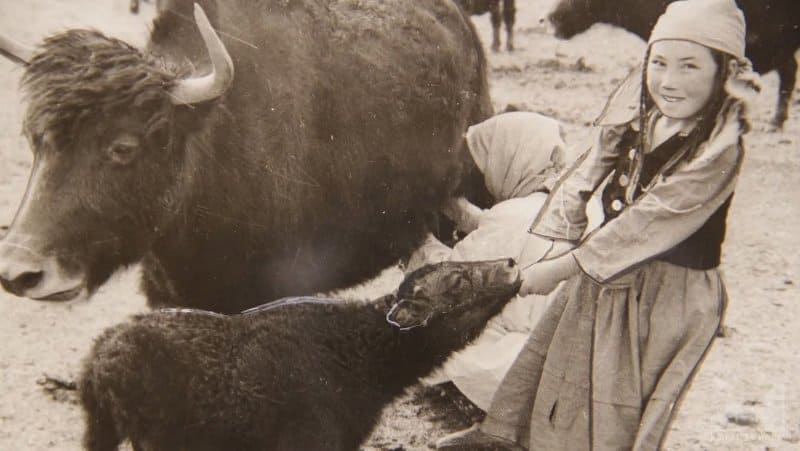
In winter, they descend into lower valleys, where they sometimes have permanent wooden houses, and in summer they ascend the mountains, constantly changing locations. They always have herds of sheep and horses with them, and they travel with them constantly.
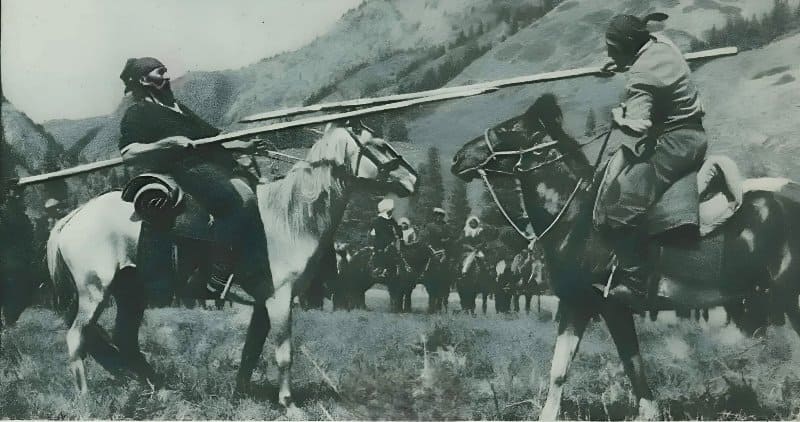
Their way of life is uniquely nomadic. Everything, from their folding house (yurt) down, is adapted to migration. Needless to say, they are excellent horsemen, spending half their lives on horseback, hardy and courageous. One common and frequent occurrence is traveling at night through the mountains in places where even during the day is not particularly comfortable.
Women are hardly inferior in this regard. I have seen remarkable scenes: in the most dangerous and difficult mountainous areas or while crossing turbulent mountain rivers, a Kyrgyz woman rides calmly, holding a child in one arm and dragging a stubborn camel loaded with household goods with the other; and she still manages to control her horse.
Even small children, who can't yet walk, can already ride horses: they're simply tied to the horse in a certain way, and they dangle as they move, as if in a box. Observing the customs, traditions, and costumes of this people, I couldn't resist comparing the Kirghiz to the Little Russians.
Of all the Asian tribes (I've seen many), none comes so close. I'm not drawing any conclusions from this, of course, but merely conveying my impressions, which I've noted before. It may seem strange to compare the naturally mobile Kirghiz with the supposedly sedentary Little Russian.
But in fact, from both perspectives, the comparison is quite rational. Indeed, what is this urge, so characteristic of the Little Russian, to reach farmsteads, apiaries, and melon fields (incidentally, this is a Kirghiz word), which in some cases takes the form of true nomadism.
It should be noted that the Kyrgyz, in some cases, also began to acquire apiaries, farmsteads, etc., which are remarkably reminiscent of those in Little Russia. I noted that the melodies of Kyrgyz songs are remarkably reminiscent of those in Little Russia.
This is undoubtedly true. However, for the sake of accuracy, I should note that melodies very reminiscent of Little Russia can also be found in Spain (these observations were made, among other things, by a well-known expert, ethnographer, and historian of Little Russia).
This apparently characteristic feature (which, of course, will catch the eye of the inexperienced observer) is not, in itself, sufficient for comparison and comparison. Women's dress, and especially the headdress, also attracts attention when compared with that of Little Russia.
Among no Muslim people do women enjoy such freedom as among the Kyrgyz. Therefore, when visiting the Kyrgyz, there are none of those oppressive constraints that one has to experience when visiting the Sarts, Bukharans, etc., when, upon the appearance of a guest, everything in the house goes upside down.
The housewives run away screaming, trying first of all to cover such a shameful part of the type as the face, and so on. You don't notice any differences between the Kyrgyz and Russians. In this respect, they differ sharply from all other Muslims I've seen.
In places where all Muslim women are covered (for example, in Tashkent), an uncovered Kyrgyz woman inevitably attracts attention, especially from devout Muslims, who see such a phenomenon as, at the very least, a heretical demonstration.
Their attitude toward travelers is always polite, but without the servility and obsequiousness characteristic, for example, of the Bukharans and Sarts. The Kyrgyz are undoubtedly a capable and gifted people, very inclined toward European culture.
I've heard very favorable reviews from local Russian peasants in Issyk-Kul.
One of them speaks of the Kyrgyz:
"When we came here (about 30 years ago), not a single Kyrgyz could hold an axe, but now he can even sharpen a saw."
Indeed, everywhere here a Russian cannot get by without a Kyrgyz, who serves as his farmhand and performs all the necessary work no worse than a Russian, and in my opinion, even better than the Russians themselves, and has the advantage of not drinking.
Unfortunately, it must be said that the seizure of Kyrgyz lands, in one form or another, is proceeding slowly but progressively. And almost all lands suitable for cultivation have already been seized by the Russians, with the Kyrgyz often being the sufferers, although the law provides for land theft and zealously protects the interests of the Kyrgyz.
Only the highland nomad camps, so important and pleasant for them, will probably remain theirs forever.
Authority:
V.I. Lipsky. "Flora of Central Asia, i.e. Russian Turkestan and the Khanates of Bukhara and Khiva." I - III. St. Petersburg. 1902-1905, pp. 1 - 841.