




Вы здесь
Karabura Mausoleum.
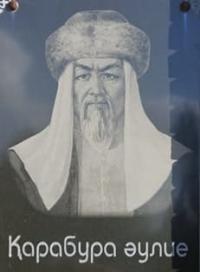
Mausoleums in the village of Sozak.
"Abulkhayr Khan made Dasht the capital of the state. Finally, in 874-1469-1470, he hastened to the eternal world. His body was buried in the city of Suzak near Tak-Khan."
Hajam-kuli-bek Balkhi's book "Tarikh-i Kipchak-khani." 1722-1725, XVIIIth century.
A trip from Shymkent to Sozak.
Karabura Mausoleum is located at an altitude of 326 m. a. s. l. in the southeastern part of the Sozak settlement, in the administrative center of the Sozak rural district of the village of the same name in the Sozak district of the Turkestan region.
Karabura Mausoleum is a sacred abode of the Great Steppe.
In the vast expanses of Southern Kazakhstan, amid the semi-desert landscapes of Karatau and ancient caravan routes, lies one of the country's most revered Muslim shrines - the Karabura Mausoleum. For centuries, this site has attracted pilgrims, historians, ethnographers, and travelers.
History, spiritual culture, folklore, and the unique natural beauty of Central Asia are intertwined here. The mausoleum is located in the village of Karabura, in the Sozak district, one of the oldest historical and cultural regions of Kazakhstan. A large number of historical and cultural monuments are concentrated in the northernmost district of the Turkestan region - Sozak, which encompasses vast semi-desert areas stretching from the northern slopes of the Syrdarya Karatau Mountains to the Betpak-Dala Desert.
Thirty-six architectural monuments have been identified in the district, most of them in the village of Suzak. Most of these monuments have remained poorly studied due to their remoteness.
Geographic location and natural environment around Karabura mausoleum.
The shrine is located in the northwestern part of the Turkestan region, within the vast Syr Darya-Karatau physical-geographical region. The area around the mausoleum is a transition zone between the Karatau mountain system and the flat expanses of Betpak-Dala.
The local landscape is characterized by rolling hills, small elevations, a large number of dry riverbeds and temporary streams, semi-desert and steppe areas, and the rocky foothills of the Karatau Mountains. Absolute altitudes range from 350 to 700 m. a. s. l.
From the west and south, the spurs of the Karatau Range, one of the oldest mountain ranges in Central Asia, are clearly visible. Its geological history spans hundreds of millions of years.
Physical and geographical characteristics of area around Karabura mausoleum.
The Sozak District is located at the junction of several large natural regions: the northwestern spurs of the Karatau, the desert expanses of Betpak-Dala, and the ancient alluvial plains of the Syr Darya basin. Centuries of weathering have shaped the characteristic topography with isolated elevated hills and low ridges.
In the spring, dry gullies and ravines temporarily fill with meltwater and rainwater, creating a contrast with the surrounding arid terrain. The climate of the district is sharply continental and arid. Key features include hot, long summers, short, snowless winters, high solar radiation, low precipitation, and significant diurnal temperature fluctuations.
Summer temperatures often reach 40°C and above, while winter temperatures can drop below -20°C. For centuries, these conditions have shaped the lifestyle of the local population, which relies on nomadic and semi-nomadic pastoralism.
Flora and fauna around Karabura mausoleum.
The vegetation is predominantly represented by semi-desert and steppe communities. The following species are found here: wormwood, sagebrush, teresken, wheatgrass, feather grass, and ephemerals. In spring, the surrounding area is briefly transformed, covered in a carpet of flowering plants.
The region is characterized by desert-steppe fauna: corsac fox, fox, tolai hare, ground squirrels, steppe tortoise, various species of larks, and birds of prey.
Who is Karabura?
Karabura's personality is shrouded in many legends and tales. In folk tradition, Karabura-ata is considered an outstanding Islamic preacher, a holy man, and one of the closest companions of the great Sufi teacher Khoja Ahmed Yasawi. It is believed that Karabura's real name was Burakhan of the Tama clan. He lived in the XIth-XIIth centuries.
He was one of the greatest figures of his time, along with Arystan Bab, Ukasha, Khoja Akhmet Yasawi, and others. Burakhan was a companion of the famous Karakhan, the founder of the Karakhanid dynasty, and made a significant contribution to the development and dissemination of divine knowledge in Central Asia.
According to some sources, Burakhan is the son of Aktan-sopa Aulie, whose grave is located in the Kyzylorda region, as is that of his brother, Saint Topehan. According to oral traditions, he lived in the 12th century and played a significant role in spreading Islam among the Turkic peoples of the Great Steppe.
His name became a symbol of spiritual devotion, wisdom, and service to humanity. In popular memory, Karabura is also known as a healer, mentor, and protector of the common people.
History of Karabura Mausoleum.
The first burials on the site of the modern mausoleum date back to the medieval period. The existing structure has been repeatedly rebuilt and renovated in different eras. Like many sacred sites in Kazakhstan, the mausoleum combines features of traditional Central Asian architecture: monumental forms, a domed top, the use of baked brick, and a laconic decorative style.
During the Soviet era, the site experienced a difficult period, but after Kazakhstan gained independence, the shrine was restored and once again became a pilgrimage center. Today, the mausoleum is considered one of the significant sites in Kazakhstan's sacred geography.
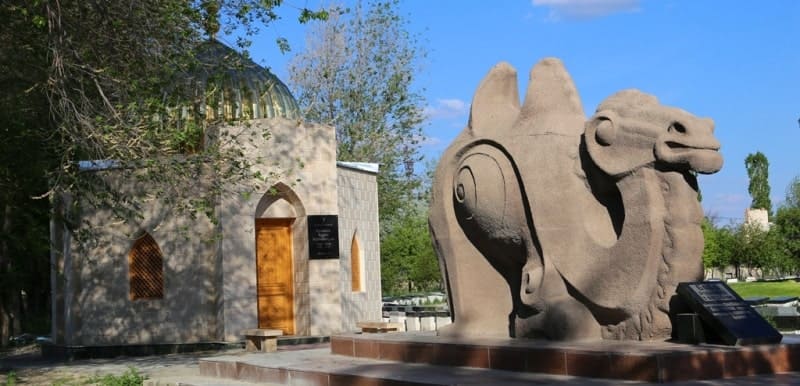
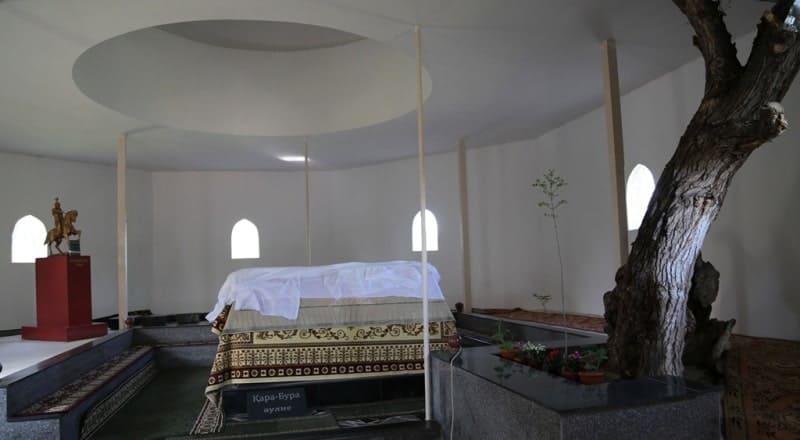
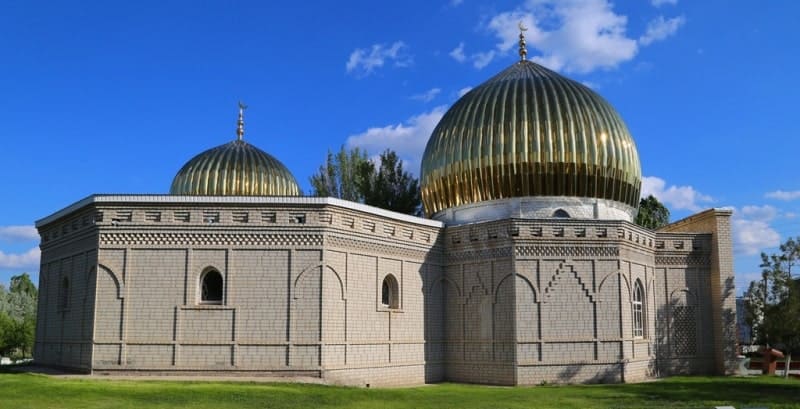
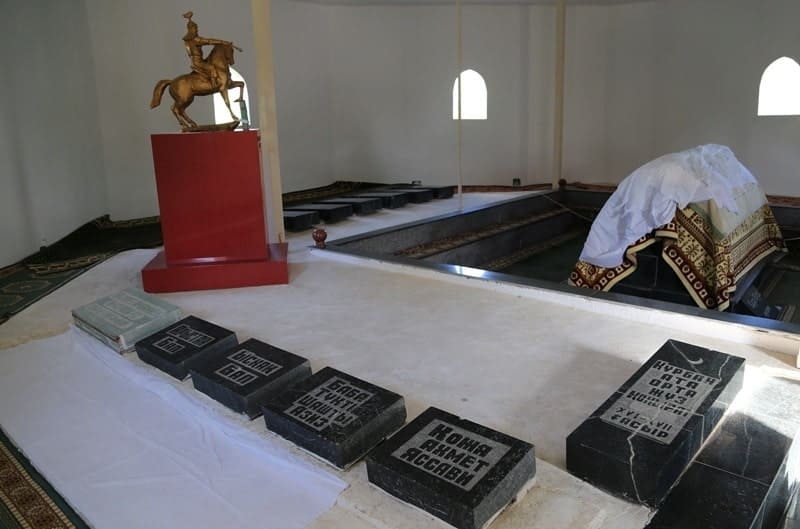
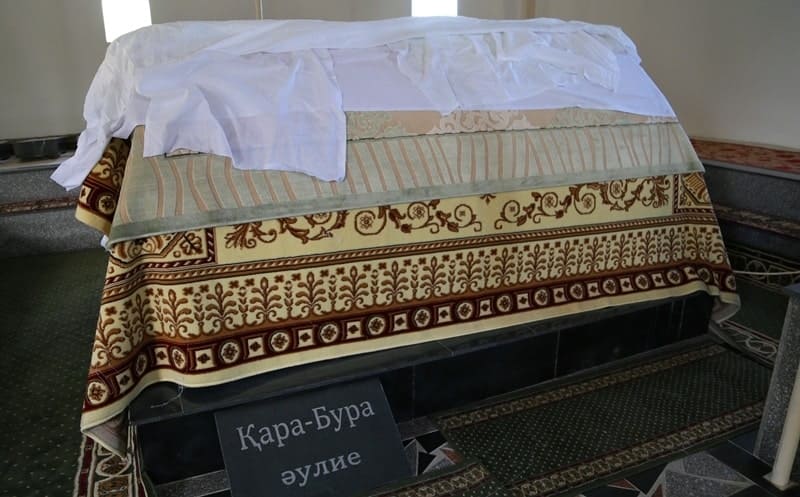
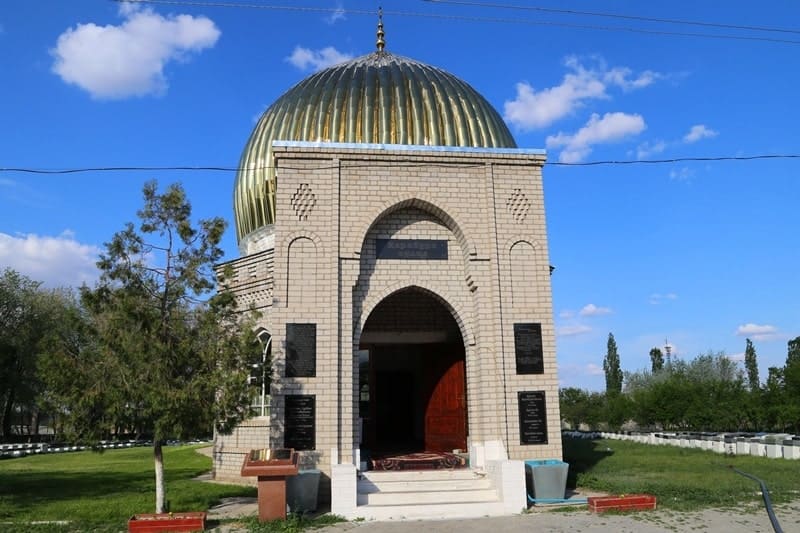
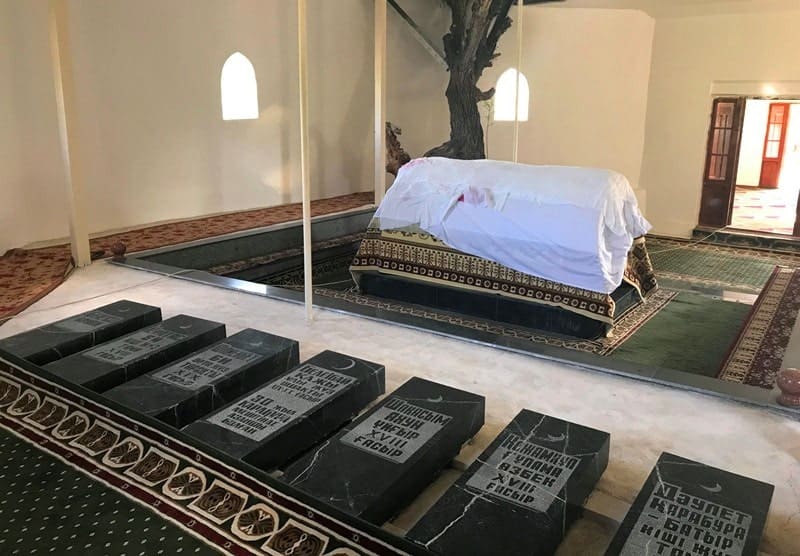
The Karabura Mausoleum was built in 1997 of white brick and consists of two rooms. The upper part of the mausoleum is a dome. The first room is 100 square meters, and the second room contains part of an ancient mausoleum built in the XIVth century. The tomb of Saint Karabura is located in the second room.
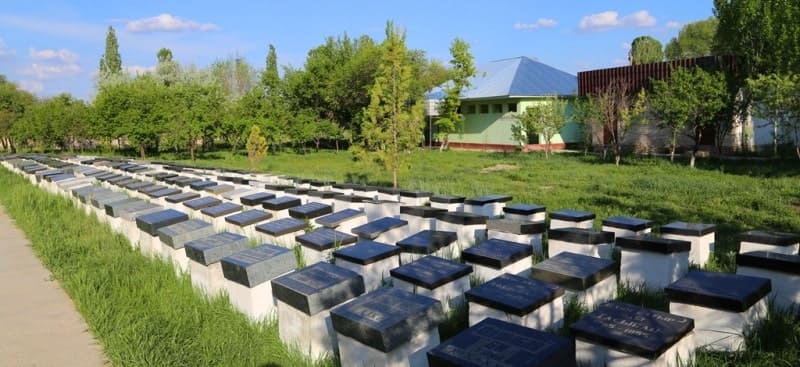
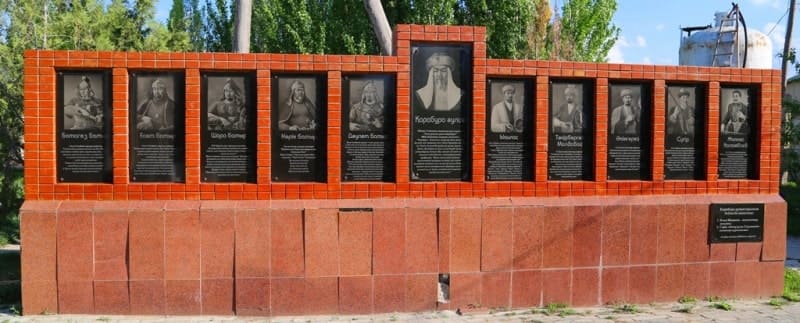
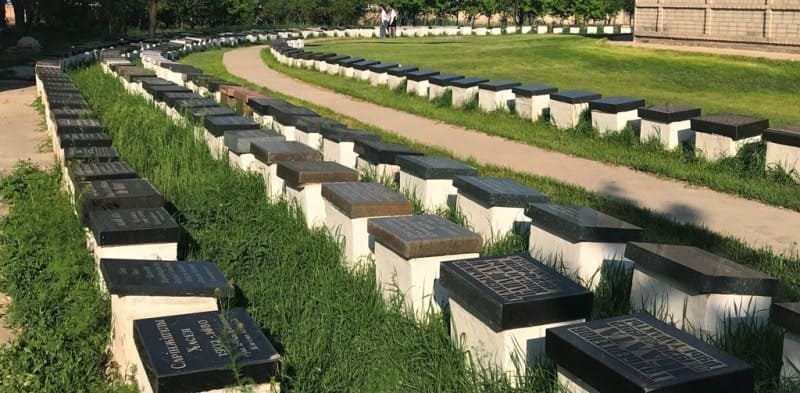
The mausoleum is built of clay and has four windows. The tomb of Kurban Ata is located here. Nearby are memorial marble slabs of Muhammad, Arystan Baba, Khoja Akhmet Yasawi, Yskak Baba (Baba Ata), and Baba Tukti Shashty Aziz. Behind the old mausoleum are buried Aknazar Khan, Belgibai Kazhy, Shilmembet Bi, Kultas Bi, Kozhamkul Gulama, Daulet Karabura Batyr, Shakhasum Akhun, and others.
The total area of the architectural complex is 240 square meters, and the mausoleum is 17 meters high. The door faces west, toward the Khoja Akhmet Yasawi mausoleum. To the left of the mausoleum is a monument to a camel. A symbolic monument to a camel is erected next to the mausoleum.
Behind the old mausoleum are the graves of prominent rulers, biys, and spiritual figures: Aknazar Khan (Kazakh Khan), Daulet-Karabura Batyr, Shilmembet bi and Kultas bi, Kozhamkul Gulama and Shakhasum-Ahun, Belgibai Kazhy.
Karabura and Mausoleum of Khoja Ahmed Yasawi.
Karabura's connection to the Mausoleum of Khoja Ahmed Yasawi occupies a special place in legends. According to a widespread legend, after the death of Ahmed Yasawi, the question of the place and manner of his burial arose. It was Karabura, as his most respected disciple and spiritual companion, who performed the necessary religious rites and organized the burial of the great sheikh.
Karabura-aulie was a companion of the legendary Khoja Ahmed Yasawi, who, before his death, instructed Karabura to be buried by Karabura. He lived in the foothills of the Karatau Mountains, possessed magical powers, and could stop the fastest stallion at a gallop with a single glance and force a river to turn back.
This legend made Karabur's name famous far beyond the borders of Southern Kazakhstan.
Legends and Tales about Karabura.
Yasavi's Last Will.
According to the most famous legend, shortly before his death, the great thinker Khoja Akhmed Yasawi bequeathed that Karabur perform the funeral rite and prayer (zhanaza) over him. Only he was permitted to accompany the Khazret Sultan on his final journey. In his final days, Khoja Akhmed Yasawi asked his relatives and disciples not to touch his body. after death. “A man will fly on a black camel, he will perform all the required rituals,” this is the last request of the great Sufi, says the legend. Soon after his death, a man appeared on a black camel, on which a white blanket was thrown and a black jug was tied to the side for washing the saint. It was Karabura aulie. He read the funeral prayer zhanaz and performed other necessary rituals.
Connection of times.
The doors of the modern mausoleum of Karabur-aulie are deliberately facing west - they look directly towards the mausoleum of his spiritual mentor Akhmed Yasawi in Turkestan.
Legend of black camel of Karabura.
There are several explanations for the origin of the name Karabura. The most famous legend tells about a black camel (“kara bura”), which accompanied the saint on his travels. The saint received his nickname “Karabura” (translated as “Black male camel”) because of a legend according to which he rode across the steppe on a mighty black camel.
Legends say that this camel could fly, and the saint himself had powerful mystical powers: he could stop a horse with one glance or turn back the course of a river. After the death of Karabur, the camel did not leave the owner’s grave for a long time and, according to legend, lay down next to it, completing its life’s journey.
Since then, the saint began to be called Karabura-ata. According to legend, after Karabura buried Khoja Akhmet Yassui, he headed south from Turkestan. “Arriving at the village, he performed ablution and died immediately. A few meters from the place where Burakhan was struck by death, he was buried.
A gravestone was erected over his grave. Not knowing his real name, people nicknamed him Karabura. “Bura” is a male camel, “kara” is black. The name of the saint was formed from these words,” the old-timers say. Karabura aulie was buried at the foot of Karatau, in the Sozak region.
This place is still a shrine and an object of pilgrimage among the Kazakhs.
A wonderful spring at Karabura mausoleum.
Local residents say that next to the mausoleum there once was a spring whose water had healing properties. Pilgrims came here for healing from illnesses and spiritual cleansing. Although the source has not been preserved in its original form, its memory continues to live in folk stories.
Karabura is protector of steppe.
According to another legend, during times of civil strife and raids, Karabur, with his prayer, saved the inhabitants of the surrounding villages from disasters and drought. Therefore, he began to be revered as the patron saint of travelers and protector of steppe nomads.
Spiritual significance of shrine is Karabura mausoleum.
For many Kazakhstanis, the Karabur mausoleum is a place of pilgrimage and prayer. People come here: residents of the Turkestan region, pilgrims from other regions of Kazakhstan, guests from Uzbekistan and Kyrgyzstan. It gets especially crowded on religious holidays and during collective ziyarat.
A visit to the mausoleum is often included in routes to the holy places of Southern Kazakhstan, along with Mausoleums: Khoja Ahmed Yasawi, Arystanbab, Ukasha-ata, Domalak Ana.
Tourist information for visiting Karabura Mausoleum.
The most comfortable period for travel:
March – May;
September – November.
In spring, the steppe comes to life after winter, and in autumn mild, sunny weather sets in. Visiting is possible in summer, but be aware of the extreme heat.
How to get there
The main transport hub of the region is Turkestan.
From here, through the settlements of the Sozak district, you can get to the Karabur mausoleum in the village of Sozak by road.
Distance to Sozak:
- from Turkestan – 184 km.
- from Shymkent – 260 km.
- from Sholak-Korgan – 74 km.
- from Taraz – 307 km.
Conclusion about Karabur Mausoleum.
The Karabur Mausoleum is more than just a monument of religious architecture. It is a place where the history of the Great Steppe, the spiritual traditions of the Turkic world, and the rugged beauty of the natural landscapes of Southern Kazakhstan meet.
Against the backdrop of the ancient mountains of the Syr Darya Karatau and the endless steppe expanses, the shrine recalls the centuries-old history of the spread of Islam, outstanding spiritual mentors of the past, and the unbroken connection between generations.
For the pilgrim, it is a place of prayer and spiritual purification. For the historian, it is an important monument of medieval culture. For the traveler, it is an opportunity to touch the living history of Kazakhstan and experience the special atmosphere of the sacred lands of Sozak.
Autjority and photos by:
Alexander Petrov.
https://e-history.kz/ru/publications/view/turkestan__turisticheskii_hram_ii__5314
https://iqap.kz
G. Kamalova on Karabur Mausoleum.
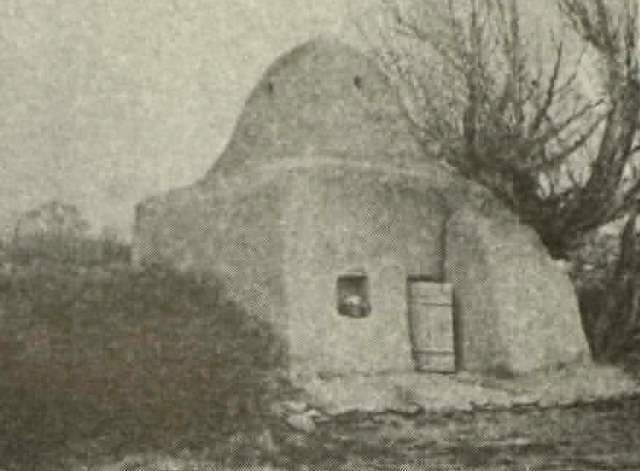
The 1994 collection of historical and cultural monuments of the Chimkent region contains some interesting information about the Karabur Mausoleum in the village of Sozak before its rebuilding in 1997. The Karabur Mausoleum dates back to the XVIIIth-XIXth centuries. It is located among residential buildings in the village of Sozak.
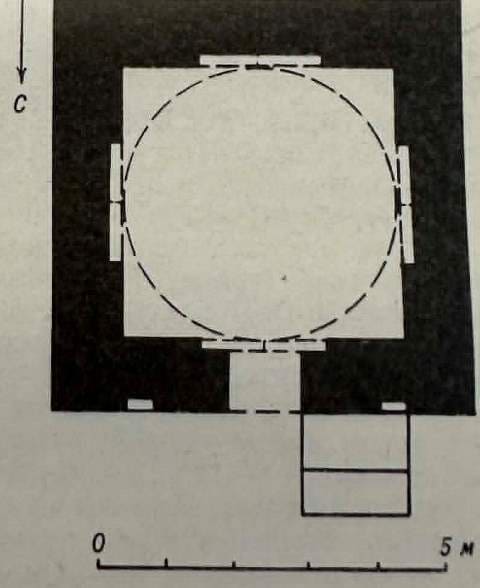
It is built of mud brick on a rubble foundation, with clay plaster on the walls. To prevent collapse, a wide buttress was installed on the main façade. The cuboid structure transitions into an ovoid dome. The upper part of the dome has four round skylights.
The facades are smooth, unadorned. The entrance is on the northern facade, flanked by two deep square niches. The interior features pointed wall niches along the axes of the square room. The transition from the quadrangle to the dome is through arched trompe-l'oeil. In the center is a tombstone made of mud brick.
Geographical coordinates of Karabur mausoleum: N44°08'08 E68°28'12
Authority:
G. M. Kamalova. "Collection of Historical and Cultural Monuments of Kazakhstan. Chimkent Region." Almaty. 1994.
Photos by:
Alexander Petrov.