




Вы здесь
Timur's Karasakpai inscription.
Timur's campaign against Golden Horde Khan Tokhtamysh.
“In the land of the seven hundred black Tokmaks, in the year of the sheep, in the middle month of spring, Sultan Timur of Turan marched with two hundred thousand troops, for the sake of his name, for the blood of Tokhtamysh Khan.
Having reached this area, he erected this mound as a sign.
May God grant justice!
If God so pleases, may God grant mercy to the people! May he remember us with blessing!"
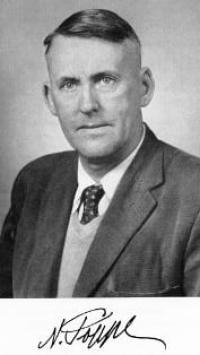
Inscription on Timur's stone slab. Deciphered by N.N. Poppe.
Decipherment of Timur's inscription in Ulytau.
When Timur undertook his campaign against the Golden Horde Khan Tokhtamysh and his troops reached the area of Ulugh Tagh on Friday, the 23rd of the month of Jumadi-1, Timur, according to Nizam ad-Din Shami, ascended the mountain peak and surveyed the area.
"It was a steppe, and in the steppe, a desert. He stopped there that day and ordered all the warriors to bring stones and build a high sign there. He ordered the stonemasons to inscribe the imperial name and the date of these days on it, so that the memory of this campaign would remain on the face of time."
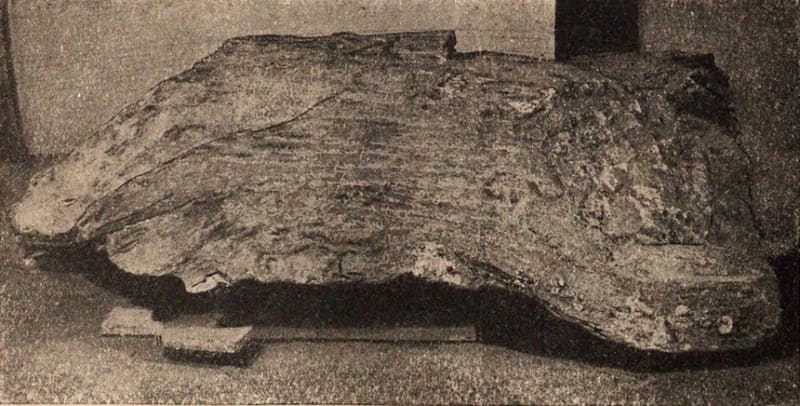
This monument, erected in late April 1391, has survived and was recently uncovered near Altyn Chuku Mountain near the Karasakpai mine in the Kazakh SSR. The stone block with the inscription carved on it was delivered to the State Hermitage Museum, where it is currently housed.
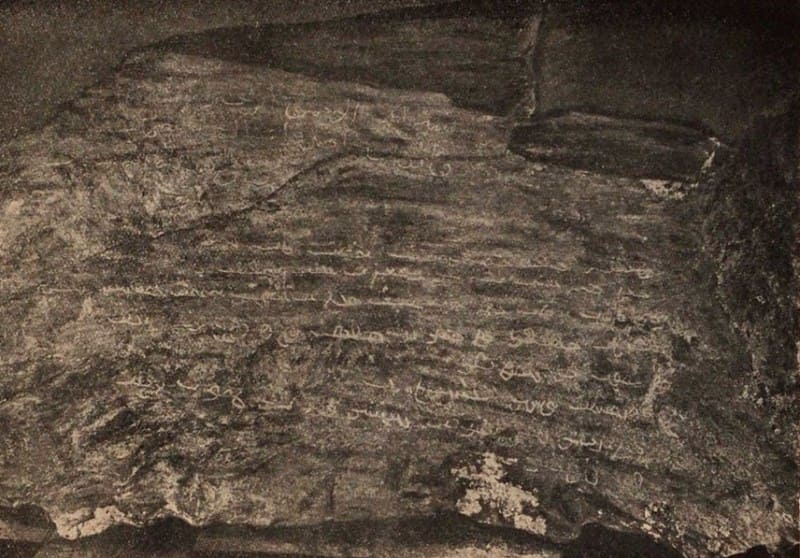
Eleven lines can be discerned on the inscription. Eight of these are written in the Uyghur alphabet, and the remaining three in Arabic letters. Although the inscription is carved on an uneven stone surface, heavily cracked in places, it is largely decipherable.
Part of Timur’s inscription, which is written in characters of Uyghur alphabet, is read by us as follows:
1. qara yeti yüz toqmaq oran-da qoi
2. yil yaz-піц ara ai turan-nïty sultan-ï
3. temür beg iki yüz tsch cerig bil-e ism-i ücün ioqtamïs qan (?)-піц (?)
4. qanï-ya yorïdï bu yer-ge yetip bel-gü bolsun tep
5. bu oba-nî qopardï
6. tnri nîsfat bergeî insall-a
7. tryri il kisi-ge raxmat qîlyai biz-ni duu-a bil-e
8. y ad qïlyai
Translation of Tamerlane's inscription.
"In the land of the seven hundred black Tokmaks, in the year of the sheep, in the middle month of spring, the Sultan of Turan, Timur Beg, marched with two hundred thousand troops, for the sake of his name, for the blood of Tokhtamysh Khan.
Having reached this area, he erected this mound as a sign.
May God grant justice!
If God so desires, may God show mercy to people!
May He remember us with blessing!"
Despite its brevity, the inscription is of undoubted interest, primarily as a confirmation of the authenticity of the above-mentioned narrative sources, for the year of the sheep, to which the inscription is dated, corresponds precisely to 1391, and the "middle month of spring" indicated in the inscription falls precisely in the second half of April and the beginning of May.
As for the name Tokmak, it was borne in the first half of the XVth century. The country of the Uzbeks.1 This name is apparently of Mongolian origin, and in Mongolian sources it is used for the country of Kipchak and the ulus of Jochi in general.2
This name appears in Mongolian literature from the beginning of the 17th century, but it probably existed among the Mongols even earlier. In the inscription being analyzed, this country is called the country of the "seven hundred black Tokmaks."
The epithet "blacks," as well as the number seven hundred included in the name, are unexplained and unknown to other sources. It is possible that the hundreds (yüz) should be understood as individual hordes, like the later Kazakh ulu ziiz 'Great Horde', oria ziiz 'Middle Horde', and kisi ziiz 'Little Horde', which The Kazakhs subsequently disintegrated. It is possible, however, that seven hundred is an analogy to other numerical designations in various ethnic names, such as the Mongolian dörben oirad "four Oirats," etc.
The expressions ism-i іісйп 'for the sake of one's name' and toqtamîs qan-nïij qanî-ya 'by the blood of Tokhtamysh Khan' are noteworthy. Tokhtamysh, as is well known, was friends with Timur in his youth, but they later became enemies, through Tokhtamysh's fault.
Timur had every reason to feel insulted, and this insult could only be washed away by the blood of Tokhtamysh, as the inscription states. It should be noted, however, that the qan-пщ after the name toqtamîs is very unclear, while Tokhtamysh's name itself is easily decipherable.
Although the inscription is written in Uyghur letters, its language is not Uyghur, but the Central Asian Turkic literary language that became known as the Chagatai language in the 15th-16th centuries. It is sufficient to point to the form qanï-/a 'to his blood', typical of Chagatai (now Northern Uzbek), not Uyghur.
The language of the inscription is characterized by numerous Arabicisms: ism 'name', nïsfat 'justice', insalla 'if God wills', raxmat 'mercy', duu-a 'blessing'. As for the inscription, written in Arabic characters, it consists of three lines, of which only the first, and the most uninteresting one at that, can be read as f-rr-yl."
The remaining lines cannot be read.
Note.
1 Translation by S. L. Volin. A very similar passage appears in the work of Sheref ad-Din Yazdi, also available to us in S. L. Volin's translation, and in Abd-ar-Rezak Samarkandi's translation by Chagmo y. Expédition de Timour-i-Lenk ou Tamerlane contre Toqtamiche, p. 104.
1 V. V. Bartold. Ulugh Beg and His Time. Petrograd, 1918, p. 76, note 1.
2 I. J. Schmidt. St. Petersburg, 1829, p. 111.
Authority and photographs by:
N.N. Poppe. State Hermitage Museum. Works of the Oriental Department. Volume II. Leningrad, 1940.
An inscription from Timor.
L'inscription de Timour, découverte auprès des mines de Karasakpaï dans la République Soviétique Socialiste Kazakh, date du temps quand Timour marchait contre le khan Tokhtamiche en 1391. Cette inscription est faite en lettres ouïgoures dans la langue littéraire de l'Asie Centrale qui reçut au XV-XVI-e siècle le nom de langue Tchagataï.
L'inscription correspond à celle qui est citée dans les oeuvres de certains historiens musulmans (C h a r m o y. Expédition de Timour-i-Lenk ou Tamerlan contre Toqtamiche, p. 104).
N. Poppe.
Corrections to reading of "Timur's Inscription" by A. Ponomarev.
"In the land of seven hundred black Tokmaks, in the year of the sheep, in the middle month of spring, the Sultan of Turan, Timur Beg, marched with two hundred thousand troops, for the sake of his name, for the blood of Tokhtamysh Khan.
Having reached this area, he erected this mound as a sign.
May God grant justice!
If it be God's will!
May God show mercy to the people!
May He remember us with blessing!"
Inscription on Timur's stone slab. Deciphered by A. A. Ponomarev.
On one side of this unworked stone, on an uneven, cracked surface measuring approximately 80x40 cm, are two inscriptions: the upper one, three lines in the Arabic alphabet, and the lower one, eight lines in the Uyghur alphabet. The lines of the Uyghur inscription are arranged parallel to the lines of the Arabic alphabet, i.e., horizontally, not vertically, as would be expected for Uyghur script.
The inscription is quite finely carved, with a line height no higher than 1 cm and a depth of 1.5-2 mm. Therefore, the small cracks in the stone blend with the letters, making reading difficult. The first line of the Uyghur inscription is 40 cm long, and the distance between the first and eighth lines is 18 cm.
Publisher provides following decipherment of this Uyghur inscription by Timur, which he identifies as Chagatai:
1. qara yeti yuz toqmaq oran-da qoi
2. yil yaz-n'iij ara ai turan-nlg sultan-I
3. temtir beg iki ytiz miq cerig bil-e ism-i tictin toqtam li qan (?)-n!q (?)
4. qanl-ya yorldl bu yer-ge yetip bel-gti bolsun tep
5. bu oba-n! qopardl
6. tqri nisfat bergei insall-a
7. tqri il kisi-ge raxm at qTlyai biz-ni duu-a bil-e
8. yad qTlyai
Timur's inscription is translated as follows:
"In the land of seven hundred black Tokmaks, in the year of the sheep, in the middle month of spring, the Sultan of Turan, Timur Beg, marched with two hundred thousand troops, for the sake of his name, for the blood of Tokhtamysh Khan.Having reached this area, he erected this mound as a sign.
May God grant justice!
If it be God's will!
May God show mercy to people!
May He remember us with blessing!"
This decipherment should be considered preliminary. The author has completely correctly identified the general content of the inscription. What we have before us is indeed a monument erected by Timur during his campaign against Tokhtamysh, as the inscription states.
However, some details of the inscription are misread, others are questionable and therefore require revision. Ancient inscriptions, as has already been noted in the scholarly literature, usually cannot be deciphered flawlessly the first time.1 Now, based on the publisher's extensive and complex work, we can make some corrections to the reading of the inscription.
Thus, we read the first line differently, as he reads: qara yeti yuz toqmaq oran-da 'In the land of seven hundred black Tokmak. The publisher himself feels a certain oddity in this phrase. While finding examples of modern Kazakh steppes being named Tokmak in ancient times, he nevertheless acknowledges that the epithet "black," as well as the number "seven hundred," are inexplicable and unknown to other sources.2
For us, the correct reading of this line is determined by the correct reading of the first letter, which he takes to be i-q and reads the entire first word as qara. We read the first letter as o-t. To confirm this reading, it is enough to compare it with the first character of the third line in the word temtir (see photograph) or with the first characters of the 6th and 7th lines in the words tqri.
All four of these characters are completely identical. Reading this letter as e-t, we read the entire first word as yiaiue-tariq. This reading is also confirmed by the writing of the last character in the word, curved upwards and having dots above it (they appear faintly in the photograph).
This is how the final q is usually written in Uyghur script; tariq is the Uyghur rendering of the Arabic era, epoch, year, number, etc.3 In documents, the date usually begins with this word.4 Consequently, in the following words of the inscription, we should expect the year to be designated, and, indeed, the publisher reads the two words following tariq as yeti ytiz 'seven hundred'.
Next, without a doubt, it should read toqsan ‘ninety’, and we again see that he reads it correctly, but only the first half of the next word, as toq, and then, mistakenly, maq instead of san. The reason for this reading was the subscript tooth in this word, taken for the letter sh, but a comparison of this tooth with the corresponding ones in the words temiir (the first word of the 3rd line) and toqtamls (the 10th word of the same line) shows that we have before us not sh, but another letter.
Furthermore, to read toqmaq, one tooth is missing at the end of the word. We take the subscript tooth for an insufficiently clearly expressed letter “s” and read the entire word toqsan ‘ninety’. The next word, read as oran-da ‘in the country’, should, of course, be read as * n ir w ticn-da ‘in the third’, especially since in the script.
The initial b-y, not o-i, is clearly expressed in the word.
Thus, first line of Timur's inscription reads as follows:
tarlq yeti yiiz toqsan iicn-da
"In the year seven hundred and ninety-third."
Then follows the correctly read continuation of the date according to the Mongolian cyclical numeration: "in the year of the sheep," etc. We make the second correction to the reading of the phrase "by the blood of Tokhtamysh Khan." In the transcription of this phrase, toqtamls qan-nlg qani-ya, the publisher inserts question marks after the words qan and nig due to uncertainty in the reading (these words are completely illegible from the photograph).
There is a depression in stone at this location through which inscription passes, and these two words are there.
1. qara yeti yuz toqmaq oran-da qoi
2. yil yaz-n'iij ara ai turan-nlg sultan-I
3. temtir beg iki ytiz miq cerig bil-e ism-i tictin toqtam li qan (?)-n!q (?)
4. qanl-ya yorldl bu yer-ge yetip bel-gti bolsun tep
5. bu oba-n! qopardl
6. tqri nisfat bergei insall-a
7. tqri il kisi-ge raxm at qTlyai biz-ni duu-a bil-e
8. yad qTlyai
Timur's inscription is translated as follows:
"In the land of seven hundred black Tokmaks, in the year of the sheep, in the middle month of spring, the Sultan of Turan, Timur Beg, marched with two hundred thousand troops, for the sake of his name, for the blood of Tokhtamysh Khan.
Having reached this area, he erected this mound as a sign.
May God grant justice!
If it be God's will!
May God show mercy to people!
May He remember us with blessing!"
This decipherment should be considered preliminary. The author has completely correctly identified the general content of the inscription. What we have before us is indeed a monument erected by Timur during his campaign against Tokhtamysh, as the inscription states.
However, some details of the inscription are misread, others are questionable and therefore require revision. Ancient inscriptions, as has already been noted in the scholarly literature, usually cannot be deciphered flawlessly the first time.1 Now, based on the publisher's extensive and complex work, we can make some corrections to the reading of the inscription.
Thus, we read the first line differently, as he reads: qara yeti yuz toqmaq oran-da 'In the land of seven hundred black Tokmak. The publisher himself feels a certain oddity in this phrase. While finding examples of modern Kazakh steppes being named Tokmak in ancient times, he nevertheless acknowledges that the epithet "black," as well as the number "seven hundred," are inexplicable and unknown to other sources.2
For us, the correct reading of this line is determined by the correct reading of the first letter, which he takes to be i-q and reads the entire first word as qara. We read the first letter as o-t. To confirm this reading, it is enough to compare it with the first character of the third line in the word temtir (see photograph) or with the first characters of the 6th and 7th lines in the words tqri.
All four of these characters are completely identical. Reading this letter as e-t, we read the entire first word as yiaiue-tariq. This reading is also confirmed by the writing of the last character in the word, curved upwards and having dots above it (they appear faintly in the photograph).
This is how the final q is usually written in Uyghur script; tariq is the Uyghur rendering of the Arabic era, epoch, year, number, etc.3 In documents, the date usually begins with this word.4 Consequently, in the following words of the inscription, we should expect the year to be designated, and, indeed, the publisher reads the two words following tariq as yeti ytiz 'seven hundred'.
Next, without a doubt, it should read toqsan ‘ninety’, and we again see that he reads it correctly, but only the first half of the next word, as toq, and then, mistakenly, maq instead of san. The reason for this reading was the subscript tooth in this word, taken for the letter sh, but a comparison of this tooth with the corresponding ones in the words temiir (the first word of the 3rd line) and toqtamls (the 10th word of the same line) shows that we have before us not sh, but another letter.
Furthermore, to read toqmaq, one tooth is missing at the end of the word. We take the subscript tooth for an insufficiently clearly expressed letter “s” and read the entire word toqsan ‘ninety’. The next word, read as oran-da ‘in the country’, should, of course, be read as * n ir w ticn-da ‘in the third’, especially since in the script.
The initial b-y, not o-i, is clearly expressed in the word.
Thus, first line of Timur's inscription reads as follows:
tarlq yeti yiiz toqsan iicn-da
"In the year seven hundred and ninety-third."
Then follows the correctly read continuation of the date according to the Mongolian cyclical numeration: "in the year of the sheep," etc. We make the second correction to the reading of the phrase "by the blood of Tokhtamysh Khan." In the transcription of this phrase, toqtamls qan-nlg qani-ya, the publisher inserts question marks after the words qan and nig due to uncertainty in the reading (these words are completely illegible from the photograph).
There is a depression in the stone at this location through which the inscription passes, and these two words are there.
Note.
1. Works of the Department of the History of Oriental Culture and Art. State Hermitage Museum, Vol. II, Leningrad, 1940, pp. 185-187. 2. The name of the mine and, accordingly, the Karasakpai inscriptions are incorrect. The mine is called Karsakpai (see Bolshoi Dzhezkazgan.
Works of the Kazakh Base of the Academy of Sciences, Issue VII, Leningrad-Moscow, 1935, according to the index).
Altyn-Choku Mountain (ibid., pp. 334-335, 346 and the map on p. 655) is located more than 300 km from the Karsakpai mine and on the left bank of the Sary-su River, whereas the Ulutav Mountains, where Timur stopped, are on the right bank of the Sary-su River.
It would be extremely important to accurately determine the location of the stone's discovery.
3 The author does not provide the full date of this word, found in Nizam ad-Din Shami, namely 793 AH. 4 A crack is, for example, a vertical line at the end of a word read by the editor as "turan"; a parallel line at the beginning of the word "yetip" is also a crack.
1 A. Garkavi. Some Notes on the Aramaic Inscription. ZVO, IV, p. 83.
See also: B. Ya. Vladimirtsov. Corrections to the Reading of the Mongolian Inscription from Erdenidzu. DAN, 1930, pp. 186-188.
2 Transactions of the Oriental Department, Vol. II, p. 186.
3 In the khan's yarlyks to the Russian clergy, this word is given in the form "daryk" (V. V. Grigoriev, Russia and Asia). St. Petersburg, 1876, pp. 229-239).
4 For example, in the yarlyk of Tokhtamysh from 795 AH and Timur-Kutlug from 800 AH (ZVO, VIII, pp. 16 and 38).
1 On the stone, the word "qanl" itself is a clear typo.
2 The Volga Horde, of which Tokhtamysh was khan, is usually called the "Golden Horde" by us, but the name "Golden Horde" was unknown to the contemporaries of this Horde. It first appeared after the Horde itself no longer existed - in the second half of the XVIth century - and only in Russian literature.
This name does not appear at all in Eastern literature.
Authority:
A. I. Ponomarev.
Publishing House of the USSR Academy of Sciences. Moscow. 1945. Leningrad.
Soviet Oriental Studies. Volume III.