




Вы здесь
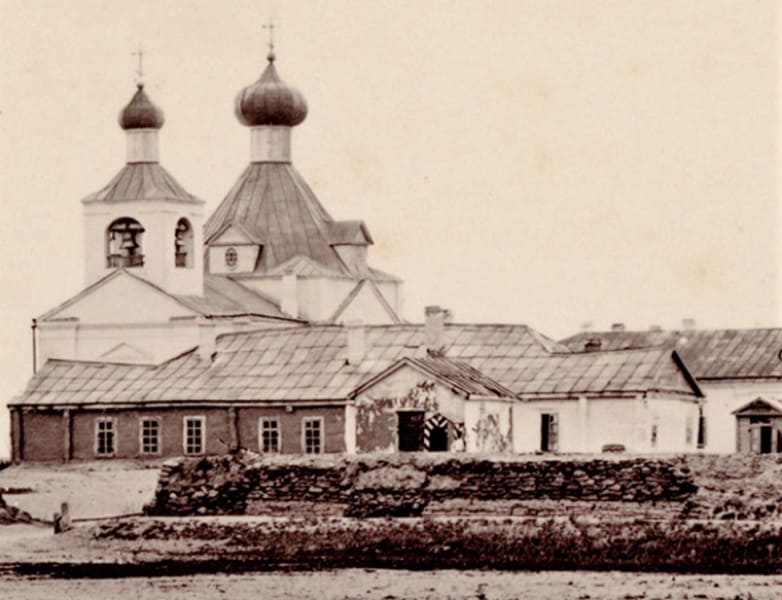
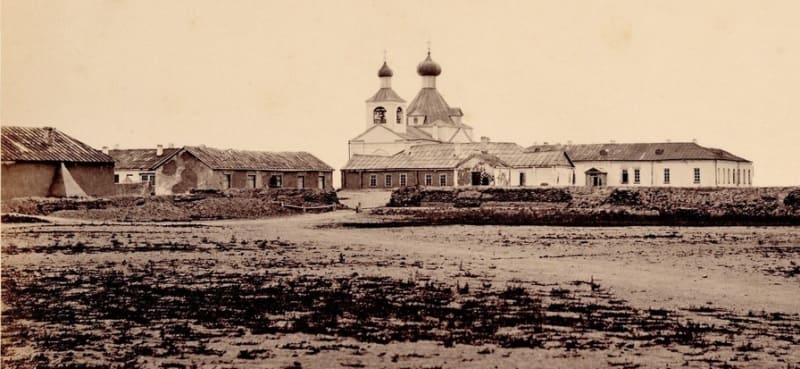
Church in Sergiopol.
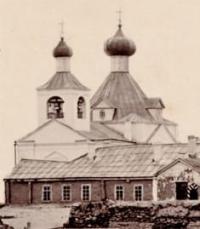
Orthodox churches in Abay region.
«Sergiopol Church (Sergievskaya), built in 1859. Staff: priest and two church attendants. 545 male, 420 female. Priest Iakov Andreevich Goldaevich, 30, native of Volyn Province, fourth-grader of the theological seminary; psalm-reader since 1896, priest since 1899. Serving since 1899. Acting psalm-reader Vasily Leontyevich Leberfarb, Semirechye Oblast, graduated from parish school, psalm-reader since 1891, serving since 1891. Acting psalm-reader Georgy Borisovich Koshukov, 48, native of Samara Province, studied at parish school, serving since 1891».
Calendar of Turkestan Diocese. 1903.
"In 1847, the fortification of Ayaguz was founded, later renamed the village of Sergiopolskaya. In 1853, the Sergiopol parish was opened. In 1857, the current military church was built at public expense. Since 1891, the clergy of this church has been on the staff of the Sergiogol local command. Since 1901, the church has been under the jurisdiction of the archpriest of the military clergy. This church is entitled to 300 dessiatines of land, but the clergy does not have such an allotment, due to inconvenience and the lack of land among the parishioners. The priest's house is wooden, with a board roof, donated by parishioners to the church, which has now been improved by the parishioners themselves. The psalm-reader lives in a dilapidated clay outbuilding attached to the same house, and the second one lives in a private apartment on The parish maintenance is 18 rubles per year. In the Sergiopol stanitsa of the military class, there are 308 Orthodox Christians of the male sex, 312 women, and 620 of both sexes (data for 1907).
Priest Dm. Muromtsev, who visited Sergiopol in 1906.
"In 1857, a military church was built at public expense. Since 1891, the clergy of this church have been on the staff of the Sergiopol local command. Since 1901, the church has been under the jurisdiction of the archpriest of the military clergy. This church is entitled to 300 dessiatines of land, but the clergy does not have such an allotment due to inconvenience and the lack of land among the parishioners."
Clergy list of 1872, item 6. Turkestan diocesan lists. No. 21, 1907.
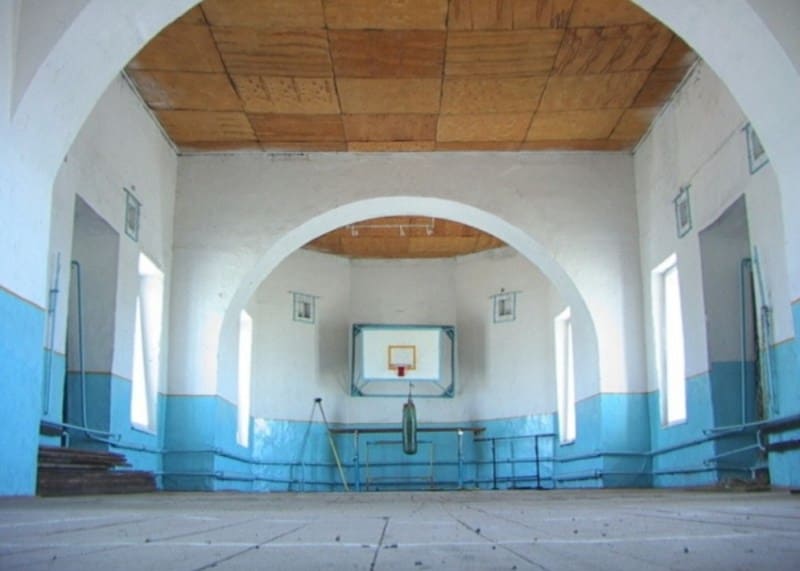
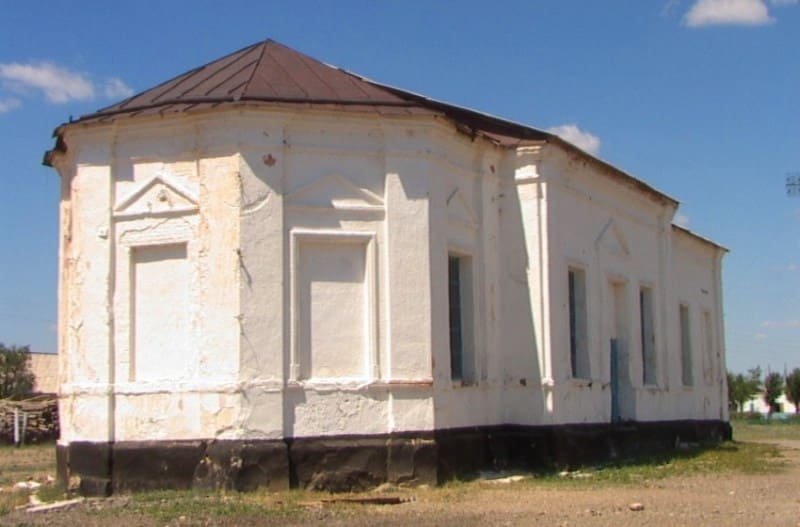
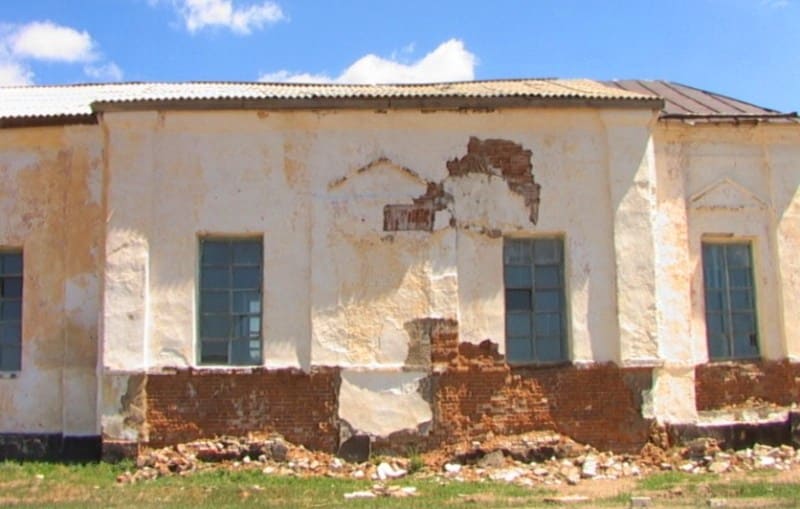
"The church's plan is an elongated rectangle, running east to west, with a slightly protruding main volume and a pentagonal altar apse. The building's walls are rather sparsely decorated with flat pilasters, relief moldings, as well as triangles of cornices above the window and door openings, and a multi-tiered cornice..." The history of this church is associated with the name of Captain Artemy Ivanovich Geibovich, the company commander where Fyodor Mikhailovich Dostoevsky served as a private soldier and later as an ensign after completing his penal servitude. A.I. Geibovich was a friend and patron of the exiled soldier from the Semipalatinsk garrison. In 1859, both friends left Semipalatinsk: Ensign Dostoevsky completed his exile, and Captain Geibovich was transferred to Ayaguz to become the head of the local military detachment. He created the first-ever Dostoevsky Museum, based on materials donated by the great Russian writer. The museum has not survived. In 1865, the funeral service for A.I. Geibovich was held in the Sergiopol church. He was buried in the local cemetery, where monuments dating back to the city's founding still stand. Unfortunately, the location of Artemy Ivanovich's grave has not been discovered. For nearly 70 years, the church served as the spiritual center of the Orthodox citizens of Sergiopol. It was closed in the tragic year of 1929. On June 30, 1929, a meeting of 368 Sergiopol residents was held. In addition to representatives of trade unions, parishioners of the Orthodox church were invited to attend, as the church was being considered for closure and its transfer to a hospital for the workers' settlement near the Turksib railway. Adapted for various purposes, the church, although considerably damaged, continues to exist today. Today, this sole monument of Russian ecclesiastical classicism in the region serves as a military gymnasium. The current state of the Sergiopol church is quite dire. The plaster is peeling everywhere, and the coating does not meet technical requirements. Significant collapse of the brickwork in the basement of the church's southern façade is observed. Later, rough layers of plaster in places obscure the noble original relief decoration of the walls.
M.M. Larionov. "Orthodox Architecture of Eastern Kazakhstan." 2007.
Church of St. Sergius of Radonezh Wonderworker in Sergiopol.
The Sergiopol Church is a monument of Russian architecture. The village of Ayaguzskaya, founded considerably earlier and settled by Cossacks a year before Kapalskaya (1847), received its own clergy only on April 20, 1852, and a parish was opened there the following year.
The Sergiopol parish was established in 1853. The Church of St. Sergius of Radonezh the Wonderworker was built in 1857 at the request of parishioners with funds allocated from the treasury. Consecrated in 1859, the church is constructed of baked brick, plastered and whitewashed inside and out.
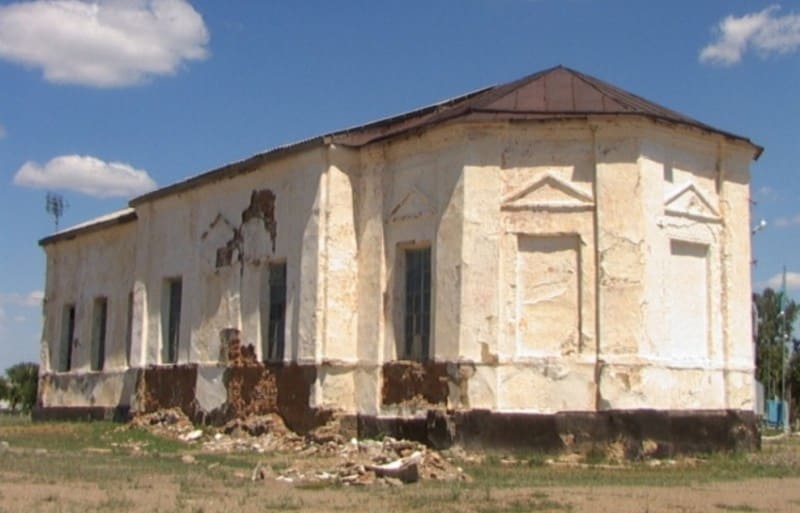
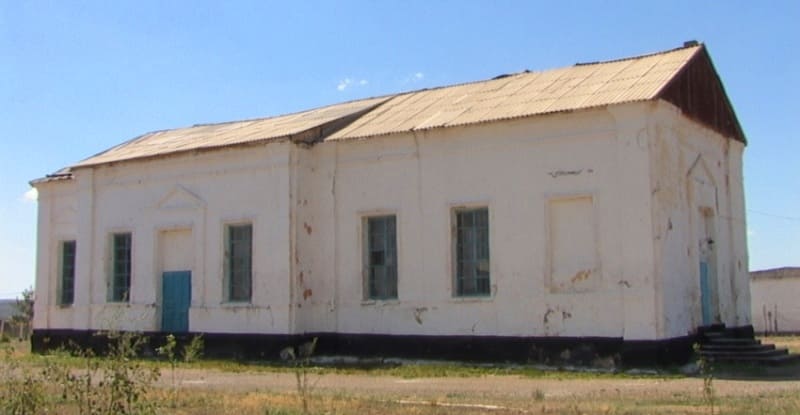
The plinth on the front side is painted black, covered with sheet iron, and painted green. The church building is an elongated rectangle running east to west, with a slightly protruding main volume and a pentagonal altar apse. The walls are rather sparsely decorated with flat pilasters, relief moldings, and triangles of cornices above the window and door openings, along with a multi-stage cornice.
A bell tower of the same material was built adjacent to the church, also covered with sheet iron and painted green. A gatehouse is located on the left side of the western entrance. The church is 35 arshins (13.5 feet) long, 14 arshins (5.5 feet) wide, and 15 arshins (5.5 feet) high.
There are two stoves in the church and one in the gatehouse, six doors, 13 windows, and seven bells: 40 pounds (10 pounds), 19 pounds (27 pounds), 9 pounds (19 pounds), 4 pounds (19 pounds), 2 pounds (26.5 pounds), 7 pounds (18 pounds), and 22 pounds.
There is one altar in the name of St. Sergius of Radonezh the Wonderworker, consecrated in 1859 by the archpriest of the Semipalatinsk Znamensky Cathedral, Pavel Lyubomudrov. The patronal feast day is September 25. The holy antimins was performed and issued by Sophony, Bishop of Turkestan and Tashkent, on May 2, 1874.
"In the second half of the 1850s, in Sergiopol, amidst 'muzankas' and 'significant piles of dirt and manure,' construction of a brick church was actively underway. It is difficult to say with certainty what this church looked like in its original form, as no drawings or photographs of the church building before it was stripped of its vertical ends have yet been discovered."
In 1857, Tomsk artist Pavel Mikhailovich Kosharov, a member of Pyotr Petrovich Semenov-Tyan-Shansky's expedition, captured the view of the Ayaguz fortress with its church on his canvases. In 1929, the church was closed and converted into a hospital on the Turksib railway.
The church is located on the grounds of the fortress and is surrounded by military barracks and government buildings.
"...The church's plan is an elongated rectangle running east to west, with a slightly protruding main volume and a pentagonal altar apse. The building's walls are rather sparsely decorated with flat pilasters, relief moldings, as well as triangles of cornices above the window and door openings, and a multi-stage cornice..."
The history of this church is linked to the name of Artemy Ivanovich Geybovich, captain and company commander where Fyodor Mikhailovich Dostoevsky served as a private soldier and later as an ensign after completing his penal servitude. A.I. Geybovich was a friend and patron of the exiled soldier of the Semipalatinsk garrison.
In 1859, both friends left Semipalatinsk: Ensign Dostoevsky completed his exile, and Captain Geybovich was transferred to Ayaguz to serve as head of the local military detachment. He created the first museum in history. Dostoevsky, based on materials donated by the great Russian writer.
The museum has not survived. In 1865, the funeral service for A.I. Geibovich was held in the Sergiopol church. He was buried in the local cemetery, where monuments dating back to the city's founding still stand. Unfortunately, the location of Artemy Ivanovich's grave has not been discovered.
For nearly 70 years, the church served as the center of spiritual life for the Orthodox citizens of Sergiopol. It was closed in the tragic year of 1929, when a wave of persecution struck the Russian Orthodox Church. In what is now Eastern Kazakhstan alone, more than seventy parishes, mostly in rural areas, ceased to exist.
This wave of mass closures partially affected cities as well. On June 30, 1929, a meeting of Sergiopol residents was held, attended by 368 people, including representatives of trade unions and parishioners of the Orthodox church, since it stood.
The issue of closing the church and transferring it to a hospital for the workers' settlement near the Turksib railway. Two documents have been preserved in the Semipalatinsk archives, one of which is the minutes of a meeting (7), and the other is a complaint from parishioners of the Orthodox Church of Sergiopol regarding the illegal actions of local authorities, sent to the Semipalatinsk District Executive Committee of the Soviets.
These documents show It remains unclear how conscientiously the complaint was handled in Semipalatinsk. What is known is that the Orthodox Church of Sergiopol was ultimately closed. Adapted for various purposes, it, although considerably damaged, continues to exist today.
Today, this sole monument of Russian ecclesiastical classicism in the region serves as a gym for a military unit. The current state of the Sergiopol Church is quite dire. The plaster is peeling everywhere, and the coating does not meet technical requirements.
Significant collapse of the brickwork in the basement of the church's southern façade is observed. Later, rough layers of plaster in places obscure the noble original relief decoration of the walls. Registered in the early 1990s. The XXth-century Orthodox parish proved so weak that it was soon abolished, so the question of the church's return and restoration remains open to this day.
Due to the church's location on the territory of a military unit, access to it is difficult. The church has been recommended to the Ministry of Culture of Kazakhstan for protection.
Geographical coordinates of church in Mamyrsu (Sergiopol): N47°56'47 E80°23'07
References:
1. Ivlev, N.P., "And Biographies Come to Life: Notes of a Local History Expert," Alma-Ata: Kazakhstan, 1983, 204 p. // Sergiopol Enthusiast, pp. 173–174. Here, N.P. Ivlev cites: Valikhanov, Ch.Ch., Collected Works, Vol. 1, p. 229.
2. Ibid., p. 174. Here is the link N.P. Ivleva on the book: Semenov – Tien-Shansky P.P. Travel to Tien Shan, M., 1958, p. 82.
3. Ibid. Page 174 – 175.
4. Ibid. Page 175. N.P. Ivlev provides a link to the book: Gaines A.K. Collection of literary works, St. Petersburg, 1897, vol. 1, p. 64.
5. Ivlev N.P. Findings of a local historian, - Alma-Ata: Kazakhstan, 1977, - 152 p. The First "Museum" of Dostoevsky, p. 64.
6. Collection of Architectural and Monumental Sites of the East Kazakhstan Region, Ust-Kamenogorsk: State Foundation for the Support of Culture and Art, 2005. // Larionov, M.M. Historical and Architectural Monuments Located in the East Kazakhstan Region Not Included in the Lists of Protected Objects, p. 225.
7. Semipalatinsk. Central House of Cultural Heritage of the East Kazakhstan Region, f. 74, op. 1, d. 272, sheets 63–64.
8. Semipalatinsk. Central House of Cultural Heritage of the East Kazakhstan Region, f. 74, op. 1, d. 272, sheet 70.
Authority:
Archive of Alexander Yuryevich Ushakov https://russiainphoto.ru/photos/330941/
Nikolay Petrovich Ivlev. "And Biographies Come to Life. Notes of a Local History Expert." 1983. Sergiopol Enthusiast, pp. 173-174.
(TsGA RUz, I-961). P.
http://www.ka-z-ak.ru/index/151--/11480-istoriya-stanitsy
kazak.68@inbox.ru