




Вы здесь
Chokan Valikhanov and first discovery of “Manas” epic.
Kazakhstan and Kyrgyzstan: a shared history.
"Go to that brave *atyr (hero), Koshay, and tell him that he must attend my funeral feast, and that a horse of his must be entered into the baiga (race) held in my honor. If he fails to appear at the feast or to provide a horse for the race, let him never show his face before me again, nor ever address me. Tell him to expect Kukotay’s golden, multicolored red banner to fly above his yurt. If I do not shatter his pack-loads, if I do not load his own possessions onto my pack animals, if I do not seize wagonloads of plunder, if I do not lay waste to his sprawling orchards, if I do not defile his lineage and ancestry, if I do not dig up the graves of his forebears, if I do not take captive his wives and his children - from those still in swaddling clothes to those old enough to herd sheep - if I do not forcibly seize the steeds he refused to give even to a friend, and if I do not boldly drag his beautiful daughters - those he would not part with even for a massive kalym (bride price) - by their fair hands and tie them to the tails of my horses... then let my name, Buk-Murun, be cursed, and may I no longer be called Buk-Murun!"
Valikhanov, Ch. Ch., Vol. 2. Alma-Ata, 1985, pp. 171-173.
Ch. Valikhanov’s ethnographic expedition to Lake Issyk-Kul.
During an expedition to Issyk-Kul in May 1856, the young researcher Chokan Chingisovich Valikhanov made a discovery whose significance extended far beyond the scope of his journey through the Tien-Shan. For the first time in academic literature, a work was documented that would later become known to the entire world as the great Kyrgyz epic, "Manas."
The expedition was led by Colonel Mikhail Mikhailovich Khomentovsky. Valikhanov participated not only as a military officer but also as a researcher; he conducted topographical observations and studied the natural environment of the Issyk-Kul basin, as well as the history, archaeological sites, language, customs, and oral traditions of the Kyrgyz people.
The trip yielded a wealth of ethnographic, historical, and geographical material. Of particular note was his encounter with a traditional folk bard. In his "Diary of a Trip to Issyk-Kul," under the date of May 26, 1856, Valikhanov recorded that a Kyrgyz singer - who knew the poem "Manas" - had come to visit him.
This entry is considered the starting point for the scholarly study of the great epic. Valikhanov did not stop at merely learning about the oral tradition; he transcribed one of the epic’s episodes - "The Death of Kuketai Khan and His Funeral Feast" - and subsequently set about translating and analyzing it from a historical and literary perspective.
It was clear to the scholar that he was not dealing with an ordinary folk song, but rather with a vast repository of historical memory, encompassing worldviews, customs, social relations, and the geography of nomadic peoples. Later, Valikhanov described "Manas" as a kind of "Iliad of the Steppe" - a comparison that was by no means accidental.
The researcher perceived the epic not merely as a narrative about the hero Manas, but as a unique encyclopedia of the people’s way of life - a reflection of their concepts regarding war and peace, kinship, customs, rituals, economic activities, geography, and the historical ties of the Kyrgyz tribes.
Pinpointing the exact location where Valikhanov met the storyteller is difficult today. Tradition associates this encounter with the region of eastern Issyk-Kul, along the route passing through San-Tash and the Syptas Pass. It is therefore quite plausible to assume that the event took place somewhere along this segment of the expedition’s route.
However, there is currently insufficient documentary evidence to definitively claim that the recording of the "Manas" epic was made precisely at the San-Tash burial mound or specifically at the Syptas Pass. “Presumably, the recording was made in the vicinity of the Syptas Pass, not far from the famous San-Tash burial mound.”
The San-Tash area itself is also directly linked to the impressions Valikhanov gathered during his travels.
Regarding the renowned stone burial mound, he wrote:
"Santash - the counting stone."
Valikhanov recounts a well-known legend about Tamerlane, who, while setting out on a campaign against China, ordered each of his warriors to place a stone at a specific location. Upon the army's return, the stones were to be moved back; those that remained in place, according to the legend, served as an indicator of the army's losses.
Thus, for Valikhanov, Santash was of interest not merely as a geographical feature, but as a monument to the people's historical memory. It was precisely this synthesis of geography, archaeology, ethnography, and oral tradition that characterized Valikhanov’s research methodology.
In the mid-XIXth century, the European and Russian scholarly communities possessed extremely limited knowledge regarding the spiritual culture of the Kyrgyz people. The "Manas" epic existed primarily within an oral tradition, passed down from generation to generation by bards known as manaschi.
Valikhanov was the first to introduce this vast body of epic material to the academic world - doing so at a time when the systematic study of “Manas” did not yet effectively exist. Later, the prominent Russian Turkologist Vasily Vasilyevich Radlov turned his attention to the epic, recording and publishing significant portions of “Manas”.
His work marked the next crucial stage in the history of the epic's study. Consequently, the foundations of academic Manasology were laid by Valikhanov, with the work subsequently carried forward by Radlov and later generations of scholars.
It is particularly noteworthy that Valikhanov’s original manuscript remained a scholarly resource for a long time, while its Russian translation was published much later. It is known that a translation of the episode "The Death of Kukotai Khan and His Funeral Feast" was presented by Nikolai Veselovsky at a meeting of the Oriental Branch of the Russian Archaeological Society on March 21, 1902, and was subsequently published.
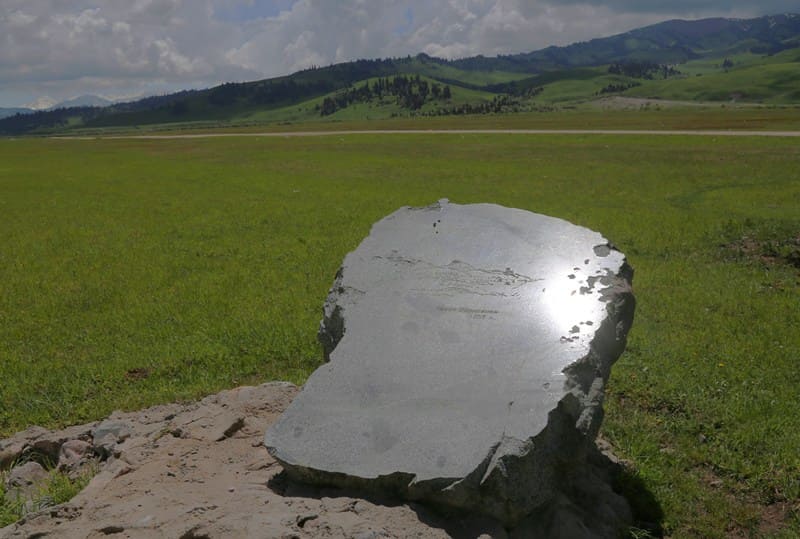
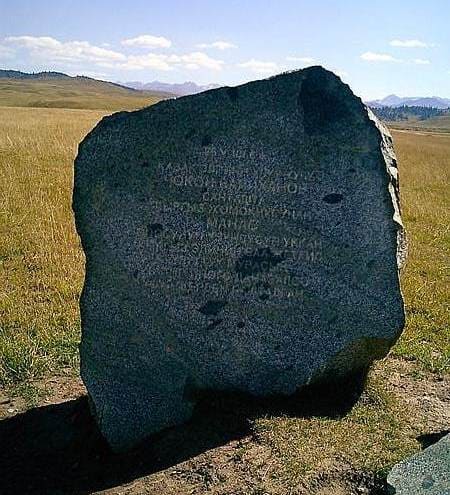
Thus, nearly half a century elapsed between the moment the field recording was made in 1856 and its eventual publication. A commemorative marker dedicated to Valikhanov was later erected near the site where this historical event is believed to have taken place.
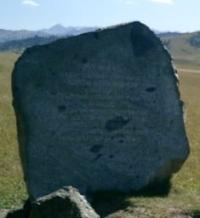
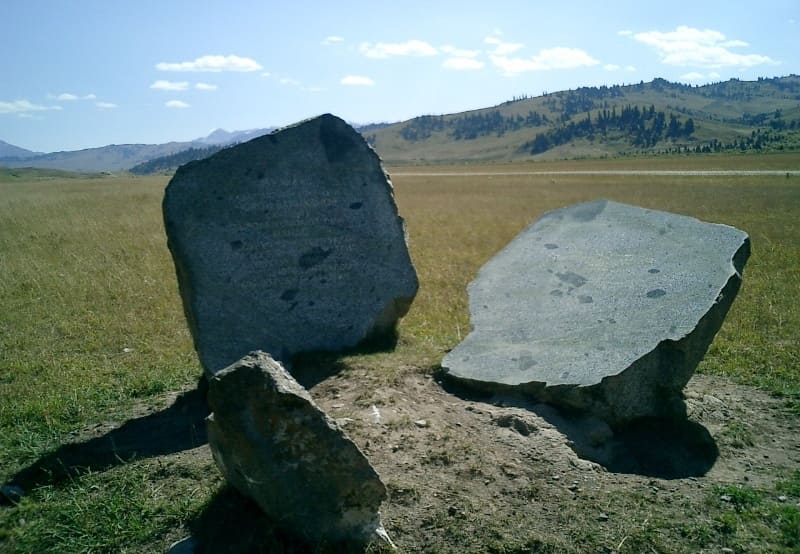
Judging by surviving photographs, it was originally located in the vicinity of San-Tash, serving as a reminder to travelers that the young scholar had passed through this area - a place where, quite possibly, one of the most significant encounters in the history of the study of Kyrgyz culture occurred.
The story of Valikhanov and the “Manas” epic has long transcended being a purely Kazakh or Kyrgyz subject. It represents a shared cultural heritage between the two peoples, tied to a specific historical landscape: the Issyk-Kul Basin and the Tien-Shan mountains.
It would therefore be highly symbolic to restore the memory of this event along Valikhanov’s original route - at San-Tash, near the presumed location where the *Manas* was recorded. Such a monument could be modest in scale and understated in design; the content is far more important than sheer monumentality.
The commemorative stele might bear the following inscription:
“1856.
Chokan Chingisovich Valikhanov
Here, during an expedition to Issyk-Kul, the young scholar first recorded an excerpt from the great Kyrgyz epic, “Manas”.”
The exact spot where Valikhanov encountered the local storyteller remains a matter of conjecture, as historical documents do not allow for a more precise identification. A memorial of this kind would serve as more than just a tribute to Valikhanov.
It would stand as a symbol of the shared history of Kazakhstan and Kyrgyzstan - a testament to the scholarly study of Central Asian cultures and to the moment when a young researcher recognized that an oral folk tradition held the stature of a work of global significance.
Perhaps the time has come for us to work together to restore the memory of this event to the very place where it unfolded - an event whose significance belongs not to one nation alone, but to all. Kazakhstan and Kyrgyzstan are linked by the shared history of the Tien-Shan, common cultural traditions, and the names of explorers who studied the heritage of the peoples of Central Asia.
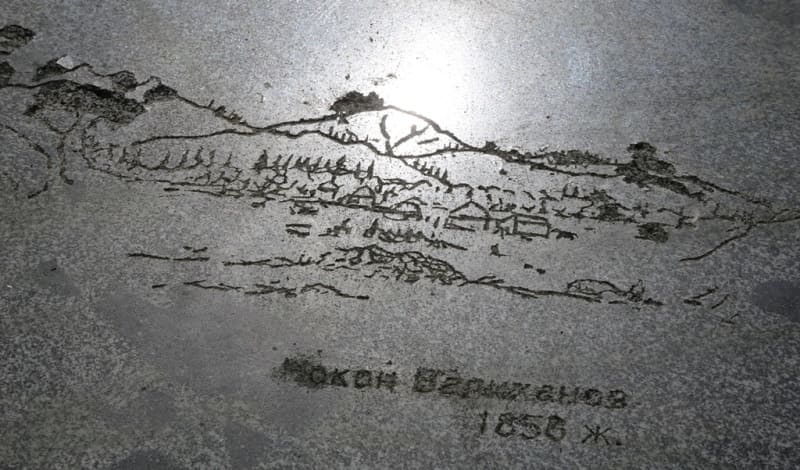
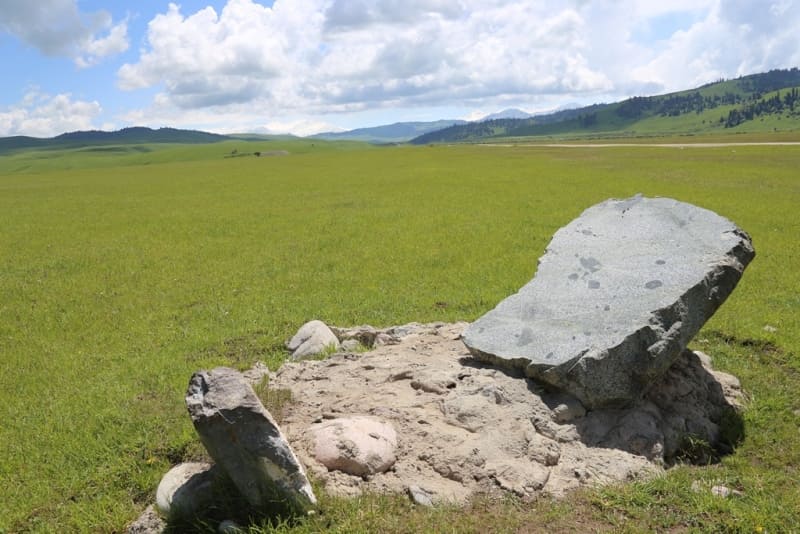
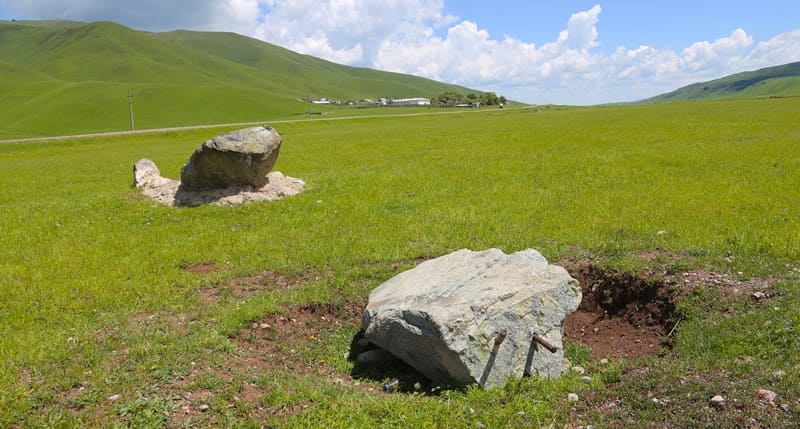
Restoring the commemorative marker dedicated to Chokan Valikhanov at San-Tash would be a fitting gesture of respect for this shared history. As of 2015, a commemorative marker marking Chokan Valikhanov’s time in the San-Tash area was still in place.
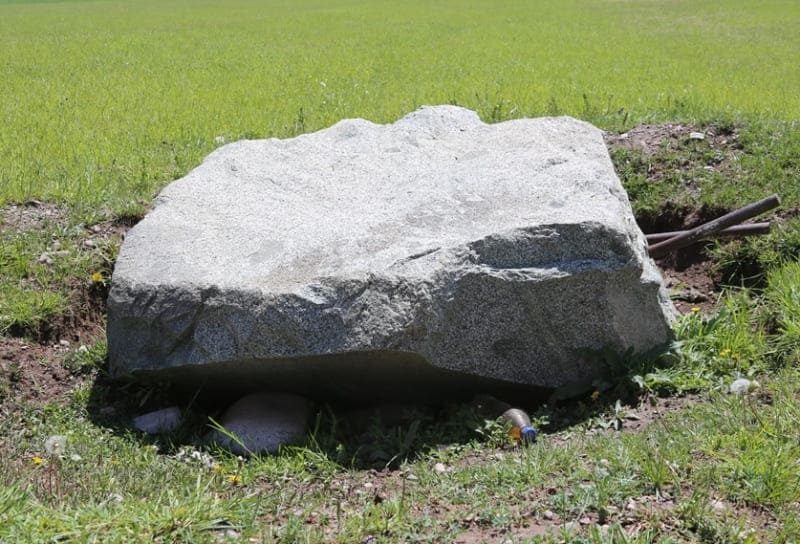
Judging by photographs, it consisted of a stone block set in an open landscape, featuring an engraved image of mountains and a commemorative inscription. Subsequently, this marker disappeared. According to available information, a memorial dedicated to the events of 1916 was later installed on the site where Valikhanov’s marker had stood.
However, it would be premature to claim that Valikhanov’s marker was destroyed specifically due to the installation of the new monument without further documentary evidence.
Authority and photographs by:
Alexander Petrov