




Вы здесь
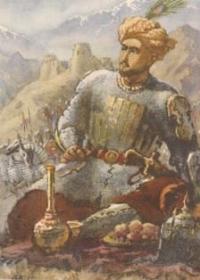
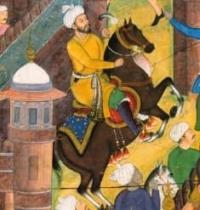
Babur on Samarkand.
Individual tours to Samarkand
"Above Samarkand, there will always be blue skies and golden stars."
Amir Tеmur.
Tours and excursions to Samarkand.
To the east of Samarkand, Timur Beg laid out two gardens: one further away, Sad-Bagh and Buldi, and the other, closer, Dilkusha Garden. From Dilkusha Garden to the Firuz Gate, he built a khiaban and planted poplars on both sides. He also built a large building in Dilkusha Garden; this building depicted Timur Beg's battles in Hindustan.
Timur Beg laid out another garden at the foot of Kuhak Hill, above the Kai-i Gil Canal, also called Ab-i Rahmat. This garden is called Naqsh-i Jahan. When I saw this garden, it was devastated; nothing remained of it except its name. There is also a garden called Bagh-i Chinar to the south of Samarkand, not far from the fortress.
In the lower part of Samarkand are the Bagh-i Shamal and Bagh-i Bihisht gardens. Timur Beg's grandson, son of Jehangir Mirza, Muhammad Sultan Mirza built a madrasah along the outer fortifications outside the Samarkand wall. The tomb of Timur Bek and those of his sons who reigned in Samarkand are located in this madrasah.
Of Ulugh Bek Mirza's buildings inside the fortress, the madrasah and khanaka (surviving) are the madrasah and khanaka. The khanaka has a very high dome; few such high domes are known anywhere in the world. Not far from the madrasah and khanaka, he built a fine bathhouse: it is called "Mirza's Bath."
Its floors are paved with stones of all colors. It is unknown whether there is another such bathhouse in Khorasan and Samarkand. South of the madrasah, Ulugh Bek Mirza built a mosque, called the "Carved Mosque." It is called "Carved" because it is decorated with Islamic and Chinese patterns made from carved and hewn pieces.
Wood. All its walls and ceiling are laid out in this manner. There is a significant discrepancy between the mosque's qibla and the madrasah's qibla. The mosque's qibla direction was likely determined by the stars. Another tall structure built by Ulugh Beg Mirza is the observatory at the foot of Kuhak Hill, which houses an instrument for compiling star tables.
It has three tiers. Ulugh Beg Mirza wrote the "Gurgan Tables" in this observatory, which are now used throughout the world. Other tables are rarely used. Previously, the "Ilkhan Tables" were used, compiled by Khoja Nasir-i Tusi during the reign of Hulagu Khan in Maragha.
Hulagu Khan is the one also called the Ilkhan. Apparently, no more than seven or eight observatories were built in the entire world. Of these, one was built by Caliph Ma'mun, and the "Ma'mun Tables" were written in it. Bitlimus also (once) built an observatory; another observatory was built in Hindustan, during the time of Raja Bikramajit Hindu, in Ujjain and Dhar, that is, in the state of Malwa, which is now called Mandu.
These tables are now used by the Indians in Hindustan. One thousand five hundred and eighty-four years have passed since the construction of this observatory. In comparison with the above-mentioned tables, the tables (of Bikramajit) are less perfect.
At the foot of the Kuhak hill, on the western side, (Ulugh Beg Mirza) laid out a garden known as Bagh-i Maidan. In the middle of this garden he erected a tall building, called Chil-Sutun, in two tiers. All its columns are of stone. At the four corners of this building were added four turrets in the form of minarets; the stairs leading to the top are in these four towers.
In other places there are stone Columns; some of them are twisted and multifaceted. On the upper tier, there is an iwan (also) supported on stone pillars on all sides, and in the center of the iwan is a pavilion with four doors; the raised floor of this building is entirely paved with stone./
Near this structure, at the foot of Kuhak, Ulugh Beg Mirza laid out another garden. There he built a large iwan, and on the iwan he placed a huge stone throne. Its length is approximately fourteen to fifteen square meters, and its height is one square meter.
This enormous stone was brought from very distant places. There is a crack in the middle; it is said that this crack appeared on site after the stone was brought. This garden also contains a pavilion; the entire lower part of its walls is made of porcelain; it is called Chini-Khana.
(Porcelain) was brought from China, by sending a man there. Inside the Samarkand fortress there is another ancient structure, which is called the "Mosque." "with an echo." If you stamp your foot on the ground beneath its dome, an echo will resonate from everywhere beneath the vault. It's an amazing thing, and no one knows the secret behind it.
During the time of Sultan Ahmed Mirza, beks, great and small, also laid out numerous gardens and orchards in Samarkand. Among the gardens, there are few with such clean, pleasant air and A spacious garden, like the garden of Dervish Muhammad Tarkhan. He laid out a garden below the Bagh-i Maidan garden, on a hill above the Kulbe clearing; the entire clearing lies beneath this garden. The garden was laid out with regularly spaced, stepped platforms and planted with beautiful elms, cypresses, and white poplars.
It's a superb location; its drawback is that there's no large stream there. Samarkand is a remarkably well-maintained city. It has one characteristic rarely found in other cities: each trade has its own bazaar, and they don't mix. This is a wonderful custom.
There are good bakeries and taverns there. The best paper in the world comes from Samarkand; all the water for the paper mills comes from the Kan-i Gil. Kan-i Gil is located on the banks of the Siyah-Aba, a stream also known as Ab-i Rakhmat.
Another Samarkand product is raspberry velvet. It is exported to all lands and countries. Beautiful meadows are located around Samarkand. One famous meadow is the Kan-i Gil meadow; it extends east of Samarkand, sloping slightly northward, and extends for one sheri.
A stream, also called Ab-i Rakhmat, flows through the middle of the Kan-i Gil; there is enough water there for seven or eight mills. The banks of this stream are completely marshy. Some say the real name of this meadow is Kan-i Abgir, but in the chronicles it is always written Kan-i Gil.
It is a beautiful plain. The Samarkand sultans always declared it a nature reserve; every year they travel to this meadow and spend a month or two there. Above this meadow, to the southeast, is another meadow called Khan-Yurti. It lies east of Samarkand, about a yigach from Samarkand.
That stream flows through the middle of this plain and flows toward Kan-i Gil. At Khan-Yurt, it forms such a wide bend that there is enough room to set up camp; leaving from there, it is very narrow. Having noticed the advantages of this location, we camped there for some time during the siege of Samarkand.
Another clearing is Budana-Kurugi; it lies between the garden of Dilkusha and Samarkand; another clearing is Kul-i Magak, about two sheris west of Samarkand, with a slight slope to the north; this is also a beautiful clearing. At its edge is a large pond, which is why it is called the Kul-i Magak clearing.
During the siege of Samarkand, when I was stationed in Khan-Yurt, Sultan Ali Mirza stood in this clearing. Another clearing is Kulbe. This clearing is smaller. To the north is the village of Kulbe and the Kuhak River, to the south is the Bagh-i Maidan garden and the garden of Dervish Muhammad Tarkhan, and to the east is Kuhak Hill.
Authority:
"Babur-Nameh." Events of the Year Nine Hundred and Three (1497-1498). Notes by Babur.
“Babur-Name. Notes of Babur. Academy of Sciences of the Uzbek SSR. Institute of Oriental Studies. 1958