



Вы здесь
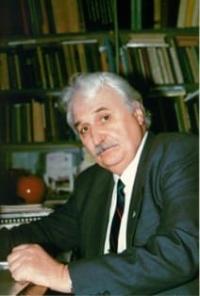
Kovshar Anatoly Fedorovich.
Birds of Talas Alatau.
“I have experienced a lot, and many,
And I have known the price of many things;
Now I drag myself within strict limits
The known size of being.
My horizon is both gloomy and close,
And every day it gets closer and darker;
The flight of my tired thoughts has become low,
And the world of the soul is more desolate and poorer
Along the furrows of reaped arable land with a sickle
You may still find a trace of life;
Perhaps you will find in me a trace of yesterday,
But there is nothing like tomorrow.
Life has given up on me; she can't
Give me back what you took from me
And that the earth is in its deepest graves
Ruthlessly buried forever.”
Pyotr Vyazemsky. "I survived." 1837. The poem was written under the impression of heavy personal losses and deaths of loved ones, including the death of A. S. Pushkin and the death of the poet I. I. Dmitriev in the same 1837. By this time, Vyazemsky had experienced the death of many friends, fellow Decembrists and family members.
Birds of Kazakhstan.
Kovshar Anatoly Fedorovich, Doctor of Biological Sciences, Professor, Head of the Ornithology Laboratory of the Institute of Zoology of the Ministry of Education and Science of the Republic of Kazakhstan. In August 1959, after graduating from the Faculty of Biology at Kharkov University (Ukraine), he came to work in the Aksu-Dzhabagly Nature Reserve, having the experience of two ornithological expeditions led by prof. I.B. Volchanetsky - to the mountainous Crimea (1957) and to the Western Caucasus (1958).
In the reserve he worked as SNS and deputy. director for scientific affairs until January 1967. Anatoly Fedorovich Kovshar was born on March 17, 1937 in Poltava. My father worked as a people's judge. The mother devoted her whole life to her family and raised 4 children.
In 1954, Anatoly Fedorovich graduated from school in the village. Reshetilovka and in the same year entered the biological faculty of Kharkov State University. A.M. Gorky. After graduating from the university in 1959, A.F. Kovshar came to Southern Kazakhstan to work at the Aksu-Dzhabagly Nature Reserve, where he worked as a senior researcher and then as deputy director until January 1967.
The result of the work was the monograph “Birds of the Talas Alatau” (1966), awarded a diploma from the Moscow Society of Natural Scientists and a Certificate of Honor from the USSR Ministry of Agriculture. In January 1967, A.F. Kovshar goes to work in the ornithology laboratory of the Institute of Zoology of the Academy of Sciences of Kazakhstan as a laboratory assistant.
In the autumn of the same year, he successfully defended his Ph.D. thesis based on the monograph “Birds of the Talas Alatau” (supervisor-Prof. I.A. Dolgushin). Since that time, Anatoly Fedorovich’s life has been connected with the Institute of Zoology, where he passed all the stages of an academic scientist - from laboratory assistant to Doctor of Biological Sciences.
From 1967 to 1980 A.F. Kovshar took part in the study of bird migrations at the Chokpak ornithological station, and devoted a lot of effort to writing 3-5 volumes of the report “Birds of Kazakhstan” (he participated in the last two volumes both as an author and as an executive editor).
For this 5-volume work, he and the other authors were awarded the State Prize of the Kazakh SSR in the field of science for 1978. In 1971-1980 A.F. Kovshar studies the biology of reproduction and adaptation of passerine birds to the conditions of the sub-high mountains of the Northern Tien-Shan.
The result of the research was a series of articles, two monographs and a doctoral dissertation on the topic “Reproductive cycles of songbirds in the sub-highlands of the Tien-Shan,” which he defended at Moscow State University. M.V. Lomonosov in May 1980
Since March 1980 A.F. Kovshar headed the laboratory for problems of wild animal protection. He took an active part in the development and adoption of the first Law of the Kazakh SSR on the protection and use of wildlife (1981), in the writing and editing of the second and third editions of the Red Book of Kazakhstan (1991, 1996).
A.F. Kovshar repeatedly participated in the commissions of the Supreme Council of the Kazakh SSR to verify the implementation of legislation on the protection of wildlife in various regions of Kazakhstan; was a member of the working groups tasked with drafting the new Law on the Protection of Wildlife and the Law on Specially Protected Natural Territories of Kazakhstan.
During the 1970s and 1980s, he served as chair of both the Section for the Protection of Terrestrial Animals and the Section for Protected Territories within the Central Council of the Kazakh Society for the Protection of Nature. Simultaneously, from 1979 to 1992, he acted as deputy chair of the Commission on the Scientific Foundations of Nature Conservation in Kazakhstan, which operated under the Presidium of the Republic’s Academy of Sciences.
In these roles, he made significant contributions to the establishment of new specially protected natural territories, the enhancement of operations at existing nature reserves and national parks, the editing and publication of scientific works, and the supervision of research projects. A. F. Kovshar also served as the editor and compiler of the collective monograph “Nature Conservation in Kazakhstan” (1982).
In recognition of his active and fruitful public service during this period, A. F. Kovshar’s name was inscribed in the Golden Book of the Kazakh SSR in 1981. His professional identity as a faunist and ecologist was solidified during his work on volumes 3, 4, and 5 of the multi-author monograph “Birds of Kazakhstan” (1967-1974) a project for which he, along with the other authors (and in his capacity as editor of the final two volumes), was awarded the State Prize of Kazakhstan in 1978.
In the years that followed, A. F. Kovshar continued to pursue an ecological-faunistic approach within ornithology, alongside his primary focus on nature conservation. Thus, during the 1980s and 1990s. Together with the staff of the Wildlife Conservation Laboratory which he headed he surveyed several regions of Kazakhstan that were, from an ornithological perspective, poorly studied.
These included the Betpak-Dala Desert, the southern Lake Balkhash region, the Alakol and Zaysan basins, the steppe territory on the right bank of the Irtysh River in the Pavlodar Region, as well as areas across the Ustyurt Plateau, the Mangyshlak Peninsula, and the Kyzylkum Desert.
Most of the findings from these observations were published in the form of faunistic papers and accounts detailing the biology of little-studied species, such as the ibisbill, the Saxaul jay, and the desert warbler, among others. Shifting his focus toward nature conservation in the late 1970s and early 1980s, A. F. played an active role in drafting and securing the adoption of the first Law of the Kazakh SSR on the Protection of Wildlife (1981).
He was also a co-author of all three editions of the Red Book of Kazakhstan (1978, 1991, and 1996), serving as deputy editor-in-chief for the first two editions and as editor-in-chief for the final one. From 1980 to 1995, while leading the Wildlife Conservation Laboratory’s research into the study and protection of rare and endangered vertebrate species, A. F. Kovshar focused the efforts of a small team (comprising just 10 specialists) on determining the distribution and population size of various species, including the goitered gazelle, houbara bustard, little bustard, Dalmatian and great white pelicans, saker falcon, black-bellied sandgrouse, demoiselle crane, ibisbill, white-tailed eagle, flamingo, grey-headed swamphen, Saxaul jay, desert monitor, Semirechye frog-toothed salamander, and variegated toad-headed agama, among others.
During the field research in which A. F. Kovshar personally participated the method of aerial visual surveying was extensively employed. For several rare species, this approach was used for the first time; for instance, the ibisbill was surveyed from a helicopter in the high-altitude regions of the Tien-Shan mountains.
The laboratory’s decade-long research (1981-1990) yielded a wealth of data on the status of rare vertebrate populations in Kazakhstan. These findings were published in two collections, “Rare Animals of Kazakhstan” (1986) and “Rare Birds and Mammals of Kazakhstan” (1991), as well as in a collaborative monograph titled “Rare Animals of Deserts” (1990).
A. F. Kovshar served as the compiler, editor, and a co-author of these volumes. Concurrently, he organized another unique collaborative study this one focused on vertebrates in urban environments which culminated in the publication of the collective compendium “Vertebrate Animals of Alma-Ata” (1988).
Beginning in the early 1990s, A. F. Kovshar became actively involved in work initiated by A. K. Rustamov an academician of the Academy of Sciences of Turkmenistan to develop. Together with Rustamov, he worked on a four-volume faunistic survey titled "Birds of Central Asia," organizing the efforts of a team of authors over the course of two years and editing the texts for the first volume; he subsequently spent eight years attempting to get this volume published in Almaty.
Efforts to secure funding for this publication continue to this day.
The expedition routes taken by A. F. Kovshar and his colleagues from the Laboratory for Wildlife Conservation Issues covered the Saryishikotrau desert, the Zaysan and Alakol basins, the Betpak-Dala, the Muyunkum and Kyzylkum deserts, the Ustyurt Plateau, and the Mangyshlak Peninsula.
The research findings were published in two collections and a multi-authored monograph titled "Rare Animals of the Deserts" (1990), for which Anatoly Fyodorovich served as compiler, editor, and co-author. Anatoly Fyodorovich himself dedicated significant effort to the study of the demoiselle crane, the Ili ground jay, and various other species.
Following the merger of the Laboratory for Wildlife Conservation with the Laboratory of Ornithology, Anatoly Fyodorovich headed the latter from 1995 until March 2007, after which he served as a chief research fellow for more than a decade. During this period, he led and actively participated in efforts to study key ornithological areas; he was also one of the primary authors and editors of the zoological section of the "National Strategy for the Conservation and Sustainable Use of Biological Diversity of the Republic of Kazakhstan" (Kokshetau, 1999) and the "Red Book" of the Almaty Region” (Almaty, 2006) and the latest the fourth edition of the Red Book of the Republic of Kazakhstan (2008).
A. F. Kovshar devoted significant attention to the training of scientific personnel. For many years, he supervised field training, as well as term papers and diploma theses for biology students from various universities; from 1976 to 1992, he also taught a specialized course on ornithology at Al-Farabi Kazakh National University (KazGU).
In 1985, he published a methodological handbook titled Field Training in Vertebrate Zoology: Part 1 Birds and authored a Biology textbook for the 11th grade. Eight PhD-equivalent (Candidate of Sciences) dissertations were defended under his guidance.
In recognition of his contributions to the training of scientific personnel, A. F. Kovshar was awarded the academic title of Professor in 1993. A. F. Kovshar also made a major contribution to the development of the nature reserve system in Kazakhstan.
Serving as chair of both the Section for the Protection of Terrestrial Animals and the Section for Protected Areas within the Central Council of the Kazakh Society for the Protection of Nature as well as deputy chair of the Commission on the Scientific Foundations of Nature Reserves in Kazakhstan (under the Presidium of the Republic’s Academy of Sciences) from 1979 to 1992 he played a pivotal role in establishing new specially protected natural areas, improving the operations of existing nature reserves and national parks, and overseeing the editing and publication of scientific works produced by these institutions.
Many ornithologists who worked in Kazakhstan’s nature reserves went on to become prominent scientists, thanks to his mentorship and moral support. Anatoly Fyodorovich also placed great emphasis on promoting natural science knowledge and the principles of nature conservation. He has authored 10 popular science books and provided scientific consultation for a number of films about the nature and wildlife of Kazakhstan.
Anatoly Fyodorovich Kovshar is widely recognized not only as a scientist but also as a talented popularizer of knowledge regarding nature conservation. He has authored or co-authored over 10 popular science books, including “Songbirds” (1983), “Aksu-Jabagly Nature Reserve” (1982), “Let’s Talk About Birds” (1984), “The World of Birds in Kazakhstan” (1988), “The Red Book: A Guide for Schoolchildren” (1987), “Nature Reserves of Kazakhstan” (1989), “Wildlife of Kazakhstan” (2003), “Through the Pages of the Red Book of Kazakhstan” (2004), and the children’s encyclopedia “Birds” (2006), among others.
A. F. Kovshar served as the compiler, scientific editor, and author of the general chapters for the five-volume school encyclopedia “Animals of Kazakhstan” (2006-2012). His research findings have been published in over 600 works. He has authored three monographs, contributed chapters to eight collective monographs, and produced the bibliography “Birds of Kazakhstan and Adjacent Territories” (2000) as well as a “Field Guide to the Birds of Kazakhstan” (2015).
It is also worth highlighting A. F. Kovshar’s significant contribution to developing and strengthening professional collaboration with ornithologists in countries neighboring Kazakhstan. One of the notable outcomes of this work was the publication of the first volume of the comprehensive reference series “Birds of Central Asia”.
The story behind the creation of this book, which spanned 13 years, is unique; its publication was made possible solely through the organizational and editorial talents of Anatoly Fyodorovich. In 1993, Anatoly Fyodorovich Kovshar founded “Selevinia” the only zoological journal in Kazakhstan and he has served as its editor-in-chief ever since.
A. F. Kovshar has made a significant contribution to the history of science in Kazakhstan by publishing articles about zoologists in the pages of “Selevinia”. He also authored the reference work “Ornithologists of Kazakhstan and Central Asia: The XXth Century” (2003), the book “Igor Alexandrovich Dolgushin” (2008), and a two-volume memoir titled “Birds. Roads. People” (2014).
Furthermore, A. F. Kovshar organized major conferences dedicated to the memory of I. A. Dolgushin (2008) and M. N. Korelov (2011), as well as the 14th International Ornithological Conference of Northern Eurasia (2015). From 1982 to 1991, A. F. Kovshar served as chairman of the Kazakhstan branch of the Moscow Society of Naturalists.
From 1993 to 2001, he was president of the Kazakhstan-Central Asian Zoological Society. Since 2002, he has headed the Union for the Conservation of Birds of Kazakhstan an organization he founded himself. In 2007, he was elected president of the Eurasian Crane Working Group, and from 2015 to 2018, he served as president of the Menzbir Ornithological Society.
Currently, A. F. Kovshar serves as a chief researcher at the Laboratory of Ornithology and Herpetology of the Institute of Zoology of the Republic of Kazakhstan. Anatoly Fyodorovich Kovshar a laureate of the State Prize of the Republic of Kazakhstan, a renowned zoologist and ecologist, and an expert in nature conservation and protected areas continues to publish the annual zoological journal “Selevinia”, writes popular science books, and participates in the laboratory’s research activities.
In total, A. F. Kovshar has published over 340 scientific and popular science works, culminating in the bibliographic compilation “Birds of Kazakhstan and Adjacent Territories” (2000). The birds of the Tien-Shan have always remained his primary research interest; 15 years after beginning his work in the deserts, he returned to the study of montane avifauna in 1994.
As part of a Kazakh-Chinese expedition, he visited the Eastern Tien-Shan, and between 1998 and 2000, as a member of a Kyrgyz-German zoological expedition, he surveyed the Western, Inner, and Central Tien-Shan, as well as the Alay Valley (followed by the Tarbagatay and Dzungarskiy Alatau ranges in 2001-2002).
Throughout these years, alongside his primary professional duties, A. F. Kovshar was actively involved in nature conservation and the management of protected areas. In the 1970s, he served as chair of both the Section for the Protection of Terrestrial Animals and the Section for Protected Areas within the Central Council of the Kazakh Society for Nature Conservation.
From 1979 to 1992, he was the deputy chair of the commission on the "Scientific Foundations of Nature Conservation in Kazakhstan" under the Presidium of the Academy of Sciences of Kazakhstan. In this capacity, he co-authored and edited together with the commission’s chair, Academician B. A. Bykov the collective monograph “Nature Conservation in Kazakhstan” (1982).
Furthermore, commissioned by the Presidium of the Academy of Sciences of Kazakhstan, he led an expedition (1983-1984) to survey the territory designated for the proposed Betpak-Dala Nature Reserve. As deputy chair of the Scientific Council on Nature Reserves under the Kazakh Main Administration for Hunting and Nature Reserves (Kazglavokhota), A. F. Kovshar organized the publication of a series of scientific works on nature reserves.
These included the ornithological collection "Biology of Birds of the Naurzum Nature Reserve” (1980) and two ornithological monographs “Birds of the Korgaldzhin Nature Reserve" (1985) and “Birds of the Markakol Basin” (1989) for which he served as the editor-in-chief.
From 1959 to 2001, he participated in every All-Union Ornithological Conference (starting with the second one), as well as the 18th (Moscow, 1982) and 22nd (Durban, South Africa, 1998) International Ornithological Congresses. At the opening of the international conference "Current Issues in the Study and Conservation of Birds in Eastern Europe and Northern Asia" held in Kazan in January 2001 and designed to revive the traditions of the former All-Union conferences A.F. delivered a plenary presentation on behalf of the Organizing Committee, titled "Ornithology of Central Asia and Kazakhstan at the Turn of the Third Millennium."
In 2000, A.F. initiated the creation of a public organization, the "Union for the Conservation of Birds of Kazakhstan," modeled after similar structures in the Russian Federation and Ukraine. The Union for the Conservation of Birds of Kazakhstan was officially registered with the justice authorities in March 2002.
The new organization’s first step was to enter into a cooperation agreement with the "Remez" Bird Enthusiasts Society (chaired by V.V. Khrokov) to conduct joint work on identifying and studying key ornithological areas in Kazakhstan. A preliminary agreement was reached to secure support for this research from the West Asian regional branch of Bird Life International and the German Nature Conservation Association (NABU).
Key publications:
“Birds of the Talas Alatau”. Alma-Ata, 1966, 437 pp.;
Contributions to the multi-volume work “Birds of Kazakhstan” (vols. 3, 4, and 5; 1970, 1972, 1974). Individual color-marking as a promising method for studying bird biology. In: “Bird Migrations in Asia”. Alma-Ata, 1976, pp. 227–232;
Polycyclic breeding in songbirds in the sub-highland regions of the Tien-Shan. “Zoological Journal”, 1977, No. 7, pp. 1071–1076;
“Songbirds in the Sub-Highland Regions of the Tien-Shan“ (Essays on Summer Life of Common Species). Alma-Ata, 1979, 194 pp.;
“Breeding Characteristics of Birds in Sub-Highland Regions” (Based on Data from Passeriformes in the Tien-Shan. Alma-Ata, 1981, 259 pp.;
“On the biology of the Ibisbill”. (Ibidorhyncha struthersii Vig.). Bulletin of the Moscow Society of Naturalists (MOIP), Biological Section, 1980, Issue 5, pp. 25-33;
“Cranes (Common Crane and Demoiselle Crane) in Kazakhstan and Central Asia”. In: “Cranes in the USSR”. Leningrad, 1982, pp. 111-131;
“Dominant species in the avifauna of the deserts of Kazakhstan”. In: “Proceedings of the 10th All-Union Ornithological Conference”, Part 1. Minsk, 1991, pp. 85-86;
“The avifauna of Kazakhstan under conditions of anthropogenic landscape transformation”. In: Zoological Research in Kazakhstan. Alma-Ata, 1993, pp. 113-143;
“Ornithological complexes of the Betpak-Dala Desert”. Selevinia, 1993, Vol. 1, No. 1, pp. 37-49. V. A. Kovshar
Authority of information:
S. N. Erokhov, N. N. Berezovikov, A. P. Gistsov, A. S. Levin. “Anatoly Fyodorovich Kovshar” (On the occasion of his 70th birthday). Russian Journal of Ornithology, 2007, Vol. 16, Express Issue 379: 1298-1302.
https://rbcu.ru/information/272/19166/