




Вы здесь
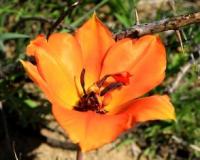
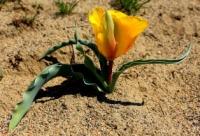
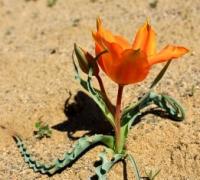
Excursion to tulips lehmanniana.
Excursions on Zhambyl province.
"And all the girls donned their finest attire,
And the valleys, covered in tulips, like a colorful carpet,
In the lakeside lowlands, nightingales sing,
Cuckoos answer them from the mountains at dawn."
Abai (Ibrahim) Kunanbaev. "Spring."
Brief description of excursion route of excursion to Tulips lehmanniana:
Taraz - settlements Asa - Kumtyin - barchan Kumburul - Taraz.
Distance of route: 72 km.
Season: beginning, until mid-April.
Best time for excursion: beginning April.
Advanced reservation: for 48 hours.
Duration of excursion: 1 day.
Detailed program of excursion in Zhambyl province:
Botanical Tours behind tulips of Greigii.
Transfer: town of Taraz - settlements Asa - Kumtiyn - barchan Kumburul (36 km).
Our way from Taraz conducts on northeast. Beyond Taraz we pass an industrial zone of city with Zhambyl phosphatic factory and our way lays to settlement of Asa to an administrative centre of area Zhambyl. Having passed settlement of Assa behind settlement Kumtiyn we turn off from the basic line on road the leader to settlement Zhuma and lake Bilikol.
Soon from road high barchan Kumburul to the left of road is visible, it and is our place of excursion where we be gets acquainted with tulipa lehmanniana. On barchan the old asphalt road which hangs above sandy sand-pit conducts. Behind barchan from the western party the river of Asa going to lake Bilikol proceeds.
Walks in vicinities of barchan Kumburul searches of tulip Lemana. Lunch on coast of the river of Asa.
Returning to Taraz (36 km).
Botany-travellers described Tulipa lehmanniana.
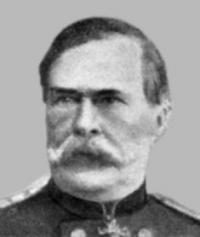
Russian botanist Karl Evgenyevich Merklin.
(1821-1904) for the first time has described Tulip in 1854 on botanical finds from vicinities of Bukhara. The specific name is given in honour of Alexander Adolfovicha Lemana's first collector (1814 - 1842), Russian botany, which in 1840 - 1842.
Collected plants of Central Asia for the Petersburg botanical garden. Coming back from this expedition, A. Leman has died of fever in Simbirsk in the age of 28 years. Its collections were processed by A.A. Bunge (1803 - 1890), having made the list from 1526 kinds, including 11 sorts new to a science and 159 new kinds.
Leman Alexander Adolfovich (Lehman).
Traveller, the candidate of philosophy, was born on May, 18th, 1814 in Derpt, has died on August, 30th, 1842 in Simbirsk. Father Lemana the known doctor; under its management its son who in the childhood was to have an inquiring nature has received initial education and loved natural sciences.
In 1833 it has acted on natural faculty Derpt of university and during university rate annually made excursions in vicinities Derpt in the summer. Upon termination of formation in 1837 Leman has received and with pleasure has accepted the offer of professor Behr was its teacher, to join an expedition preparing on New Land and in the spring 1837 has acted with expedition.
On east coast of the White sea, through Snow Mountain expedition has arrived on June, 21st to coast of Lapland, then, on July, 17th, on the western coast of New Land at Matochkin strait. Having returned to Petersburg in the autumn of the same year, Leman in 1838 has been invited Century And. Perovskii to investigate the Orenburg edge.
In the winter 1839 it has made campaign to Khiva together with Perovskii through impassable weights of snow, in the spring 1840 has gone on east coast of Caspian sea in Is new-Aleksandrovsk, in which vicinities it made various excursions and has collected rich materials; then has made research of southern slopes of Urals Mountains and steppes down to the Silver-tongued orator.
Winter 1840-1841 Leman has lead in Orenburg, being engaged in putting in order of the collected subjects. When in the spring 1841 mission of mountain officials has been sent to Bukhara, to it has adjoined and Leman as the scientist, and has lead in different districts of Bukhara more than year.
Coming back in Derpt, it has died in Simbirsk of "nervous fever ", all on 28-th year of a life. Researches Leman very valuable, have not been published. Part of materials Leman bequeathed Academies of sciences, it has left the botanical collections to the professor of botany in Perpt Bunge, other materials and descriptions of travel are published after its death by its comrades-academicians.
Its travel to Bukhara has acquainted scientific world with almost unknown earlier life bukhars. Collected Leman zoological and geo-gnostic collections have been described Behr and Brandt. After death Leman its following works are published:
"Reise nach Buchara und Samarkand" 1841 and 1842 of SPb. And "Lehmanii reliquiane botanicae sive enumeratio planarum in itinere per dеserta Asiae mediae ab. Lehmann annis 1839-1842 collectarum". Rudolfshtadt 1848 the Description of the Asian plants found Leman, are published Bunge in "Beitrag zur Kenntniss der Flora Russland's und der Steppen Centralasiens. S.Pet. 1852".
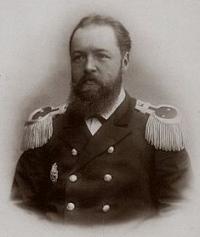
Aleksandr Aleksandrovich Bunge (October 28, 1851-1930).
Doctor of Medicine, zoologist and explorer, a distinguished Arctic explorer, son of the renowned Aleksandr Andreevich Bunge, botanist, honorary academician of the St. Petersburg Academy of Sciences, and professor at the University of Dorpat.
Born in Dorpat, he graduated from the Faculty of Medicine at the University of Dorpat, and defended his dissertation for the degree of Doctor of Medicine in 1880. From 1877 to 1881, he worked as a physician in hospitals in Dorpat and St. Petersburg.
After becoming a naval officer, Bunge served for many years on various naval ships, serving as flagship physician to the staff of the commander of the Pacific Ocean squadron, the staff of the commander of the combined detachments of the Baltic Sea, and as flagship physician of the Baltic Fleet.
He also participated in the Russo-Japanese War. In 1908, a Russian squadron provided aid to the inhabitants of Sicily, who had suffered from a massive earthquake. The squadron's flagship physician, Bunge, played a crucial role in this. However, he made history primarily for his research in the Arctic.
In 1882, Bunge was invited to work at the Sagastyr expeditionary station, established in the Lena Delta as part of the First International Polar Year, where he led meteorological observations and also conducted botanical and zoological research.
After his first winter in the summer of 1883, he traveled to the Bykovskaya channel of the Lena Delta, the site where, in 1806, naturalist Mikhail Adams (see) recovered the first mammoth skeleton in the history of science. Adams had kept the skeleton in the St. Petersburg Kunstkamera and later in the Zoological Museum of the USSR Academy of Sciences.
En route, Bunge explored the branches and islands of the Lena Delta and visited the site of D. De Long's last camp. On this trip, he collected fossil animal bones and exceptionally rich mineralogical and botanical collections. By decision of the IRGO, the expedition remained for a second winter.
In 1885–1886, Bunge led the Academy of Sciences expedition to the New Siberian Islands and personally explored Kotelny and Bolshoy Lyakhovsky Islands. This was the first expedition to the New Siberian Islands since P. F. Anzhu's expedition of 1820–1823 and, in fact, the first scientific expedition aimed not only and not so much at coastal surveys, but at a comprehensive study of the archipelago.
Bunge's New Siberian expedition conducted extensive meteorological, biological, and geological research. Bunge's assistant was E. V. Toll, who explored the eastern part of the Anzhu Islands. The expedition yielded an exceptionally rich collection of natural data on the New Siberian Archipelago.
The scientific community highly praised the expedition's results. In 1888, the IRGO awarded Bunge the Count F. P. Litke Medal, and the expedition's meteorological observations were used by F. Nansen during his famous voyage on the Fram.
In 1892 and 1895, Bunge participated in the Yenisei Expedition, which aimed to deliver construction materials for the Siberian Railway via the Kara Sea. Returning from the Yenisei Expedition, he took part in a three-year circumnavigation of the globe on the cruiser Rurik.
After his 1900 voyage, Bunge received an invitation to join a Russian expedition to "degree measurements" in Spitsbergen. In addition to his primary medical duties, he conducted magnetic and meteorological observations, collected flora and fauna, and studied Spitsbergen's climatic features and their impact on the human body.
Returning from Spitsbergen at the end of 1900, Bunge did not remain in St. Petersburg for long. In 1901, he departed on a long voyage to the Pacific Ocean with the high rank of flagship physician. During the Russo-Japanese War, Bunge survived the entire siege of Port Arthur.
After the fortress's surrender, he returned to St. Petersburg via Shanghai and immediately accepted an offer to participate in an expedition to the mouth of the Yenisei River. In 1912, Bunge served on the Naval Ministry commission reviewing G. Ya. Sedov's expedition to the North Pole.
He was the only member of the commission to support the project. On his recommendation, P. G. Kushakov was included in Sedov's expedition. In 1914, "due to age limit," Bunge retired and lived out his days in his homeland of Estonia, where he owned a farm.
But at "age limit," he could no longer run the farm, so he sold it and moved to Reval. He died there, just before reaching 80 years of age. An island (Bunge Land) between Kotelny and Faddeyevsky islands. Discovered in 1811 by Ya. Sannikov, later named by E. V. Toll.
A peninsula on Russky Island. Arch. Nordenskjöld. Named in 1901 by E. V. Toll, who initially mistook it for an island. A glacier on West Spitsbergen Island. Named in 1899-1901 by the "degree measurement" expedition. A glacier on the western coast of the northern island of Novaya Zemlya.
Named in 1913 by G. Ya. Sedov. A mountain on the island of West Spitsbergen in the eastern part of Heera Land. Named in 1899–1901 by members of the "degree measurement" expedition. Cape (Doktorsky) in the northern Lena Delta is apparently named in Bunge's honor.
Note:
Author program is Alexander Petrov. Copying and introduction - only from sanction of author.
Alexander Petrov
photos by: