




You are here
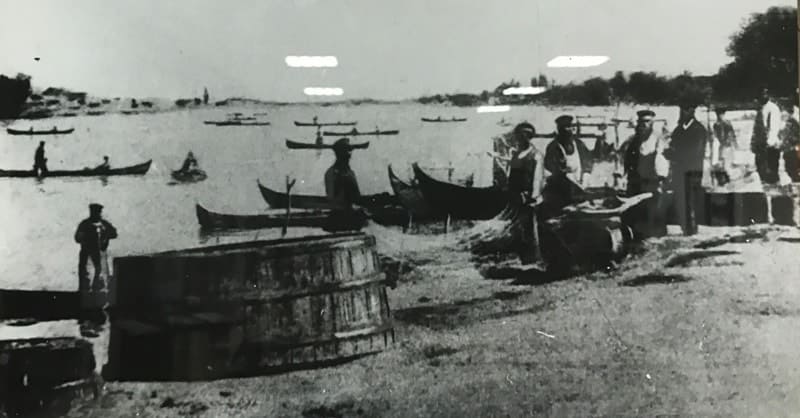
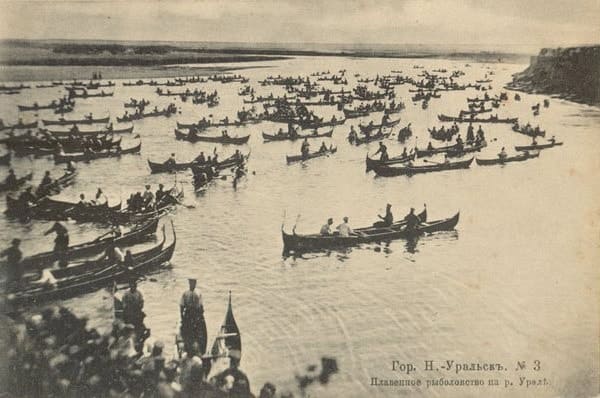
Yaitsky fishing on Ural River.
Tour on Ural River in Atyrau.
"This river is considered the most fish-rich in the country."
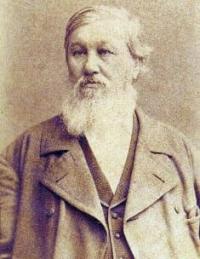
V.N. Tatishchev.
"The Ural River is like a huge ventnet, the wings of which are the shores of the sea and the rows of nets along the buoy lines. Whatever enters that ventnet almost never returns, but becomes the Cossacks' sure prey."
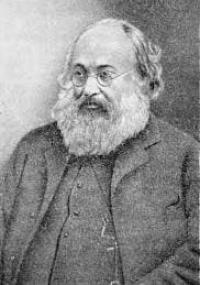
N. Ya. Danilevsky.
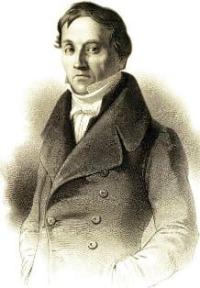
"Danilevsky remained in Tiflis after my departure in December 1855 to use the archive for the last eight years of the fishing lease on the Kura. He returned to Astrakhan only in March 1856 and was then sent to the Ural River, which we had previously only briefly visited at its mouth. Danilevsky not only thoroughly explored the entire Ural delta but also traveled upriver, all the way to Orenburg."
Karl Baer "Autobiography."
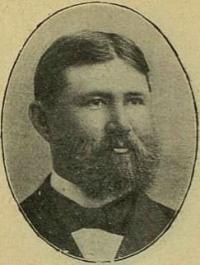
"Just as agriculture, which feeds the majority of Russia's population, is not a simple occupation in the eyes of the common people, but a sacred one, surrounded by a special poetic aura, so fishing among the Ural Cossacks, still the population's favorite pastime, has its own poetry: it invariably appears in almost all local folk songs."
N. A. Borodin.
Boat ride on Ural River in Atyrau.
Yaik has long been famous for its fisheries. Even in the Middle Ages, Russians came here to fish. Organized fishing on the river has existed since the 18th century. Initially, the Cossack industry was concentrated in the area of the Yaitsky town.
In the lower reaches, near Guryev, Astrakhan fishermen built an uchug. It consisted of a log barrier across the entire river. Initially, the uchug had gates 6 to 8 fathoms wide on both sides, but it was later converted into a continuous barrier. Fish from the sea could only pass into the river through side channels.
According to legends preserved among the Cossacks, the fish pressed against the uchug so hard that they were forced to disperse them with cannons. The Gurevsky uchug became the cause of frequent disputes and quarrels between the Yaik Cossacks and the Astrakhan fishermen.
In 1743, at the insistent demands of the Yaik Cossacks, a decree was issued according to which the Gurevsky uchug was finally destroyed, and the Yaik Host received the right to own all the fishing grounds from the Yaitsky town, later renamed Guryev.
It should be noted that near Uralsk, they established their own uchug in the summer and fall, which prevented the red fish from escaping upstream beyond the Cossack domain. It existed until 1918. Gradually, a completely unique fishing system developed on the Yaik.
By the XVIIIth century, the Cossack river was one of the leading fish producers in Russia. The Cossack fishing system was It was introduced by the first Orenburg governor, I. I. Neplyuev, and represented a strictly organized fisheries industry. It was designed to put all participants in the fishing industry under equal conditions.
The laws of Cossack fishing allowed for the catching of fish from a certain area of the river with the least expenditure of labor and time and at the right time of year, when fish and its products were most valuable. Fishing on the Yaik in the mid-18th century was carried out four times a year.
The first catch took place in the spring. It usually began in mid-April after the ice had melted and ended in June. This was the so-called spring flood, when the Cossacks caught stellate sturgeon with drift nets from boats. Large sturgeon: beluga, osetra, and thornback sturgeon, caught in the nets were released back into the river.
The second catch - the autumn flood - began around October 1 and lasted for about four weeks. Then, from the end of November until mid-December, river fish were caught with seines for domestic use. From January 1st until the end of February, the most important fishing season - the gaffing - took sturgeon and beluga with gaffs in yatovy (wintering pits).
The gaffing began on a designated day, when all serving and salaried Cossacks assembled on horseback at the military chancery. Harnessed to a sleigh. The signal to begin the gaffing was a cannon shot, after which the entire Cossack force rushed to the river.
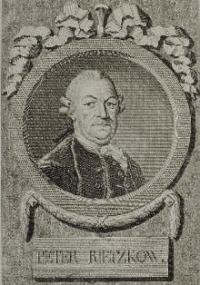
Each made as many holes in the ice and gaffed as many as they could, without hiring laborers. A long pole with a sharp hook was used for gaffing. With it, huge fish were impaled and pulled onto the ice. The gaffing sometimes lasted up to a month, and, as Rychkov noted, a single Cossack could land around 40-50 sturgeons and beluga sturgeons.
The caught fish - fresh-frozen in winter and salted in spring and summer - as well as the caviar and glue made from them, were shipped in huge quantities to Moscow and other Russian cities. Merchants were especially eager to attend the gaffing, when the freshly caught fish were sold right there on the ice.
In the mid-XIXth century, the need to develop uniform fishing legislation became urgent in Russia. Academician K. M. Baer began collecting data on fisheries. From 1853 to 1856, he conducted a detailed study of the fish resources of the Caspian Sea and its tributaries.
Baer studied the ecology of the main commercial fish species in the Ural-Caspian region, tracing their spawning runs, spawning grounds, and wintering areas. He identified the causes of declining catches in the fisheries - the destruction of juveniles, overfishing, and the closure of spawning grounds for breeders -and developed recommendations for sustainable fisheries management.
At the same time, based on his proposals, the basic principles for protecting sturgeon in the Ural River basin and maintaining their high abundance were formulated. Working alongside Baer, N. Ya. Danilevsky not only explored the Ural Delta but also traveled up the Ural to Orenburg.
Based on these studies, Danilevsky came to the sad conclusion: "The Ural River is like a huge ventnet, the wings of which are the seashore and the rows of nets along the buoy lines. Whatever enters that ventnet almost never returns, but rather becomes the Cossacks' sure catch..."
Danilevsky believed that the characteristic features of Cossack fishing were the desire to catch the maximum amount of fish in the river twice a year, using the cheapest methods and prohibiting summer fishing. At the same time, he highly valued the organization and discipline of fishing in the Urals and the fair distribution of catch among fishermen.
In 1860-1862, N. A. Severtsov studied the Ural River. He presented the results of his research in the article "The Life of Red Fish in Ural Waters and Its Importance for the Order of Ural Fishermen." In it, Severtsov described in detail the spring stellate sturgeon floodplain of 1861.
The Cossack army, expecting a large fish run, arrived near Guryev on April 15th that year. There were 182 fishing huts along a stretch of approximately 70 km. By April 20th, the "stellate sturgeon fishermen" had occupied a front of up to 100 km.
The stellate sturgeon fishery began, which, as in previous years, ran in large schools that year. Thus, the entire spawning stock of stellate sturgeon was destroyed in the lower reaches of the river. Using his observations, Severtsov developed regulations that would limit the movement of some stellate sturgeon to their spawning grounds.
In 1894, the "Regulations on Fishing Techniques in the Ural Cossack Army" established the position of military fisheries technician for the first time. The already renowned ichthyologist and researcher N. A. Borodin was appointed to this position.
As early as 1884, Borodin began work on the artificial breeding of stellate sturgeon in the Urals, and in 1891, he successfully conducted experiments on the fertilization of sturgeon eggs. He was also the first to describe a species rare in the Urals - the Persian sturgeon.
In Uralsk, Borodin established an ichthyological laboratory and assembled the first collection of all the Ural fish species. Borodin strongly opposed the achaina fishery near the mouth of the Ural River, which, in his opinion, resulted in a significant catch of young sturgeon.
This type of fishing became widespread in the second half of the 19th century. It used set nets made of thick hemp yarn, which were lowered under the ice. The achaina fishery lasted from late December to March 1. Cossacks would undertake this extremely dangerous trade across the sea ice with sleds, sometimes 30-50 km from the shore, and would set their nets at the very edges of the ice, where the catch was most profitable.
According to Borodin, 30-40 families of large entrepreneurs, who also employed hired Cossacks, participated in the akhaiina fishery. With Borodin's assistance, akhaiina fishing was banned in 1895. Instead, fishing with spreader seines, which preserved the young sturgeon, was permitted.
This innovation allowed 5,000-6,000 Cossacks to personally participate in the catch. N. A. Borodin carried out a variety of activities to improve fisheries in the Urals. In particular, from 1894 to 1898, he organized the rescue of young carp and other fish that were perishing en masse in floodplain lakes and ponds.
There were three main negative factors in the pre-revolutionary fishery in the Urals. The first was the winter fishing of sturgeon in their wintering grounds, which resulted in the severe depletion of winter stocks of sturgeon and beluga. The second was the spring floodplain, which affected the reproduction of stellate sturgeon, as productive species were caught.
Requirements necessary for preserving fisheries resources. For example, during the spring stellate sturgeon fishery, all other sturgeon species caught in the nets were thrown back into the water, as it was believed that they were more profitable to catch in winter.
Moreover, every participant in the fishing operation was responsible for enforcing this rule, and any offenders were severely punished.
N. A. Borodin wrote eloquently about the importance of fishing in the lives of the Ural Cossacks:
"Just as agriculture, which feeds the majority of Russia's population, is not a simple occupation in the eyes of the common people, but a sacred matter surrounded by a special poetic aura, so fishing among the Ural Cossacks, still the favorite pastime of the population, has its own poetry: it invariably appears in almost all local folk songs."
At the end of the 19th century, marine fishing began to have a significant impact on sturgeon numbers in the Urals. While river fishing caught only adult specimens, marine fishing steadily depleted the entire Caspian sturgeon stock, including juveniles.
The scale of marine fishing rapidly increased, and by 1912-1913, overfishing had led to a sharp decline in catches. The outbreak of World War I led to a decline in marine fishing, which facilitated the restoration of sturgeon stocks in the Caspian. In the early 1930s, marine fishing again experienced widespread development.
The total length of self-catching gear used in the Caspian Sea during those years reached 7,000-8,000 km, and the length of ditch nets exceeded 10,000 km! For most of the year, sturgeon feeding areas and migration routes were blocked by continuous curtains of self-catching hooks and ditch nets. In the late 1930s, due to the depletion of sturgeon stocks, sea fishing ceased.
However, in the late 1950s and early 1960s, commercial fishing for semi-anadromous fish using nylon nets developed, entangling and killing enormous numbers of juvenile sturgeon. Since the mid-1960s, a biologically based fishing regime has been implemented in the Ural-Caspian Sea.
This envisages a complete cessation of catches of anadromous and semi-anadromous fish in the sea and its Ural region. Commercial sturgeon fishing was concentrated in several fishing grounds near Guryev. This allowed sturgeon catches in the Urals to reach 100,000 centners per year, accounting for more than one-third of the global catch of this valuable fish.
For comparison, it should be noted that at the beginning of the 19th century, 150,000 centners of sturgeon were caught in the Urals, 50,000 in the early 1930s, and only 20,000 centners in the mid-1960s. These data indicate that over the past two centuries of organized fishing, the Urals has not lost its importance in sturgeon production.
On the contrary, after the regulation of the Volga River, its share of the sturgeon industry in the entire Caspian Basin increased sharply.
Authority:
A.A. Chibilev. "Ural River." Leningrad: Gidrometeoizdat, 1987.