




You are here
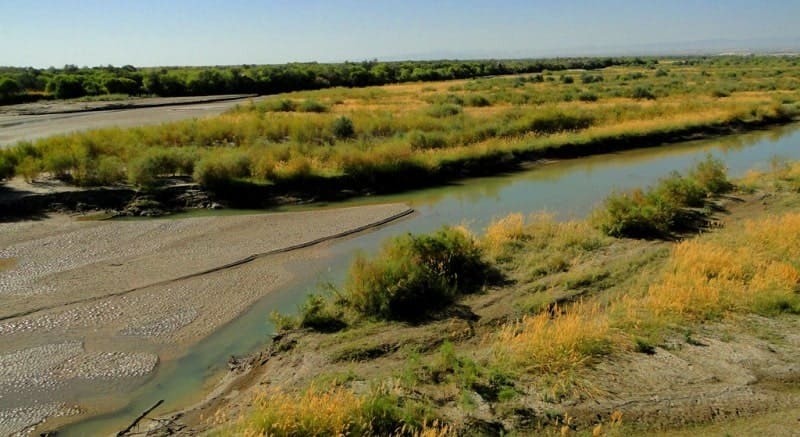
Delta of river Ili.
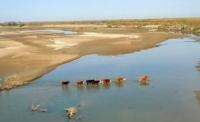
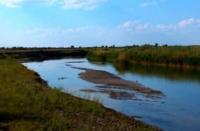
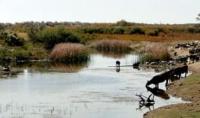
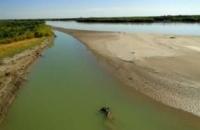
Photos by Silk Road Adventures in Kazakhstan.
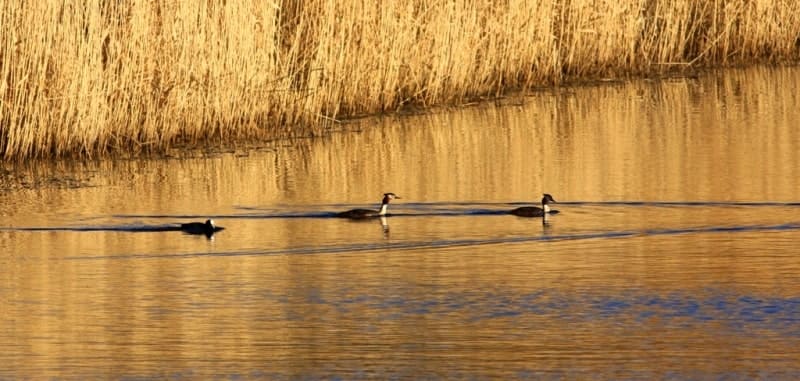
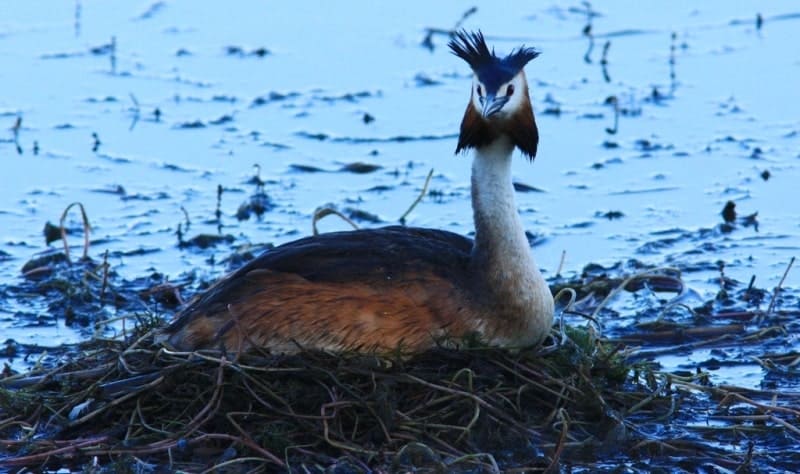
"Closer to the edge of the Balkhash reeds, sandy hills appear among the steppe. After walking about eight miles from the village, we approached the reeds, a wide strip bordering the southern shore of Lake Balkhash to the Chit-Bakanas ravine. From the top of a sandy hill, a veritable sea of greenery appears before the observer's gaze. Far, far away, to the horizon to the south and east, an endless thicket of reeds stretches. Its dark foliage, like the sea, ripples with a dull sound in a strong gust of wind. In places, large sandy hills rise up, and the smooth surfaces of small lakes glimmer, serving as a haven for ducks, coots, and great crested grebes."
A. M. Nikolsky. "Journey to Lake Balkhash and the Semirechye Region." 1885.
"But, agitated, free and strong,
As if a wave splashing in the open, -
You, like the sea itself, are wide
And bottomless, boundless, like the sea.
There is no end or limit to you."
Saken Seifullin. "Dream." June 6, 1915.
Tours to Ili River Delta.
Ili Delta is located at an altitude of 341 to 347 m. a. s. l., in southeastern part of Lake Balkhash, in Balkhash district of Almaty region.
Channels in Ili Delta.
Iir, Karaozek, Bayminey, Karagailyk, Zhideli, Terisakkan, Ketpenkaldy, Kokozek, Shybyk, Shegorai, Kertubel, Martuk, Bokkara, Svetlaya, Dosybaiketken, Arystan, Naryn, Sortumsyk, Kuchaysky Naryn, Tersken, Shirokiy Naryn, Kaldayaksky Naryn, Yerimbay, Deadlock Krypsalo, Bazarbay and others.
Lakes in Ili delta.
Salambay, Koskyzyl, Bogushinnoe, Kogalykol, Asanbay, Shubarkunak, Bolshoe and Maloe Naurusbaevskoe, Zhuankol, Shinarkol, Kanbaktai, Zhaksylyk, Sinee, Beloe, Trekhgrannoe, Salambay, and others.
The Ili Delta is a unique natural area in Kazakhstan where the large Ili River flows into Lake Balkhash, forming a vast, wetland area rich in branches and tributaries, important for biodiversity, with plans to establish a national park. This is not just a "delta" in the general sense of the word, but a specific, protected ecosystem that is the key source of water for Lake Balkhash.
The Ili Delta is one of the richest natural complexes in Semirechye. The river, dividing into several branches, occupies a vast expanse: the delta is approximately 120 kilometers long, 90 kilometers wide, and has a total area of approximately 6,500 square kilometers.
The view of the river delta from above is unique. Salt and freshwater lakes with water ranging from brown to ultramarine, sparkling white patches of salt marshes, yellowing reed beds, and green tamarisk groves against the light background of sand create a beautiful, unforgettable color scheme and a unique composition.
The Ili Delta never remains unchanged. Like almost all desert rivers, the Ili flows without additional feeding, eroding sandy and clayey banks. Particles of silt, clay, and sand suspended in the water, giving it the color of coffee with milk, settle to the bottom, gradually raising it.
The river begins to deviate from its channel, eroding and collapsing the banks, and finally carving a new path for itself. And so it goes on forever. The same thing happens in the delta. Once, the Ili and Topar were the most full-flowing tributaries.
Currently, the maximum water flow occurs through the Jideli, Ir, Baymenei, and Shubarkunan channels - the delta is shifting from the southwest to the northeast. At the beginning of the Quaternary, the delta occupied a different geographic position.
Its three main branches, now called bakanas (dry riverbeds) - Naryn-Bakanas, Orta-Bakanas, and Shet-Bakanas - were located much further east than they are today. Together with smaller riverbeds, they formed a vast triangle shaped like the Greek letter "delta," with its base near the shores of Lake Balkhash and its apex south of the Karshintal tract, near the village of Bakanas.
Now, only the bakanas remain of the ancient delta, cutting through the Saryesik-Atyrau Desert.
Vegetation of Ili Delta.
The banks of the channels and inter-dune lakes of the modern Ili Delta are overgrown with impenetrable thickets of reeds and cattails, and unique plant communities have formed on the sandy mounds and ridges. Here grow tamarisk with flowers ranging from delicate pink to dark lilac, chingil with its characteristic rattle-like fruits, and saxaul.
Common species include dogbane, teresken, saline wormwood, djantak, reed grass, and other species. Rare plants include ferula taukumensis, meyer's clumpflower, light yellow rindera, and vesiculosus aldrovanda.
As one moves south toward the beginning of the delta, riparian vegetation appears along the banks of the channels:
narrow-leaved oleaster, several species of willow, chingil, honeysuckle, rose hips, teresken, juzgun, licorice, and chyi.
The trees and shrubs here are densely entwined with clematis, a vine native to the riparian forests. The impenetrable thickets of the riparian forests provide an excellent refuge for many animals, whose lives can be observed here year-round. Poplar groves are particularly impressive.
Poplar groves are unusual in that their leaves are of varying shapes. If you take twigs from the lower and upper parts of the crown, they appear to be from different species. This is why poplars are called "variegated poplars," or "variegated poplars."
These trees do not form dense, high-density stands, as foresters call them, but grow at a distance from one another, reminiscent of an African savannah. The bizarrely twisted trunks are often hollow, and rollers, hoopoes, tits, and other animals nest in them.
Golden eagles, white-tailed eagles, and booted eagles nest at the tops of the crowns, as if on a second floor. In poplar groves, in addition to the animals native to riparian forests, you can encounter other species. For example, the beautiful Asiatic poplar hawk moth, listed in the Red Book of Kazakhstan, lives only in poplar groves.
Poplar groves have little economic value either as fuel or as a source of timber. Nevertheless, poplar groves are becoming increasingly scarce: indiscriminate logging and intensive grazing, which prevent their natural regeneration, threaten the survival of the poplar, which is listed in the Red Book of Kazakhstan.
In the Ili Delta, one can see one of the largest tugai groves, Dzhel-Turangovaya. Unfortunately, the condition of this grove is deplorable. Without measures to protect it, this natural dendrocomplex may soon disappear. Yet, tugai forests play a vital ecological role in riverine desert biocenoses.
The anchoring action of the roots protects the banks from erosion; the green filter purifies the river water of mechanical impurities, chemicals, and pathogens, prevents siltation and shallowing of the riverbed, and creates favorable conditions for fish spawning.
Waterfowl and semi-aquatic birds in Ili Delta.
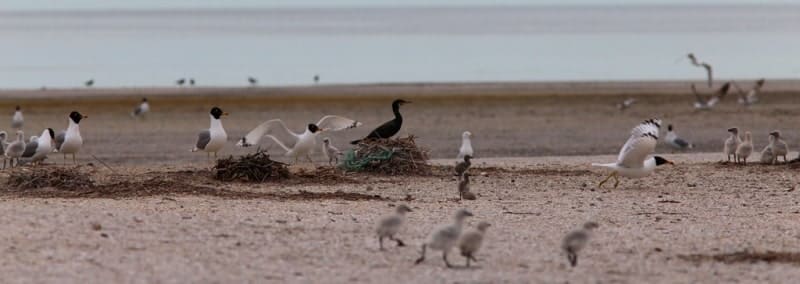
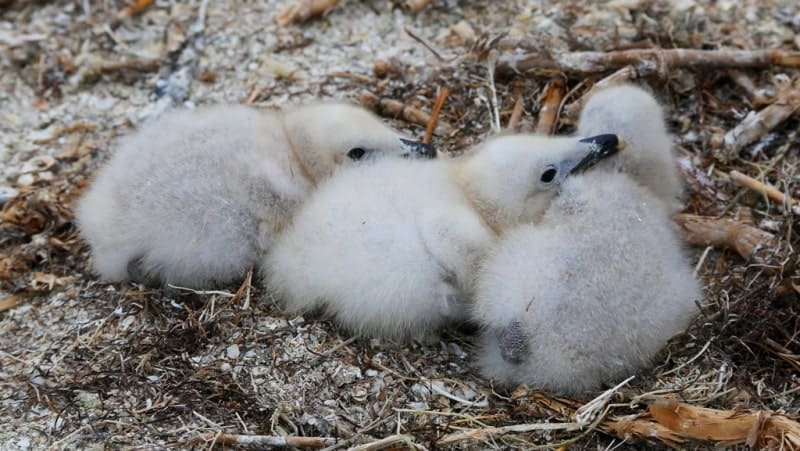
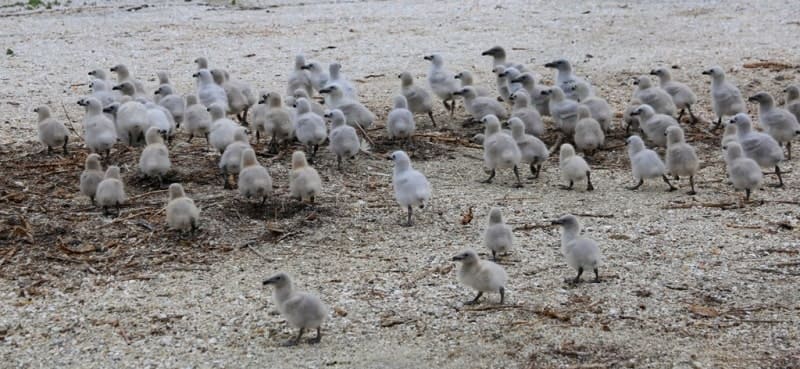
The delta is a veritable animal kingdom. The avifauna is particularly diverse and abundant here: approximately 40 species of birds nest here, and over 50 species have been recorded during wintering and migration. The most prominent group of birds are waterfowl, most of which form colonies on numerous lakes.
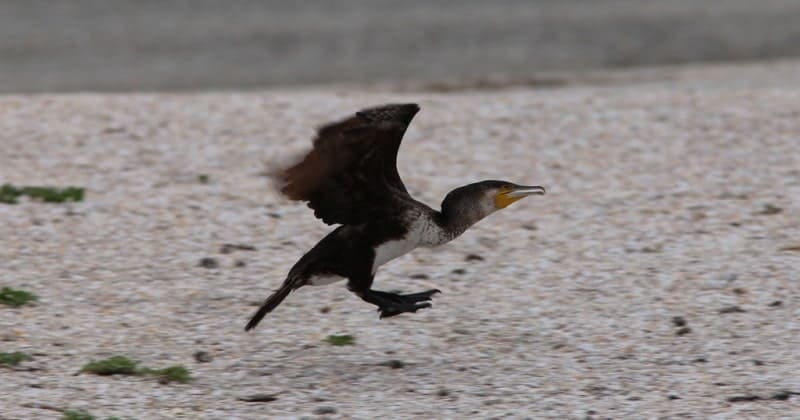
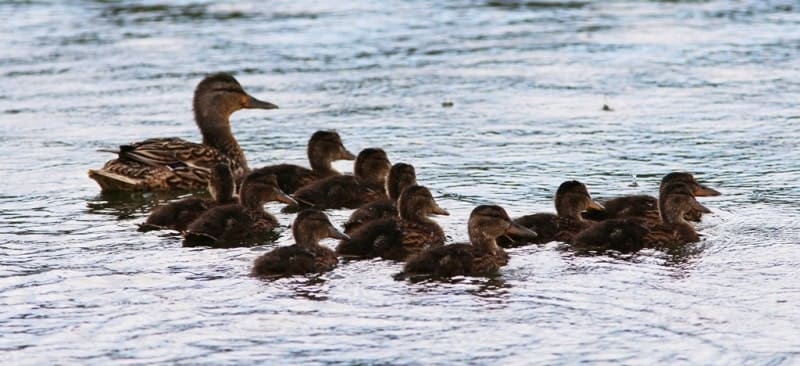
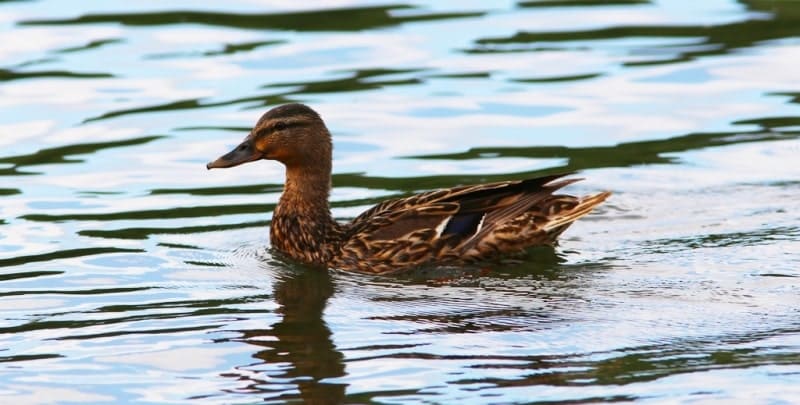
Dalmatian and Great White Pelicans nest together with Great Cormorants. This good neighborhood allows them to share in the foraging process; the pelicans typically act as beaters, while the cormorants act as divers. The delta lakes abound with a variety of ducks, from the abundant, handsome red-headed duck to the extremely rare, comical white-headed duck.
These areas are favored by gadwalls, mallards, teals, red-headed and ferruginous pochards, and other ansel-billed ducks. Mute and whooper swans, glossy ibis, and greylag geese were once common and even numerous in the delta, and countless numbers of greylag geese nested there.
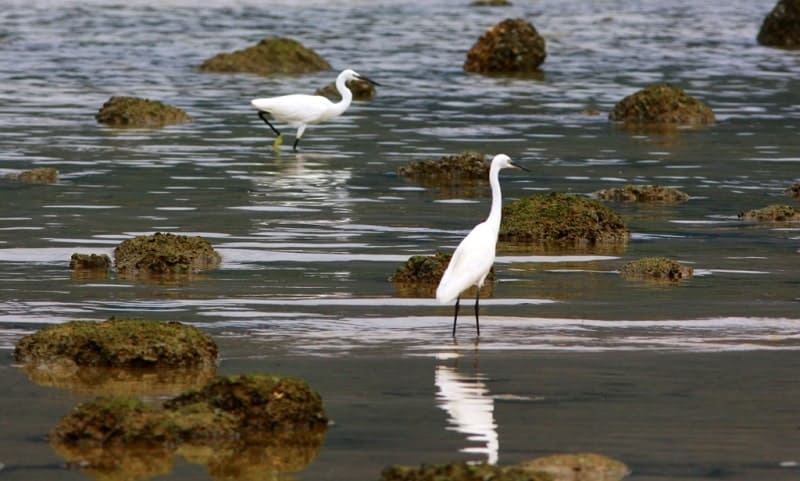
However, due to uncontrolled hunting, the numbers of these birds have declined so much that many species are listed as endangered: glossy ibis, whooper swans, white-headed ducks, spoonbills, and egrets, as well as the now-rare birds of prey - the short-toed eagle, white-tailed eagle, pallid eagle, and osprey.
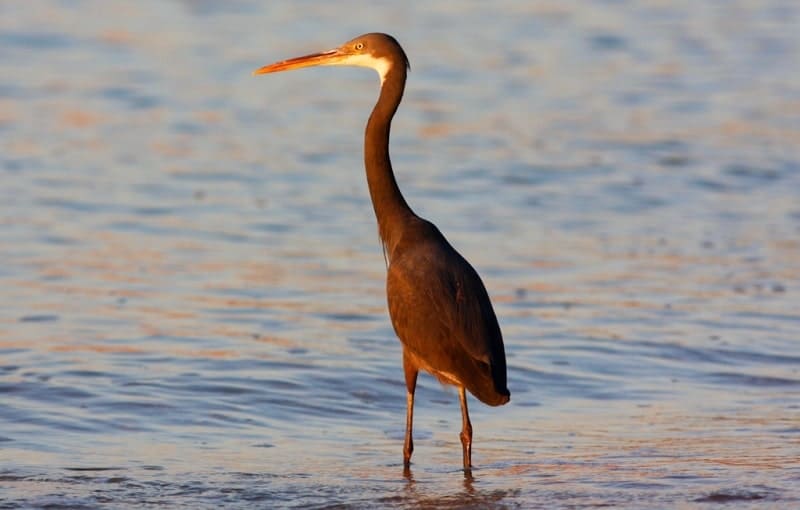
In the Ili Delta you can see great crested grebes, red-necked grebes, coots, grey herons, bitterns, moorhens, crakes, rails, various species of waders, gulls, terns, and other birds. Birds of prey are oftenю The marsh harrier is also common. Other fully-fledged avian inhabitants of the reed beds should not be overlooked, such as the great grey shrike, penduline tit, whiskered tit, blue tit, various warblers, warblers, buntings and warblers, bluethroats, and nightingales.
The polyphony of these birds and their variegated colors lend a unique character to the reed jungle. These areas are home to fabulously vibrantly colored birds: the Semirechye pheasant, kingfisher, hoopoe, green and golden bee-eaters – truly birds of paradise!
While the bird world is quite accessible for observation, some mammals, despite the diversity of species and their relatively high numbers, are difficult to encounter.
Wild animals in Ili Delta.
For example, the wild boar – a large and powerful animal of the reed thickets – moves silently across its territory. Excellent hearing and a keen sense of smell allow it to detect approaching danger a hundred paces away and avoid human contact.
Equally sensitive and cautious is the roe deer, a small deer native to the Semirechye region. It only briefly enters an observer's field of vision, and then, with light and powerful leaps, it flees. Wild boar and roe deer were once the Turan tiger's primary prey.
However, the tiger itself was subject to intense hunting pressure: the prestigious hunt for this most beautiful of cats, the disruption of its prey base, and the burning of reeds led to the complete disappearance of the tiger in the Ili Delta by the mid-1930s.
Since the tiger often preyed on domestic animals, herders breathed a sigh of relief, but the wolf, which had previously avoided the tiger's territory, took over its habitat. This bold, cunning, and at the same time cautious predator began to cause even greater harm to livestock farming.
In recent years, the jackal has also appeared in the lower reaches of the Ili. Thus, by thoughtlessly destroying one predator, humans created conditions for the flourishing of two others, less discerning in their choice of prey but more active.
The Turanian tiger is no longer found anywhere in the CIS.
It is listed in the IUCN Red Book. The fate of the muskrat is also indicative - a valuable aquatic fur-bearing rodent of North American origin, acclimatized in the Ili Delta in 1935-1936. This animal reproduced extremely rapidly and spread across the vast territory of the Balkhash region.
In the 1951-1952 season alone, the muskrat harvested over half a million pelts, and in the most favorable years, the harvest volume reached one and a half million. Suffice it to say that with the acclimatization of the muskrat, the fur trade in the Balkhash region increased more than 40-fold.
The state reaped significant profits, as scientific data shows that one hectare of developed muskrat farming is more profitable than the equivalent area of any arable land. Unfortunately, in our era of intensive water resource development through river regulating, the muskrat population has declined drastically and continues to decline.
Tolai hares remain numerous in the Ili Delta. There are years when these animals become rare due to widespread diseases - epizootic outbreaks - or as a result of harsh winters. Jungle cats, foxes, and other predators exacerbate the hares' plight.
But a year or two passes, and these familiar animals once again enliven the dunes and tugai forests with their presence. The Ili floodplain and adjacent desert areas are home to the solongoi - a fast, daring predator, a threat to small birds and mouse-like rodents.
The solongoi's natural habitat is mountains; its existence in the delta remains a mystery to science. Another fur-bearing predator, the Central Asian weasel, lives alongside the solongoi; here, it is several times larger than its sister species from other geographic regions.
The slow, clumsy-looking badger, which leads a crepuscular lifestyle, also lives in these areas.
Ichthyofauna in Ili Delta.
The ichthyological fauna of the Ili and Balkhash Deltas was quite poor in Przhevalsky's time, limited to only five native fish species: three of these - Schrenk's perch, Balkhash marinka, and the common sloth bear - are endemic, while two species - the Ili marinka and Strauch's sloth bear - are also found in other bodies of water in the basin.
In 1898, carp were released into Lake Balkhash, followed in 1934 by Aral barbel and the Aral sturgeon subspecies (spiny sturgeon), followed by bream, pike perch, and catfish. Later, asp, grass carp, silver carp, Caspian roach, and Talas dace were introduced. The total number of fish species reached more than two dozen.
Along with valuable fish species, so-called trash fish also found a new homeland - Amur chebachok, Amur false gudgeon, and firebrand. The success of the acclimatization of the new fish exceeded all expectations - most of them successfully established themselves and spread throughout the waters of the Balkhash region.
But nature has its own laws, and they often clash with human desires and predictions. An uncontrolled process of transformation of the ichthyofauna has begun in the Balkhash basin. The intensely multiplying pikeperch has sharply undermined the stocks of river perch, switching to marinka and destroying it; carp have begun to lose their former commercial importance.
There is a clear trend toward a decline in the pikeperch population itself - not only are the numbers of predators declining, but their size is also decreasing. Predatory fish species such as asp, catfish, and barbel are currently doing well, but it is difficult to predict how the situation in the waters will develop in the near future.
Insects in Ili Delta.
A glimpse of the Ili Delta would be incomplete without mentioning its smallest and most numerous inhabitants. In summer, the delta buzzes with a swarm of flying insects, and mosquitoes create an unbearable environment for warm-blooded animals and humans.
Their swarms rage during the day, but they become especially active after sunset. Mosquito bites are painful and can drive a person to despair. Therefore, it's best not to enter these parts without mosquito repellent and a special gauze blanket.
In such a situation, it's especially captivating to observe the various dragonflies, which skillfully hunt mosquitoes. Dragonflies from the Demoiselle family are particularly intriguing in their behavior – these fragile creatures have metallic-looking abdomens and vertically folded wings.
In flight, they resemble butterflies. In clear weather, many dragonflies perch on reeds protruding from the water, occupying the same position - their bodies, like magnetic needles, are aligned strictly parallel to each other. This insect behavior initially seemed mysterious, but the answer was quite simple: the dragonflies perch with their heads toward the sun and turn toward it to better examine their prey - small flying insects easily visible against the light.
The Ili River Delta and the southern part of Lake Balkhash in Kazakhstan have been recognized as wetlands of international importance. World Wetlands Day, designed to draw the attention of the public and governments around the world to the value of wetlands for supporting the sustainable development of our planet, is celebrated on February 2.
On this day in 1971, in Ramsar, Iran, the Convention on Wetlands of International Importance as Waterfowl Habitat, known as the Ramsar Convention, was signed. The day of its signing in 1997 was declared World Wetlands Day. The new wetland of international importance is located within three nature reserves – Pribalkhash, Karoysky, and Kukansky.
The government of the Republic of Kazakhstan plans to significantly enhance the protected status of this area by creating a single national park within the three reserves. Documents for the designation of the Ili River Delta and the southern part of Lake Balkhash were prepared as part of a World Wildlife Fund (WWF) project and officially submitted to the Ramsar Convention Secretariat by the government of Kazakhstan.
Geographic coordinates of Ili River Delta are: N45°40'38 E74°24'53
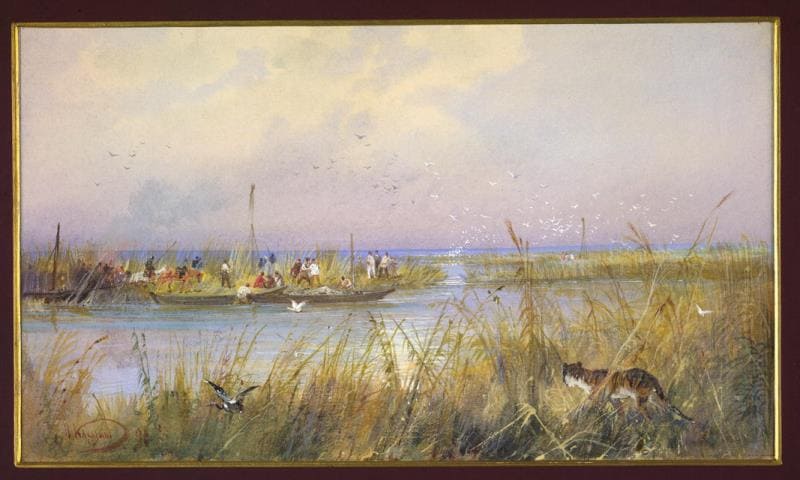
Authority:
"In the region of Seven rivers. Zhetysu". Author and originator B. Gubanov. Alma-Ata, Kaynar publishing house, 1989.
Photos by:
Alexander Petrov.