




You are here
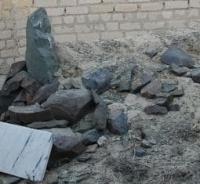
Grave and mausoleum of Baksy Koilybay.
Go sightseeing Kazakhstan.
The people supported them through voluntary contributions, but alongside this official clergy, there were also the «baksy» - interpreters of fate and representatives of an ancient, ancestral belief in good and evil spirits. They, too, engaged in divination and healing. They possessed a musical instrument featuring two horsehair strings and various metal trinkets; they played it with a horsehair bow while chanting unintelligible words and summoning spirits believed to assist them in their divinations and healing rituals. While performing these incantations, they would contort their bodies, throw themselves into the fire, and stab themselves with knives. Their healing methods were as follows: for colds (though not severe ones), they would slaughter a black or yellow goat, remove the fresh lung and heart, and either press the organ against the patient's body or rub it over them, while feeding the meat to the patient. In cases of general bodily weakness accompanied by aching pain, they would slaughter a fat horse and wrap the patient in its hide while it was still warm. Sometimes, they administered baths using running water. During divination, the *baksy* would first strike up a long conversation with the host, skillfully questioning him about his past life; based on this information, he would offer an ambiguous answer - one that the listener could apply to his own situation and interpret however he pleased.
Alexander Fyodorovich Golubev - Russian geodesist, astronomer, topographer, explorer, traveler, and General Staff Captain. From the monograph “Ala-Kul” (published in “Notes on General, Physical, and Mathematical Geography”, Vol. I, 1867; “Memoirs of the Imperial Russian Geographical Society”).
Main tourist attractions Kazakhstan.
The grave of Baksa Koylybay is situated at an elevation of 308 meters above sea level, 231 meters from the right bank of the Kulebay River (a right tributary of the Dulygaly River); it lies 9.3 km southwest of the Kuntuar tract, 22.5 km southeast of the Dulygaly Mosque, 63.1 km southwest of the settlement of Sarlyk, 89.5 km northwest of the settlement of Zhezdy, and 64 km north-northwest of the settlement of Baikonyr, in the western part of the Ulytau District.
Koylybai-baksy from the Kipchak clan, who lived approximately in the IXth-Xth centuries, was a famous healer (in Kazakh - bucks), as well as a follower of Korkyt, the inventor of one of the most popular Kazakh folk musical instruments - kobyz, the possession of which, according to legend, always meant a connection with the world of magic and secret powers.
One of the famous legends associated with Koylybai is the story of how the art of playing the kobyz helped the Kazakhs defeat the Kalmyks in horse races. There is also a legend, retold by Shokan Valikhanov, and tells about how the djinn subordinate to Koilybai, led by the djinn Nadir-Sholak, were able to save their master from the army of the Albasta (in Turkic mythology, demonic feminine creatures who hunt for the extermination of small children).
The grave of Baksy Koylybai has been an object of pilgrimage for many centuries. In our time, a mausoleum was built on it, a place was equipped to accommodate pilgrims.
Geographic coordinates of grave and mausoleum of Baksy Koylybay: N48°24'05 E65°57'16
Authority and photos:
Vitaly Shuptar. www.guide.kz
lexander Petrov.