





You are here
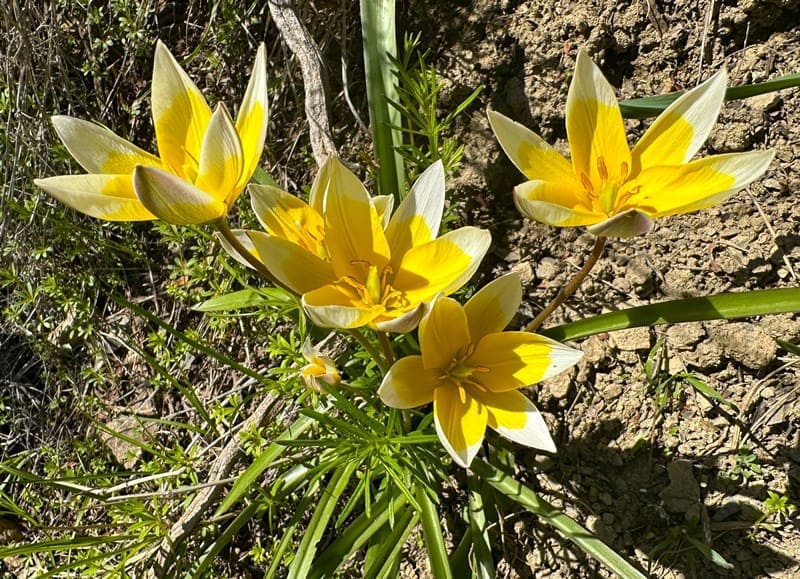
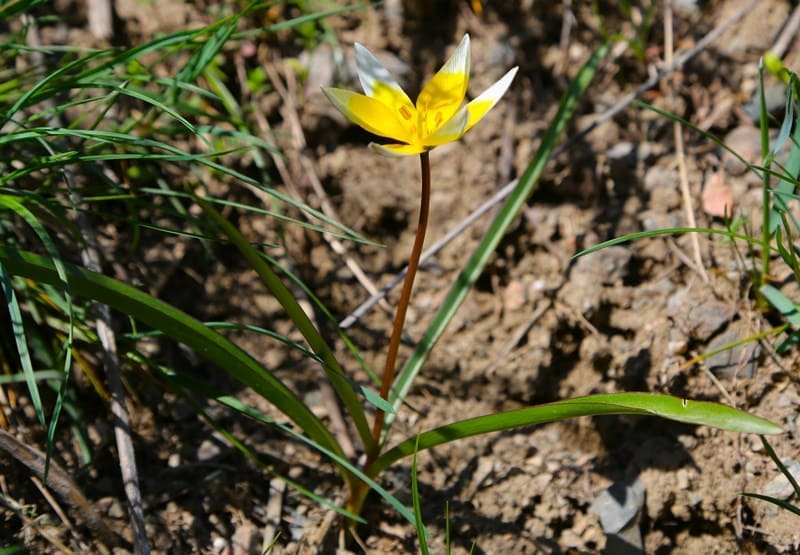
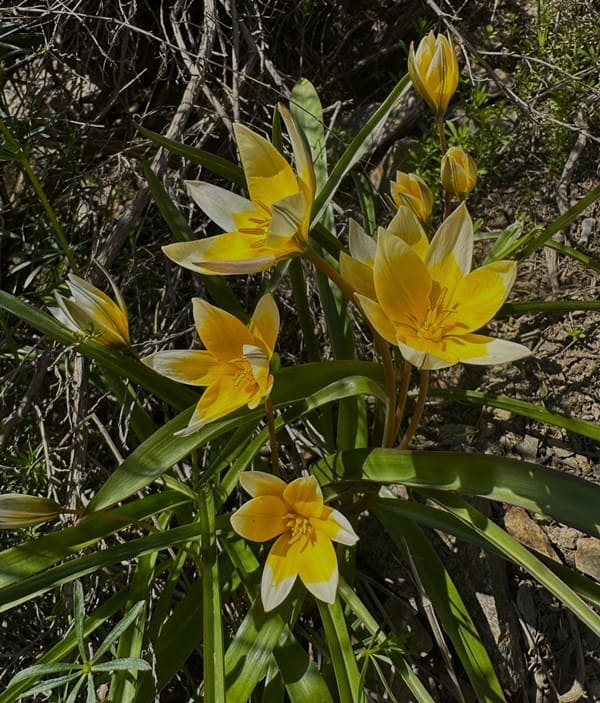
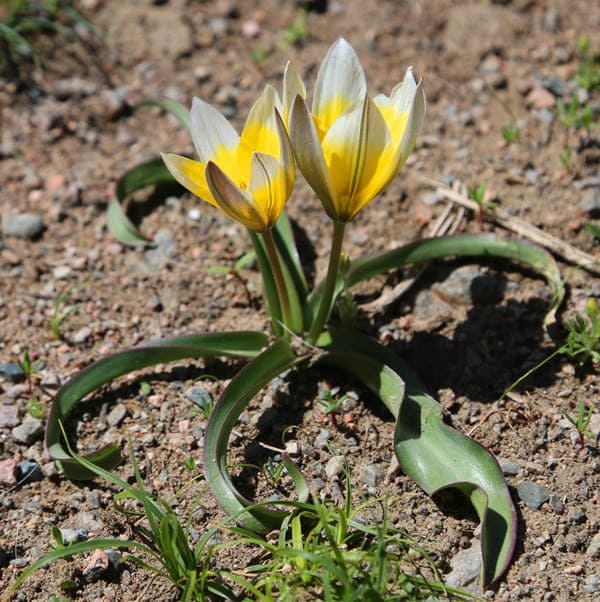
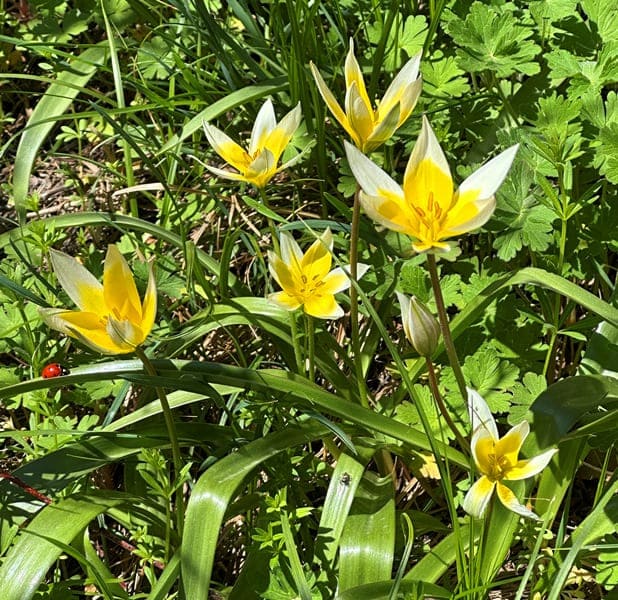
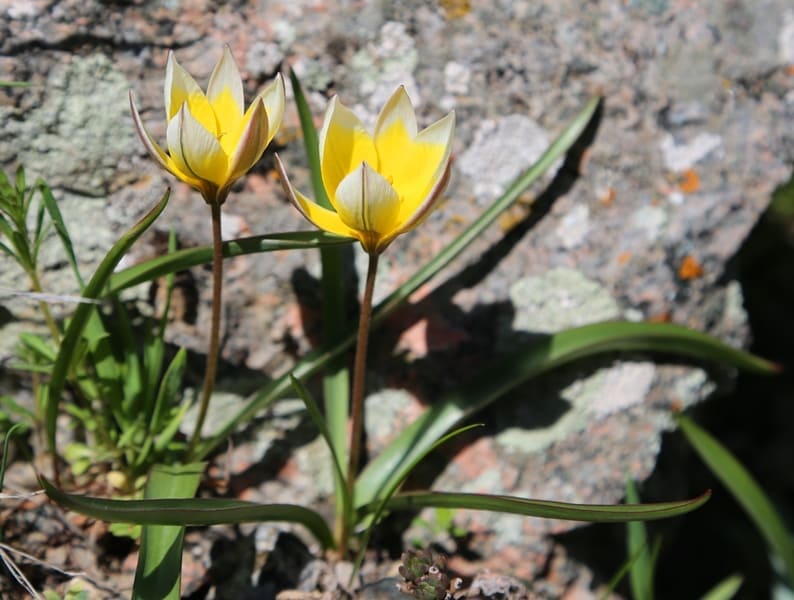
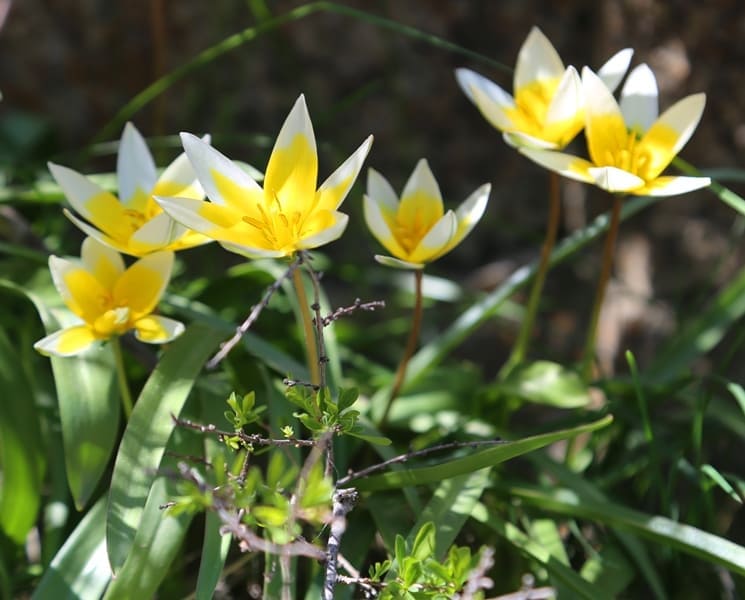
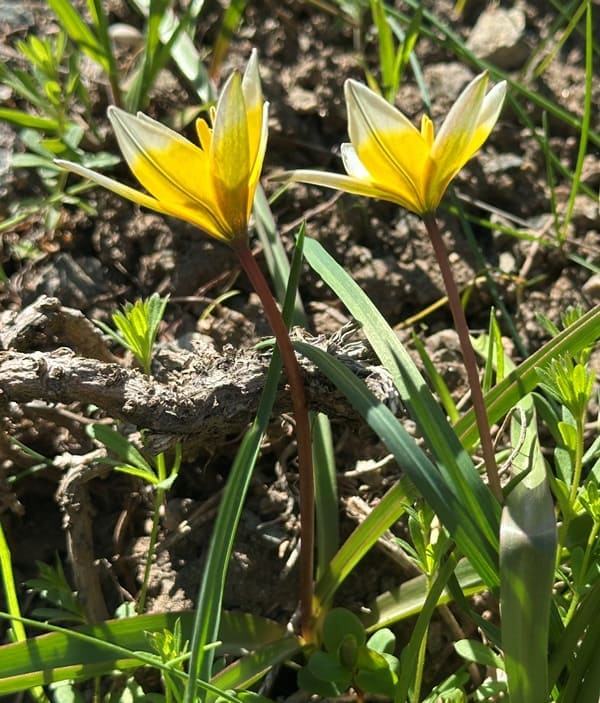
Tulipa tarda.
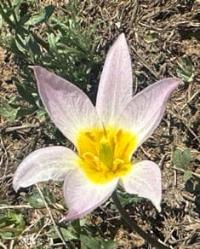
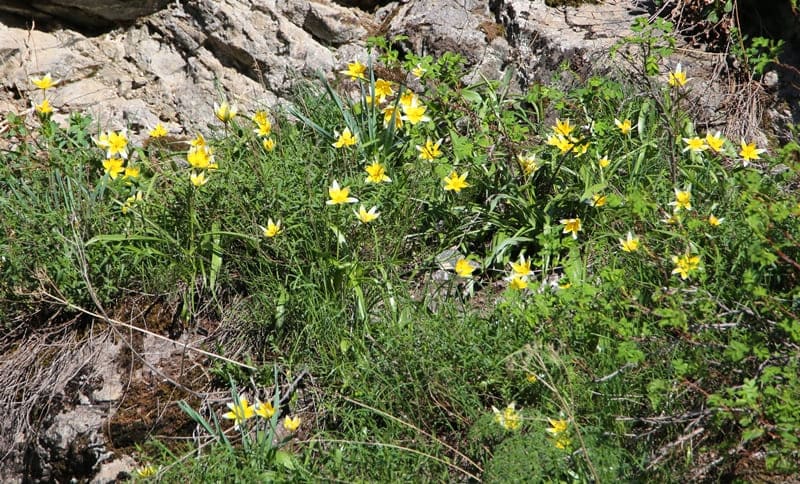
Tulips in Kastek Gorge in Almaty Region.
"I planted tulips, and with sorrow in my chest
My heart cried: 'Know, all labors are in vain. Life is short.'
As soon as the buds open: 'The heavens, alas, are already calling: come!'"
Great XIth-century Persian Sufi poet Baba Tahir. "And to Heaven and Earth...". A collection of ruba'i (quatrains).
Historical Background of Tulipa tarda.
The tulip Tarda was first described by the British botanist Otto Stapf in 1933.
Tulipa tarda.
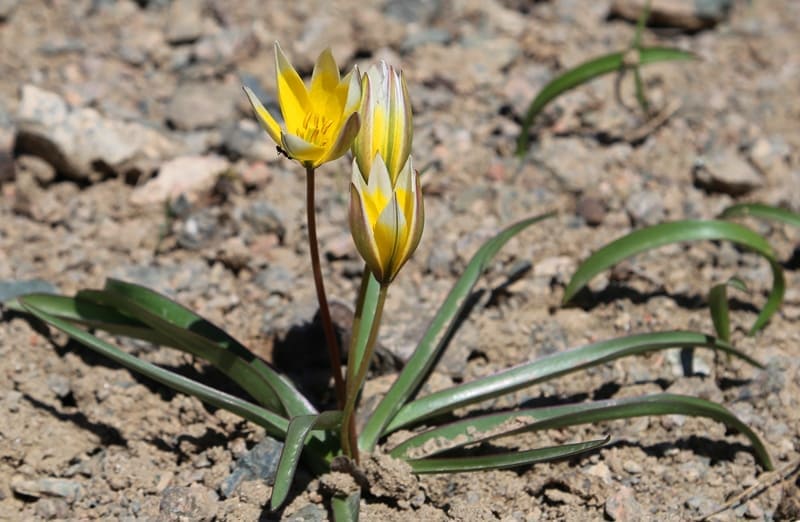
From the subgenus Eriostemones. Plants are 5-20 cm tall. The bulb is often round, 1.5-3 cm in diameter, with black-brown, leathery, glabrous bracts; young bracts are yellowish-salmon, often with a golden hue. The stem is dark green, glabrous; the peduncles are pubescent.
There are 3-7 leaves; they are dark green, glabrous, grooved, linear-lanceolate. The flower is white, rarely yellow, with a wide yellow base, almost flat in the sun, star-shaped, and closed in cloudy weather. The outer tepals are 1.5 times narrower than the inner ones, tapering evenly toward both ends, greenish-violet along the back, yellowish toward the base;
The inner tepals are widest at 1/3 of the base, tapering below into a long, yellow-on-the-outer claw; their tips are white on the outside. On the inner side, all tepals are yellow for 3/4 to 4/5 of their length from the base, white above. The filaments and anthers are yellow.
The ovary has a fairly long style.
Phenology of Tulipa tarda.
Blooms in April-May for 6-14 days.
Ecology of Tulipa tarda).
It is extremely rare on the rocky and gravelly slopes of the Northern Tien-Shan mountains. Endemic.
Distribution of Tulipa tarda in Kazakhstan.
Northern slope of the Zailiskiy Alatau ridge – Kastek Gorge, Chemolgan Gorge (on the road towards the Ushkonyr tract).
Cultivation of Tulipa tarda in Kazakhstan.
Introduced into cultivation in the early XXth century, it is one of the most decorative species for landscaping. It is indispensable for landscaping rocky areas. When forced, it is decorative only in bright light, when its flowers fully open. It is hardy in open ground. It tolerates deep planting. It reproduces well vegetatively and by seed. Seedlings bloom in the 3rd or 4th year.
The "Solnyshko" variety is registered. Interesting decorative forms (VIN USSR Academy of Sciences) with very long and narrow tepals and forms with double flowers are available.
Key facts about Tulipa tarda.
Scientific name: Tulipa tarda Stapf. The specific epithet "tarda" means "late" in Latin, referring to its flowering time (April in Kazakhstan and Kyrgyzstan), when most other wild tulip species have already finished blooming.
Synonyms: Tulipa tarda.
In literature, the plant may also be referred to as Tulipa dasystemon (hairy-stamen tulip), but Stapf identified it as a separate species.
Origin of Tulipa tarda.
It is endemic to the Tien-Shan (Central Asia). In the wild, it is found in Kazakhstan and Kyrgyzstan.
Practical Importance of Tulipa tarda.
The Tulipa tarda is one of the most undemanding and rewarding botanical species in cultivation. Unlike garden hybrids, it does not require annual digging and grows quickly, forming picturesque flower carpets. Planting and site selection - The optimal time is from mid-September to mid-October, allowing the bulbs to establish roots before frost.
Planting location: sunny areas or light partial shade. Alpine gardens, rockeries, and the foreground of flower beds are ideal. Soil - Well-drained, sandy loam or light loam. Avoid areas with standing water, as this can cause the bulbs to rot.
Depth - Plant at a depth of 6-15 cm (approximately three times the bulb's height).
Spacing - Leave 5-8 cm between bulbs.
Watering - Regular but moderate, especially during the period of active growth and flowering (April-May).
Fertilizing - In early spring, apply nitrogen fertilizer immediately after the snow melts.
During budding: Phosphorus-potassium supplements for strong stems and vibrant flowering.
After flowering, apply potassium fertilizer to encourage the maturation of daughter bulbs.
Species Features - A single stem can produce from 1 to 15 star-shaped white flowers with a bright yellow center. Digging - can grow in one place without replanting for up to 4-5 years.
Recommended - combines well with small-bulb plants (muscari, crocuses) and non-aggressive perennials.
Avoid planting near lilies (common diseases) and aggressive groundcovers (ivy, periwinkle), which can crowd out the bulbs.
Preservation and threats of late tulip in Kazakhstan.
The Tulipa tarda, like many other wild species in Kazakhstan, is a unique natural heritage that requires strict consideration of environmental characteristics and conservation measures. The late tulip plays an important role in the ecosystem - it is an important component of steppe and petrolithophilic (growing on rocks) communities.
The late tulip is listed in the Red Book of Kazakhstan. The main reasons for the decline of the late tulip population are human economic activity, livestock grazing, steppe plowing, and illegal flower picking for bouquets. Penalties for picking late tulips – picking, damaging, and destroying endangered plants, including tulips, is punishable by law in Kazakhstan.
Damaging bushes or picking them carries a fine of 50 monthly calculation indices (more than 200,000 tenge as of 2026). The late tulip is protected through the creation of specially protected natural areas (SPNAs), where any economic activity is prohibited during the flowering period.
Stapf, Otto.
Otto Stapf (March 23, 1857 – August 3, 1933) was an Austrian (German-Austrian) biologist and botanist. Otto Stapf was born on March 23, 1857. Stapf received his PhD in 1882. He defended his doctoral dissertation in 1887 at the University of Vienna.
From 1891 to 1922, Otto Stapf lived in England, where he was in charge of the herbarium at the Royal Botanic Gardens, Kew. In 1908, he became a Fellow of the Royal Society of London. Stapf was also a member of the Linnean Society of London.
In 1927, he was awarded the Linnean Medal. Stapf made significant contributions to botany, describing numerous plant species. Otto Stapf died on August 3, 1933. Otto Stapf specialized in bryophytes and seed plants.
Authority:
http://flower.onego.ru
Photos by:
Alexander Petrov