



You are here
Space station in Zailiyskiy Alatau.
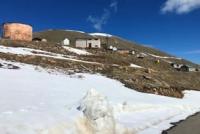
ATours - Almaty Kazakhstan.
"Golden rays rush down from the height,
Flooding your Alatau ridges with radiance,
Century glaciers bathe in sunshine
You smile joyfully at the blue skies … "
Ilyas Dzhansugurov. “In mountains of Kyrgyz Alatau”. 1929.
Combined Tours Along Kazakhstan.
High-altitude cosmic ray station at Zhosalykozen Pass.
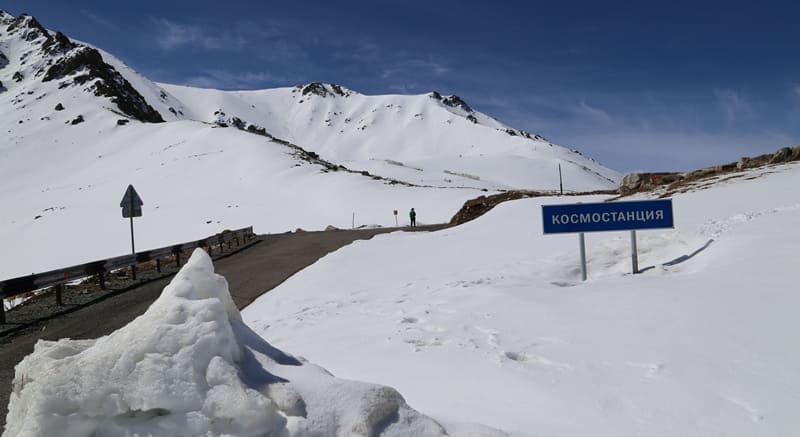
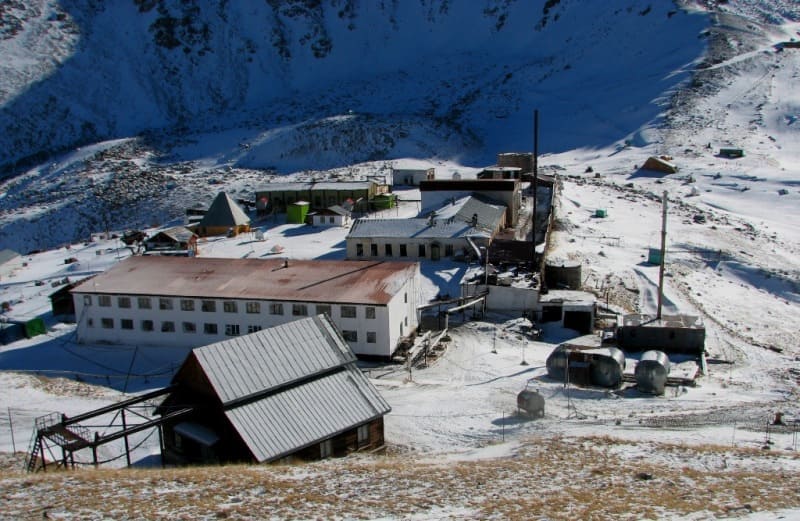
High in mountains of Zailiskiy Alatau on the northern slope of the range, near the Zhosalykozen (Dzhusaly-Kezen) Pass lies one of Kazakhstan’s most unique scientific facilities: a high-altitude station for the study of cosmic rays. The station is situated at an altitude of 3,336.8 m. a. s. l., in the upper reaches of Big Almaty (Greater Almaty) Spur, within the boundaries of what is now the Bostandyk District of Almaty. The pass sits on the watershed between the Prokhodnaya and Ozyornaya rivers, which belong to the basins of the Big Almaty Lake, respectively.
An altitude exceeding 3,300 meters here holds significance beyond mere geography. It is precisely these conditions a rarefied atmosphere, rugged mountain terrain, and the ability to detect particles of cosmic origin almost directly within the upper layers of the Earth’s atmosphere that have made this area exceptionally well-suited for physicists studying cosmic rays and the interactions of ultra-high-energy particles.
The history of the scientific complex at Zhosalykozen dates back to a period of rapid development in the field of cosmic-ray physics within the Soviet Union. The high-altitude cosmic ray research station was established in 1957. In the years that followed, it evolved into a research hub dedicated to the study of cosmic radiation.
Since 1961, the station has been used to record particles of cosmic origin. The establishment of such a facility in the Zailiskiy Alatau was a logical development. By the mid-XXth century, physicists understood that high-altitude stations offered a significant advantage for studying cosmic rays: the higher a detector is positioned, the thinner the layer of atmosphere above it, and the closer it is to the point where cascades of secondary particles are generated.
Around the same time the Kazakhstani station was being established, the Tien Shan High-Altitude Scientific Station part of the P. N. Lebedev Physical Institute (FIAN) also began to take shape on the same mountain pass. According to FIAN, its development took place between 1958 and 1961.
The station’s primary objective was to study the origin and interactions of high-energy cosmic rays. Consequently, a unique scientific complex gradually emerged in this high-altitude area of the Trans-Ili Alatau, bringing together researchers from various fields.
An Open-Air High-Altitude Laboratory.
Cosmic rays are streams of high-energy particles arriving at Earth from outer space. Upon entering the atmosphere, these primary particles interact with the nuclei of air atoms, triggering cascades of secondary particles. Such cascades are known as "extensive air showers."
They may consist of electrons, positrons, muons, hadrons, and other particles. Investigating these showers became one of the core research areas at the Tien-Shan station. According to FIAN, a comprehensive experimental setup for studying extensive air showers was commissioned alongside the station’s infrastructure in the late 1960s and has since undergone numerous expansions and upgrades.
It made it possible to study cosmic particles across an extremely wide energy range roughly from $10^{12}$ to $10^{18}$ electronvolts. For high-energy physics, this was of fundamental importance: such facilities allowed for the study not only of cosmic rays themselves but also of the processes by which they interact with matter, as well as the search for evidence of new physical phenomena.
A neutron monitor acts as a continuous "counter" for outer space. It is one of the most well-known components of the station’s scientific infrastructure. According to the Institute of the Ionosphere, the 18NM-64 neutron supermonitor, located at an altitude of approximately 3,340 meters, has been in continuous operation since 1973.
The cosmic-ray station designated internationally as AATB is part of the global NMDB (Neutron Monitor Database) network. Data on cosmic-ray intensity and atmospheric pressure are transmitted to this international network with high efficiency.
This transforms the small, high-altitude scientific outpost in the mountains near Almaty into a component of a global system for monitoring cosmic radiation. The detection of cosmic rays is significant beyond the realm of fundamental physics. Fluctuations in particle flux are linked to solar activity and the state of the near-Earth space environment; consequently, such observations are used to study the processes occurring between the Sun and the Earth.
The Zhosalykozen Pass is situated in the harsh, high-altitude zone of the Zailiskiy Alatau mountains. The climate here differs sharply from that of the foothills near Almaty, characterized instead by a high-mountain environment featuring long, cold winters, strong winds, significant daily temperature variations, and a persistent snow cover.
The station’s high-altitude location is also of interest regarding permafrost processes. Soil studies at the pass have revealed the presence of permafrost. This factor was initially underestimated during the construction of the first buildings; based on shallow test pits, it was assumed that the ground only froze seasonally, but subsequent research uncovered a more complex permafrost structure.
Thus, the station’s site has become a unique natural laboratory not only for physicists but also for specialists studying climate, permafrost, the atmosphere, and high-altitude natural processes.
A scientific complex at Zhosalykozen Pass.
Over time, a cluster of scientific institutions has developed at Zhosalykozen. It hosts various units from Kazakhstani scientific organizations including the Institute of Physics and Technology and the Institute of the Ionosphere - along with other research divisions.
According to Kazakhstani scientific institutions, the Tien-Shan High-Altitude Scientific Station currently operates a suite of equipment for monitoring cosmic rays; specifically, data from its neutron monitor are integrated into an international observation network.
The Tien Shan High-Altitude Scientific Station of the Lebedev Physical Institute (FIAN) holds a distinct position. The P. N. Lebedev Physical Institute of the Russian Academy of Sciences (FIAN) continues its research at this site; the institute’s official history links the station to long-standing studies of high-energy cosmic rays.
In 2008, FIAN secured long-term land-use rights for the site, with approximately 40 hectares allocated to the scientific complex. The facility possesses its own energy infrastructure and also supplies electricity to other scientific organizations located in the area.
Zhosalykozen and Tien-Shan Scientific School.
Over the decades of the station’s operation, a distinct scientific tradition has taken root here. This high-altitude complex has served as a venue for research, academic workshops, and experiments focused on cosmic-ray physics, high-energy physics, and astrophysics.
During the Soviet era, the scale of operations was particularly significant. The station hosted specialists not only from Kazakhstan and Russia but also from other countries within the socialist bloc. According to published accounts, the number of personnel at the site reached substantial levels during its most active years.
Today, the station’s significance extends well beyond its history. Over the course of half a century, a vast body of observational data has been amassed here, while the equipment and methods used to detect cosmic particles have undergone continuous refinement.
For a traveler, Zhosalykozen is primarily a high-altitude mountain pass and a point of interest on the northern slope of the Zailiskiy Alatau range. For the scientific community, however, the site holds a far greater level of importance. At an altitude of over 3,300 meters, human-made facilities exist for the purpose of studying processes that occur far beyond the confines of Earth.
In clear weather, the site offers expansive panoramic views of the high mountains, while the surrounding landscape serves as a reminder of the station’s unique location: scientific instruments operate here, effectively at the very edge of the zone where human habitation is possible at high altitudes.
Please note that any visit to the scientific facilities must be arranged in advance with the station administration; this is an active research complex, not a tourist site with open access. The high-altitude station at Zhosalykezen is one of those sites that might easily go unnoticed amidst the broader landscape of natural landmarks in the Zailiskiy Alatau, yet its history holds great significance for science in Kazakhstan.
Established during the era of the first large-scale studies of cosmic radiation, the station has endured through several generations of scientific programs and transformations of its research infrastructure. Equipment for observing cosmic rays remains in operation here, and the data collected by the station are integrated into international monitoring systems.
In this way, a small, high-altitude patch of the Trans-Ili Alatau has become part of a global scientific infrastructure - a unique Earth-based observation post from which researchers have, for many decades, been recording particles arriving from outer space.
Geographic coordinates of Cosmostation at Zhosalykozen Pass: N43°02'36 E76°56'37




Authority and photos by:
Alexander Petrov.