




You are here
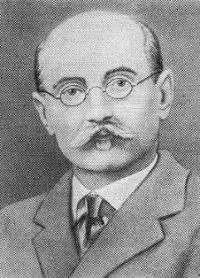
I. Lipsky about Lake Chatyr-Kul in 1903.
A trip from Tashrabat caravanserai to Lake Chatyr-Kol.
“Ahead and far below a panorama of the Chatyr-Kul valley opened up and in the middle of it the lake itself was silver. On the bank of the river flowing into the lake, yurts were put up for us, which the Kyrgyz eyes had opened since the pass. The horizon was bordered by mountains completely covered with snow. The height of the lake is 11,570 feet. It is freshwater, its length is about 2 versts, its width is less. It is home to marinka (Diptychus) and osman (Oreinus) fish, which generally predominate in the waters of the Tien Shan system. It is remarkable that in the existing descriptions of Chatyr-Kul it is spoken of as a lake devoid of fish - based on the review of the Kyrgyz - which news, by the way, also passed into foreign works (see El. Reclus l’Asie russe. 1881). Meanwhile, the Kyrgyz who were with me not only declared the existence of fish, but did not hesitate to name its species. On the other hand, there are many water birds in the vicinity, feeding, of course, on fish, which G. Kaulbars also drew attention to. The soil on the shores of the lake is clayey and belongs to post-tertiary sediments. The area is deserted. At this time, all the Kirghiz have disappeared, but in the summer some people wander here.”
N.L. Zealand. "Kashgaria and Tien-Shan passes." Travel notes. 1888.
Sights of Lake Chatyr-Kol.
“Its southern slope, along which we were now moving, was well covered with grasses, especially its foothills. The spurs coming from the ridge have a moraine-like appearance - they often run in ramparts and carry a lot of stones and boulders.
What is especially interesting is that they contain a whole series of small lakes, which are located in groups, sometimes as if on floors. These lakes have clearly dried up, and instead of them you can see dried lake hollows, often wet and sedge.
The ridge on the southern side, although snowy, is obviously covered with sparse cover. Glaciers, of course, but there is no doubt that they existed. Having driven through these foothills, we arrived at a place from where we could already see Chatyr-Kul. It was a beautiful place.
From here it was clear that the mountains lying on the southern side of the lake and forming a continuation of the Tien-Shan did not rise immediately and turned into a snowy ridge. Gradually moving to the west, we arrived at the nomadic center.
Along the northern shore of Chatyr-Kul there is one of the best nomadic routes. There are many yurts scattered along the slopes and gorges. The sides of the gorge consist of worn original limestone rocks. The vegetation near Chatyr-Kul is absolutely no different from the former Aksai.
The only thing that turned out to be original here was coco, an edible, rather large and curious herb from the thistle breed Carduus nidulans Rupr. (Schmalhausenia eriophora CWinkl). I also met her without flowers on Aksai. In addition, there was a lot of Sibbaldia tetrandra Bgl.
There is also a lot of white Festuca sibirica Hack. growing here, which I met starting from Kok-kiya. The vegetation in the Chatyr-Kul valley is quite good, although small, alpine. In addition to those mentioned, I would like to note: Aster alpinus L., Gentiana falcata Turcz., G. humilis Stev., G. tianschanica Rupr. and G. detonsa Fries; Artemisia rupestris L., Smelowslcia annua Rupr., Erysimum altaicum CAM., Sisymbrium mollipilum Maxim., Ranunculus songaricus Schrenk, Dracocephalum dis¬color Bge., Callianthemum alatavicum Freyn, Festuca altaica Trin., Avena desertorum Less., Deschampsia koelerioides Rgl., Ligularia altaica DC., Poa attenuata Trin., Hordeum brevisubulatum Hack., Calamagrostis anthoxanthoides Ug\., Acanthilimon diapensoides Boiss. var., Chorispora soongorica Schr.
We stopped at one such camp, Chunkei-oso. The position of this migration is very good. Here on the southern side of the ridge, despite the height, it was quite warm. In the distance, part of the lake could be seen (eastern corner), and further to the east could be seen that part of the Tien-Shan where we had recently been - Kok-kiya.
From here it was clear that the Tien-Shan mountains of Kok-Kia immediately breaks off to the west, as if by a ledge. Starting from Chunkey-oso, the Atbashinshy ridge has a curious character. The limestone mountains here are worn down, as if polished, with bulges.
They are often cavernous, porous, and talus. In general they look quite deserted. Almost the entire shore of the lake and up to significant heights of the mountain are covered with white Festuca sibirica Hack. Lake Chatyr-kul, which opened only gradually, has a dirty appearance at first and sticks out like tongues to the east.
A dark blue wedge then juts out into this dirty water and the water further to the west becomes a beautiful dark blue color. The view towards the southwestern end of the lake, where there is a snow ridge, is very beautiful. At first, the pasha's road went far from the lake and only in the second half almost all the time along the lake shore.
I, however, turned to the lake much earlier in order to measure its height and make various observations. Height The lake turned out to be quite significant - 12,458 ft. The water of this huge lake is a very beautiful dark blue color, and to my surprise, it tastes fresh, at least from the shore.
This was strange because there are salts right on the shore of the lake (I collected samples of them). And then on the shore there are whole banks of the marine plant Zostera marina L. There was such a mass of this plant that it is not always possible to approach the water: your foot sinks as if into soft manure and only then into the water.
The zoster bank stretched throughout our entire journey along Chatyr-Kul. I find this fact of the presence of a marine plant at such an enormous height in a mountain lake very interesting. Festuca ovina L. v. supina Hack, and the blue F. sibirica Hack. stretch along the entire shore of Chatyr-Kul; in places, along the gravelly riverbeds, Oxytropis tianschanica Bge. and Dracocephalum discolor Bge. White Festuca was especially abundant, growing in distant tufts; the lichen Dufourea madreporiformis Ach.
Horses and sheep graze here. In this somewhat deserted place, with weak and sparse vegetation, no migrations were observed for quite a long time. Then, when the mountains again approached the lake, nomadic migrations appeared in significant numbers.
The western end of Chatyr-Kul offers very good places for migrations; the slopes are covered with beautiful grass. They say that on the opposite southern side of the lake there are no migrations at all. It was already evening when we reached the very western end of the lake.
After passing the lake, we drove for some time along the valley, and then I climbed one of the hills to take photographs of the lake. From here, from the western end, the picture of the lake was especially beautiful; To the left (north) the view was bounded by the Atbashi Mountains, and to the right (south) by a snow-capped ridge – a continuation of the Tien-Shan.
A barely visible strip of the southern shore stretched far to the east. It is, of course, impossible to photograph the entire lake. Continuing further west, where the Atbashi Range actually ends, we came across what appeared to be moraine formations.
These were undoubtedly enormous moraines, now covered with beautiful vegetation. They undulate from a former glacier here, which descended from the northern slope of the mountains that lie on the southern side of Chatyr-Kul. A nomadic camp is located on these same sites.
This area is called Mustyr. It turns out that extensive preparations had been made at this camp to receive guests. On one side, they were waiting for me, and on the other, the Russian consul, Petrovski, was supposed to pass through from Kashgar. "We spent the night here."
Authority:
V.I. Lipsky. "Flora of Central Asia, i.e., Russian Turkestan and the Khanates of Bukhara and Khiva." 1902-1903.