





You are here
A. A. Ivashchenko on Tulips of Kazakhstan.

Tulips in Kazakhstan
"Regarding the hybridization of wild tulips: it seems to me that what I have not 'improved' is, in fact, the most beautiful. I mean to say that in plants taken directly from nature such as Tulipa fosteriana or Tulipa greigii the form and color of the perianth are more beautiful than those of hybrid seedlings derived from these same species I believe that when it comes to preserving wild-growing flowers especially these original, natural species it is impossible to surpass their coloration and the exquisite nature of their forms."
Dutch collector Dr. Dirk W. Lefeber, "On the Hybridisation of Tulips," 1960.
A Photo Tour for Tulips in Berkara Gorge.
Kazakhstan rightfully holds a leading position globally in the preservation of the species and form diversity of wild-growing tulips. Thirty-five species of this genus grow across the vast expanses of our country.
According to the widely accepted classification by A. Hall, they are divided into three subgenera:
1) Tulip Leiostemone);
2) Eriostemones;
3) Orythia.
In the works of A. I. Vvedensky (1955) and Z. L. Bochantseva (1962), these subgenera are classified as sections. The representation of each subgenus varies, both in terms of the number of species and their specific geographical distribution.
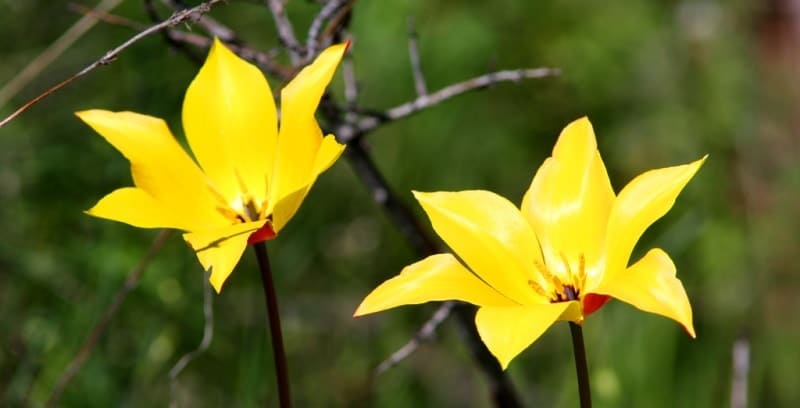
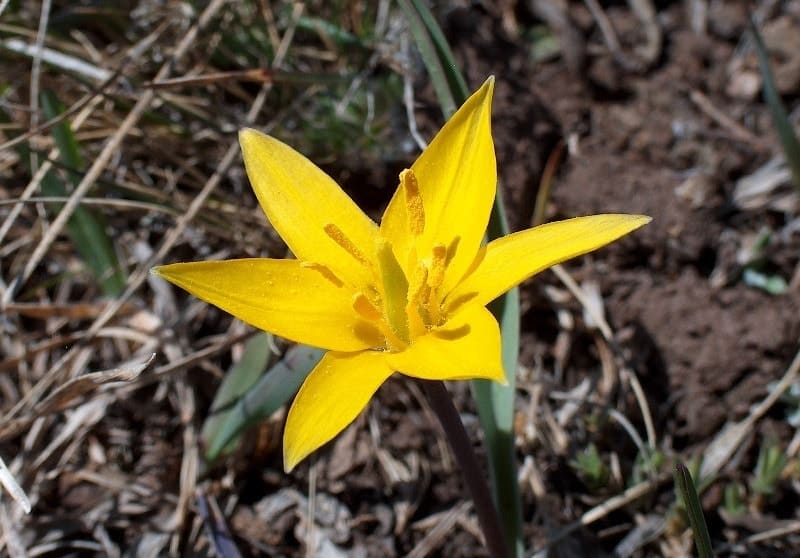
The subgenus Orythia comprises only three species with small, yellow flowers; among these, Tulipa heteropetala and Tulipa uniflora are found in the low- and mid-mountain steppes of the Altai and Tarbagatai ranges, while Tulipa heterophylla occurs in the alpine zone of the mountains of the Northern and Central Tien-Shan.
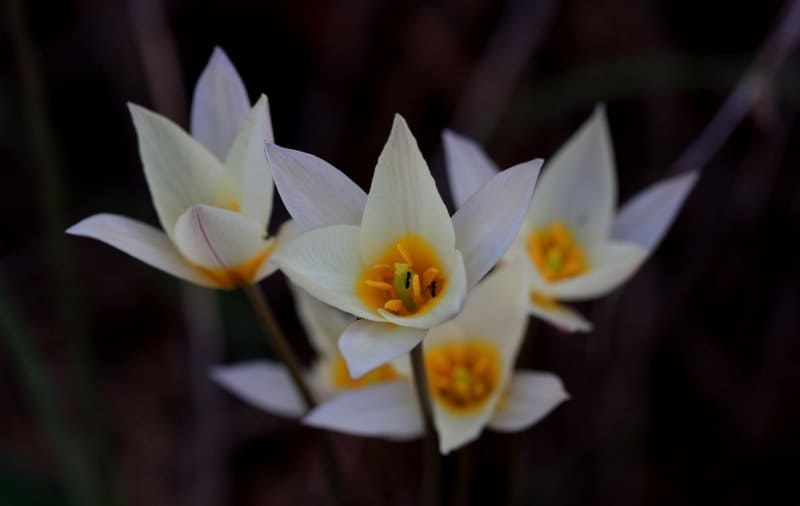
The subgenus Eriostemones includes 13 species, characterized by their small, often numerous flowers and pubescent (hairy) stamen filaments; these species are distributed throughout various regions of the country. The largest group, consisting of 19 species, belongs to the subgenus Leiostemones, whose members are distinguished by large, solitary flowers.
The greatest diversity within this subgenus - 17 species is concentrated in the Tien-Shan mountains and the surrounding deserts. Tulip species that exhibit significant polymorphism and high ornamental value have been extensively used in plant breeding.
For instance, Tulipa greigii, Tulipa kaufmanniana (new name the Tulipa berkariensis A.P.) and Tulipa schrenki (also known as Tulipa gesneriana) serve as the progenitors of many exquisite cultivars, developed primarily by Dutch breeders. One of the most globally renowned wild tulips is Tulipa greigii, which, as early as 1877, was awarded a certificate as a first-class variety in the Netherlands.
This magnificent tulip grows in steppe and loamy soils, ranging from the foothills up to the lower boundary of the subalpine zone. Its distribution is primarily centered in the Western Tien-Shan, extending westward to the vicinity of the city of Kyzylorda, and eastward as far as the Zhetyzhol Range, located at the junction of the Chu-Ili Mountains and the Zailiskiy Alatau.
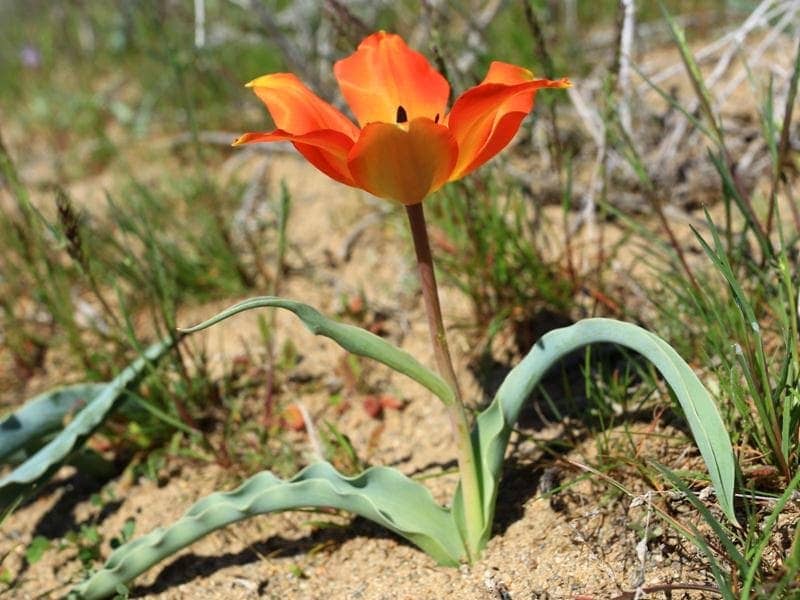
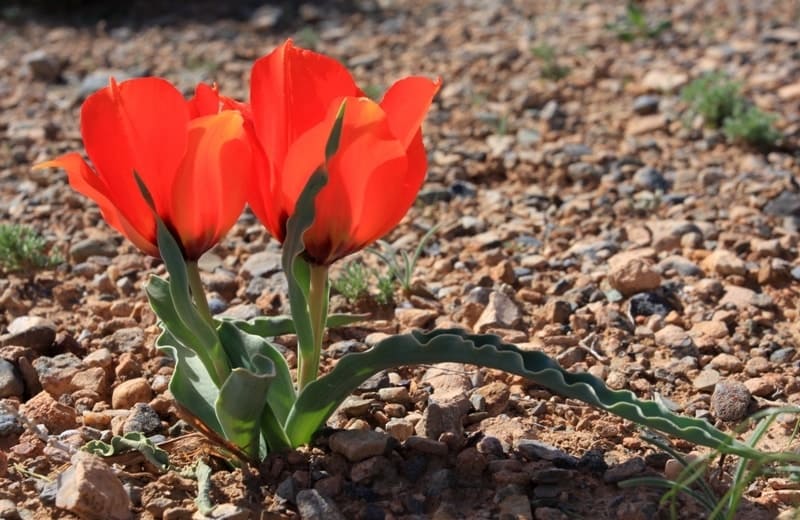
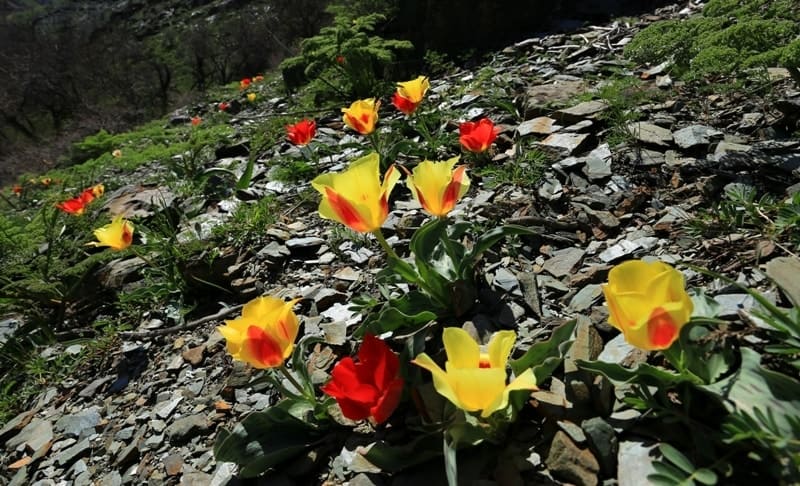
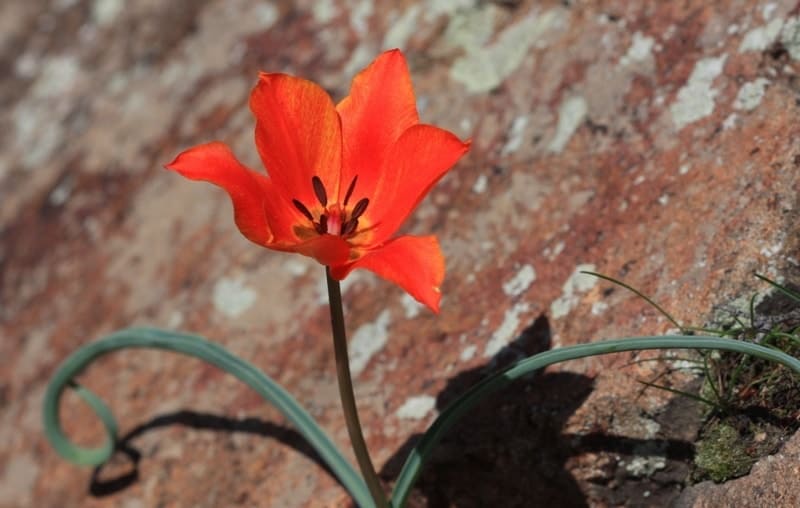
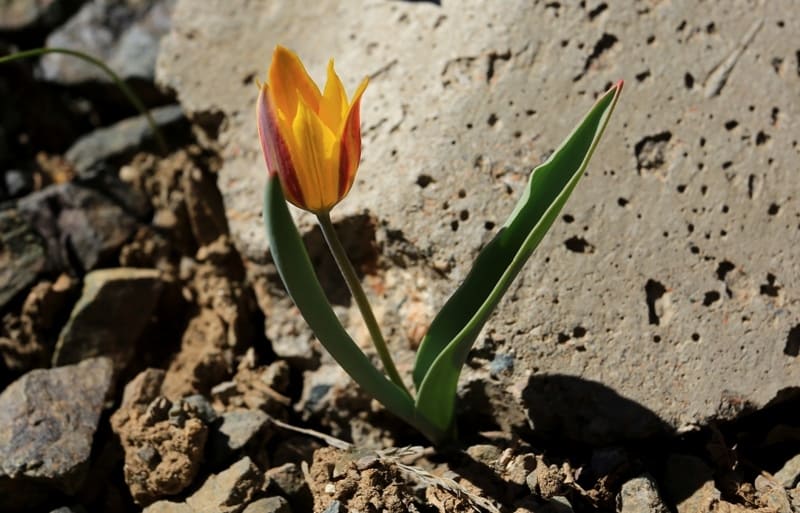
Tulipa greigii is exceptionally striking, not only for its large (up to 10-15 cm) goblet-shaped flower but also for the distinctive dark-purple mottling on its broad, bluish-green leaves. The flower color ranges from the most typical scarlet or red to orange, bright yellow, cream, and nearly white.
The greatest color diversity is found in populations within the Syr-Darya Karatau mountains and the southern part of the Aksu-Zhabagly Nature Reserve. In these areas, spontaneous hybrids between this species and Tulipa kaufmanniana are quite common, while in the central part of the Syrdaryinskiy Karatau Range, hybrids with Tulipa albertii also occur.
Greigii tulip is characterized by high seed productivity and strong seed germination; it thrives in cultivation and responds well to horticultural care. It is successfully grown in many botanical gardens across Central Asia, Russia, and Western Europe.
It plays a significant role in plant breeding, serving as an ancestor to more than 200 cultivars roughly 10% of the entire modern range of cultivated tulips.
Reflecting on the superior qualities of wild tulips, the Dutch collector Dr. Lefebvre (1960) wrote:
"Regarding the hybridization of wild tulips, it seems to me that what I have not 'improved' is, in fact, the most beautiful. I mean to say that in plants taken directly from nature such as Foster’s or Greig’s tulips the form and color of the perianth are more beautiful than those of the hybrid seedlings derived from these same species.
I believe that when it comes to preserving wild flowers especially these unique, natural species it is impossible to surpass their coloration and the exquisite refinement of their forms."
Lefebvre highlighted the role of Kazakhstani tulips in the varieties he developed by incorporating their origins into the names for instance, "Alma-Ata," "Yuri Gagarin," and others. Among the Kazakhstani tulips used in breeding, the Tulipa kaufmanniana holds the second most significant position.
Its natural range lies entirely within the Western Tien-Shan stretching from the Ugam Range to the Karatau Mountains and the western part of the Kyrgyz Alatau. It typically inhabits areas with softer, moister soils, occurring within meadow and meadow-steppe communities, shrub thickets, and apple forests.
Population density can reach as high as 300 individuals per square meter; however, the proportion of generative (flowering) individuals is quite low, due to intensive vegetative propagation. Tulipa kaufmanniana is characterized by a high degree of polymorphism.
In natural populations within the Ugam Range, we have identified 13 forms that differ in their overall habit, as well as in the shape and color of their flowers. The flowers range from 3.5 to 5 cm in height, with shapes varying from flat and star-like to lily-shaped or cup-shaped.
There is a rich diversity of colors, including white, cream, bright yellow, orange, crimson, burgundy, and lilac-white. Seedlings grown from seeds collected from these distinct forms first began to bloom sporadically in their fifth year at the Almaty Botanical Garden.
Notably, they fully retained the habit and flower coloration of their parent forms. Tulipa kaufmanniana is particularly valuable for its early flowering; in some years, in the climate of Almaty, blooming has been observed as early as March 27th. This trait, combined with high morphological plasticity and the capacity for vegetative propagation, makes Tulipa kaufmanniana much like the previously mentioned species exceptionally attractive to plant breeders. Z. M. Silina (1977) notes that more than 200 cultivars have been derived from this species, while the most recent classification lists 57 cultivars (representing 2.7% of the total assortment of cultivated tulips).
Varieties developed by Dutch breeders are the most popular; however, in the mid-20th century, Professor Zinaida Petrovna Bochantseva, working in Tashkent, developed over 10 varieties, including “Aelita”, “Bakhor”, “Nimfa”, “Professor I. A. Raikova”, and “Voskhod Solntsa”, among others.
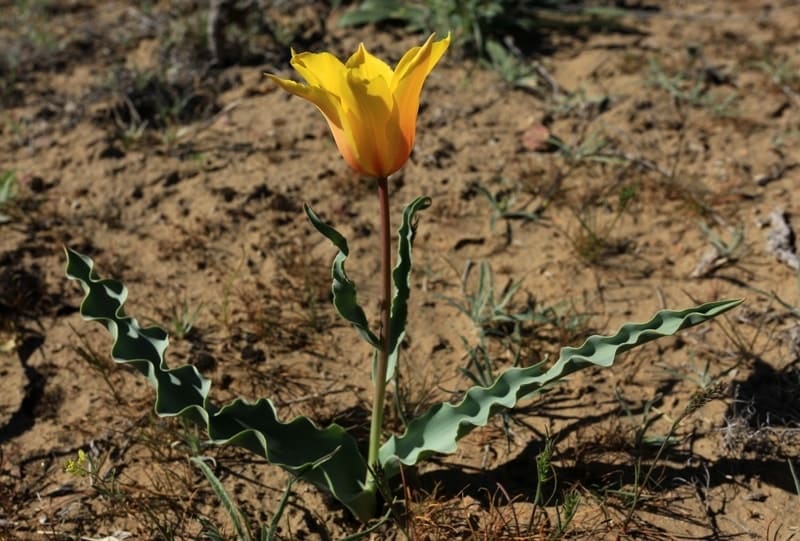
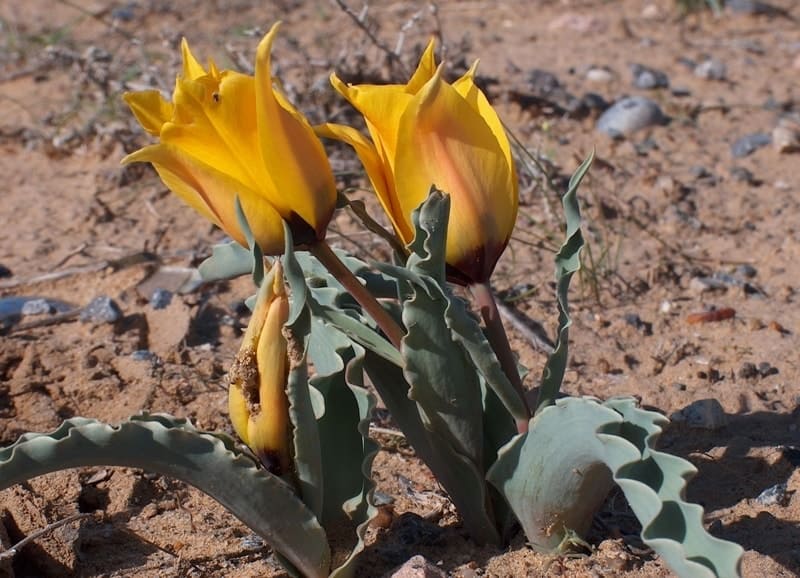
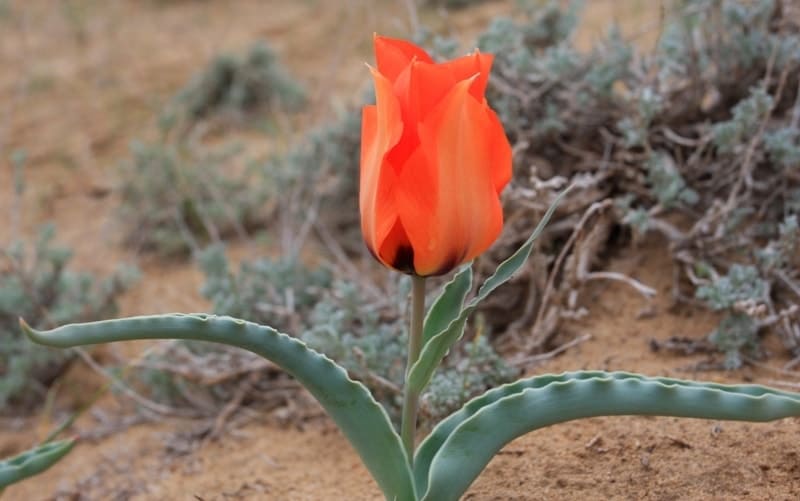
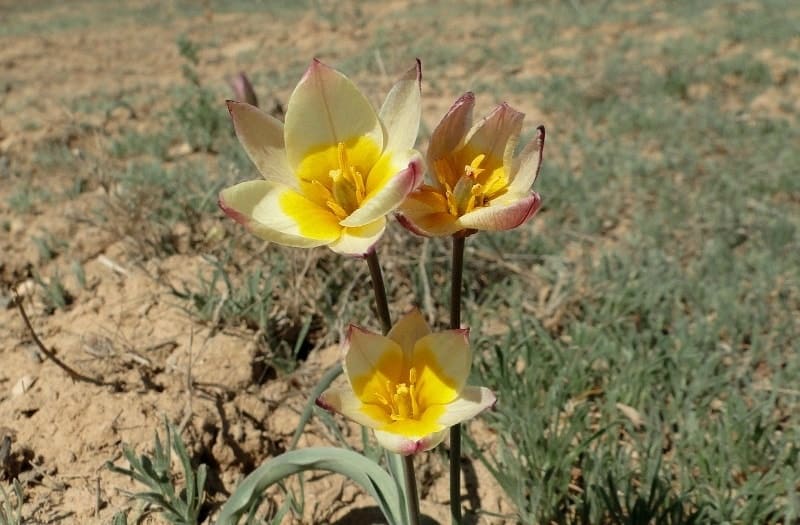
From an ornamental perspective, Tulipa albertii a species endemic to Kazakhstan is particularly interesting. It grows in the gravelly soils of the Karatau foothills, the Chu-Ili Mountains, the southern spurs of the Dzungarskiy Alatau, and the Betpak-Dala Desert.
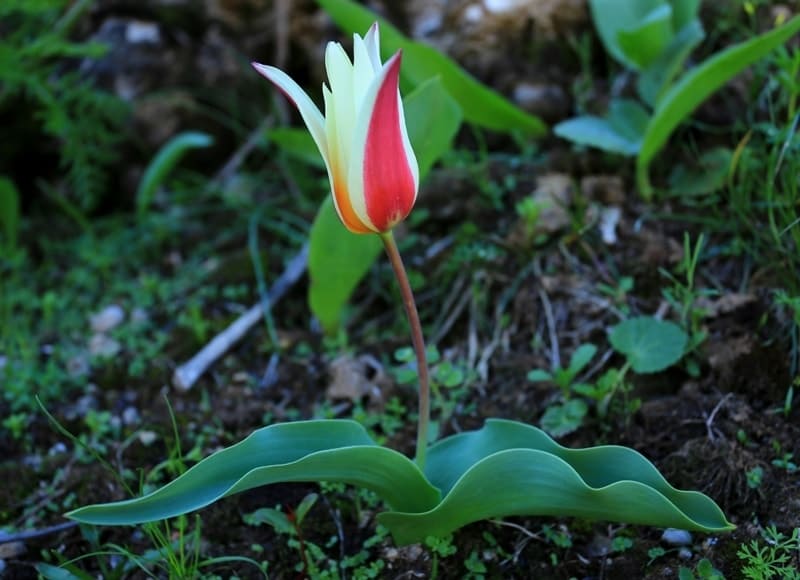
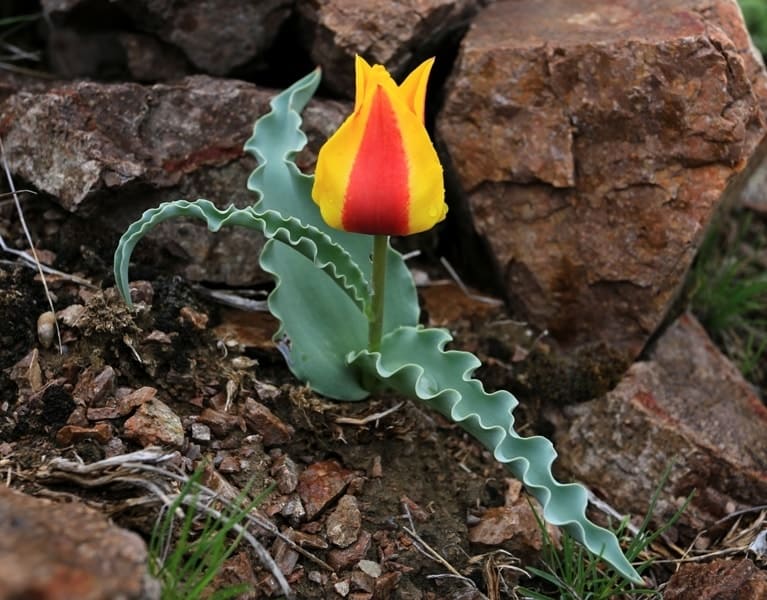
Despite its very short stem (1-12 cm), it features a large, cup-shaped blossom that comes in a wide range of colors. Near the eastern edge of its range, in the Dzungarskiy Alatau, specimens with yellow flowers predominate; near the western edge, in the Syrdaryinskiy Karatau Mountains, the flowers are pinkish-red or red; while in the central part of its range (the Chu-Ili Mountains and the Betpak-Dala Desert), there is a vast diversity of color variations, including pure yellow and red, as well as orange and variegated forms.
Tulipa alberti is quite difficult to cultivate; in our experiments at the Botanical Garden in Almaty, seedlings did not bloom for the first time until their seventh year. Cultivation efforts for this species proved much more successful at the Botanical Garden in Zhezkazgan, where the climate is more arid.
This species is virtually never used in plant breeding. In experiments conducted in 1987 by V. V. Voronin, an enthusiast from Almaty, involving the crossing of wild tulips with one another and with cultivated varieties, the most successful hybrids were those derived from Tulipa albertii and Tulipa greigii.
We have frequently encountered spontaneous hybrids of these species in the Chu-Ili Mountains. Natural hybridization is a highly characteristic feature of Kazakhstani tulips, which significantly complicates species identification a point noted as early as 1935 by A. I. Vvedensky.
This phenomenon is particularly prevalent in Tulipa ostrowskiana; hybrid populations of this species, displaying an exceptionally wide range of flower colors, are commonly found in various gorges of the Zailiskiyi Alatau. In these areas, its habitat overlaps with that of Tulipa kolpakowskiana, resulting in the emergence of numerous natural hybrids.
According to Z. L. Bochantseva (1962), these two species are the most recent additions to an evolutionary lineage that includes Tulipa schrenki*, Tulipa ferganica, and Tulipa zinaidae. Furthermore, Tulipa ostrowskiana is an amphidiploid, possessing a complete set of chromosomes from Tulipa kolpakowskiana and another, as-yet-unidentified, species.
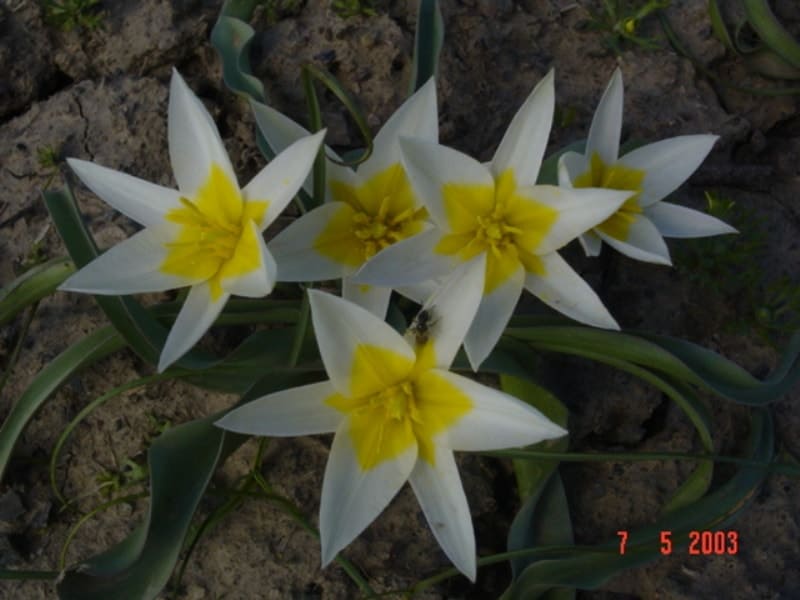
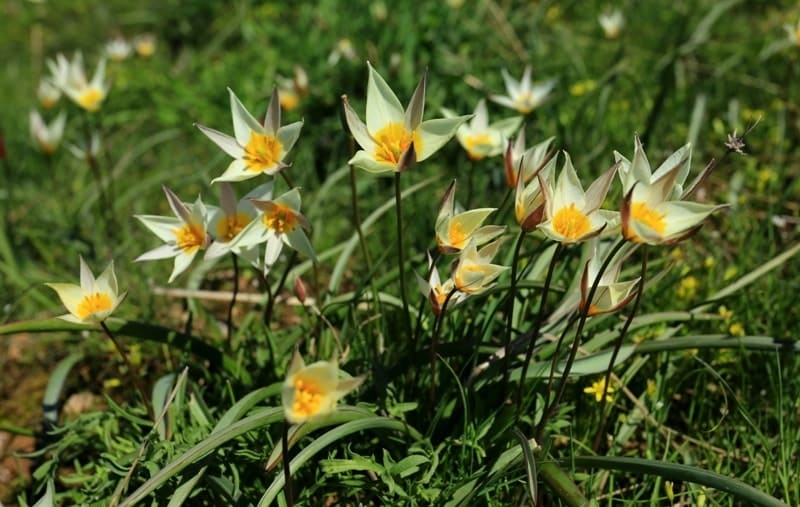
These facts indicate that the process of speciation within this group is not yet complete and remains actively ongoing. A similar pattern is observed among the small-flowered, Western Tien-Shan species of the subgenus Eriostemones a group that includes Tulipa turkestanica, Tulipa bifloriformis, and Tulipa orthopoda which exhibit both a standard chromosome count (2n = 24) and increased chromosome numbers (36, 48). There are often four leaves sometimes even five or six though three-leaved specimens are not uncommon, especially near the upper limit of the plant's range, which in some places can exceed 2,000 meters above sea level.
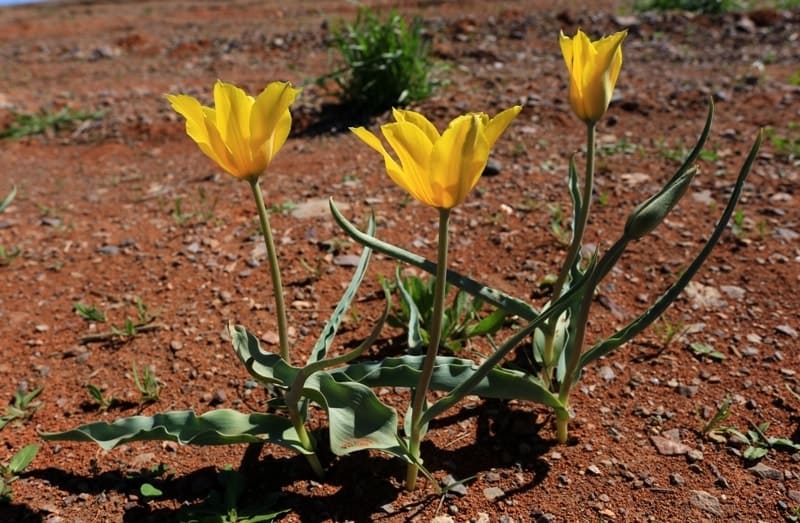
The flower of this species is bright yellow on the inside, while the backs of the outer petals feature a distinct greenish stripe bordered by red or grayish-violet. Tulipa tetraphylla (the four-leaved tulip) is found in the Trans-Ili and Kungei Alatau ranges, with its distribution extending into the Terskey Alatau.
Another large-flowered species found exclusively in the high-altitude zones of the park is the Tulipa tianschanica, which was first described in 1880. Its range is similar to that of the aforementioned species, though it occurs much less frequently.
At first glance, it appears to be a smaller version of Tulipa tetraphylla. Its primary distinguishing feature lies in the bulb scales: rather than being tough, leathery, and almost shell-like, they are soft and have a paper-like texture. The Tien Shan tulip is a very rare species within the park and, consequently, remains insufficiently studied.
It typically blooms in late June or July and has been found only in the upper reaches of the Issyk River within the Almaty Nature Reserve and at the high-altitude junction where the Asy, Zhenishke, and Turgen rivers converge. In contrast, two other high-altitude species the hairy-stamen tulip Tulipa dasystemon and the heterophyllous tulip Tulipa heterophylla are widespread.
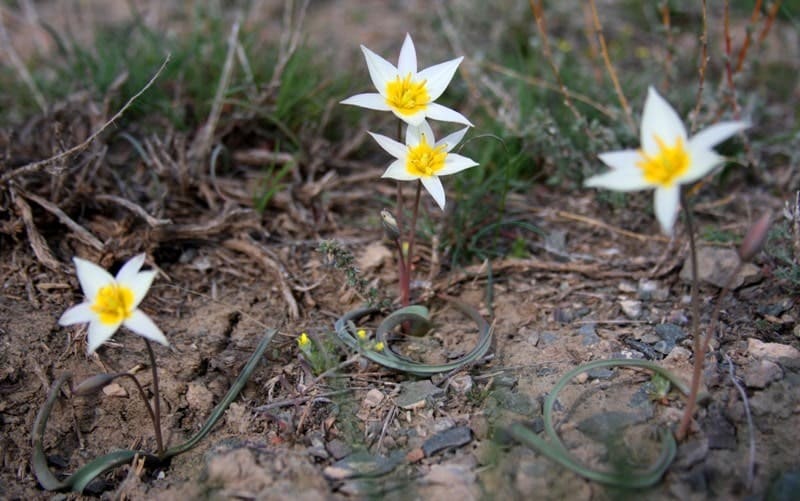
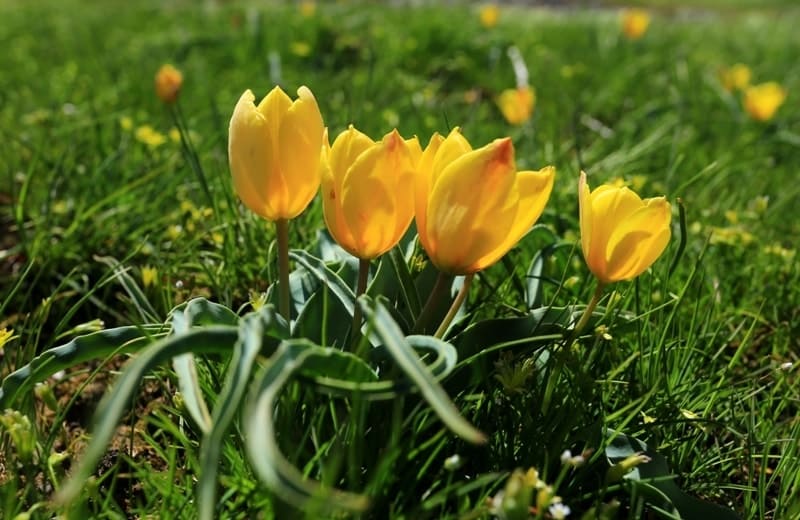
They can be found in meadows, steppe-like areas, on rocky slopes, and in forest clearings, ranging from the mid-altitude spruce forests up to the alpine zone. Both species are characterized by having only two linear leaves and small yellow flowers.
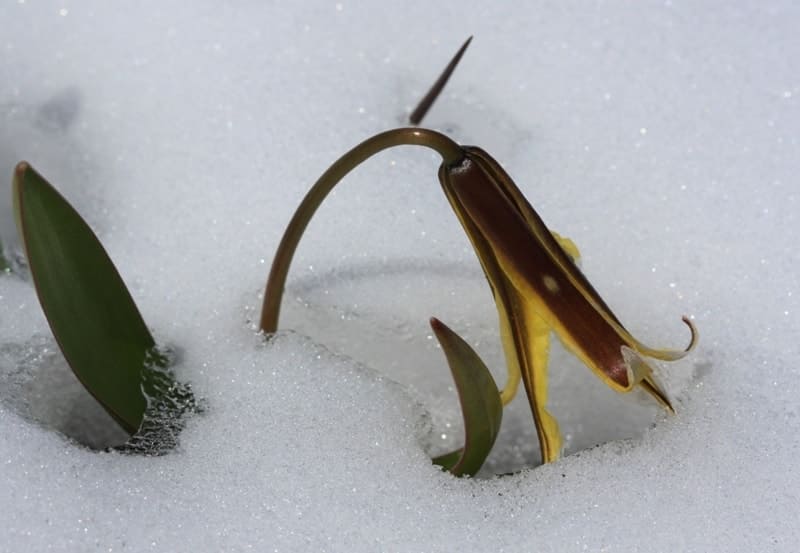
In the first species, the flowers open into a flat, star-like shape, while in the second, they are bell-shaped and almost always nodding. On the snow-free patches of south-facing, sun-warmed slopes for instance, in the vicinity of Big Almaty Lake the first flowers of these species appear as early as the end of April.
At the upper limits of their range, near melting snowfields (such as at the Zhosaly-Kezen Pass), the last blooms can still be seen as late as mid-to-late July. Thus, the flowering season for these hardy "alpines" spans nearly three months in the wild.
They typically bloom quite profusely, creating vibrant yellow patches across valleys and slopes. The density of flowering plants can reach 30-40 individuals per square meter; since the two species often grow together, the visual appeal and unique character of these brilliant golden patches are further enhanced.
Many people, unfamiliar with botany, do not realize that these plants are actually tulips. Some mistake them for yellow snowdrops or crocuses, while others insist that they are some of which are representatives of the “Gagea” (star-of-Bethlehem) genus.
However, all of these are wild-growing tulips, which constitute a valuable gene pool for our incredibly rich biodiversity. They all require protection especially the large-flowered Ostrovsky’s tulip Tulipa ostrowskiana and Tulipa kolpakowskiana, both of which are listed in the Red Book of Kazakhstan.
Therefore, anyone who collects these plants for bouquets or for sale should be warned: these species are protected by the state, regardless of where they are found. (The fines for picking them are as high as those for any other species listed in the Red Book 648 tenge, or half of the "monthly calculation index," for every single specimen plucked.)
Wild-growing tulips are a national treasure and a source of pride for us all... It is not without reason that Kazakhstan is considered the birthplace of the tulip.

Authority:
A. A. Ivashchenko, Candidate of Biological Sciences, Senior Researcher at the Ile-Alatau State National Natural Park, Almaty. 2009.