





You are here
Atyrau Museum of History and Local Lore.
Excursion Kazakhstan tours.
"If somewhere in the British Museum there were a cozy room with no more than twenty exhibits, good lighting, comfortable chairs, and a sign inviting you to smoke, I don't think I'd ever leave the museum."
Joseph Priestley.
Adventure and photo tours in Kazakhstan.
Atyrau Regional Museum of History and Local Lore is located at an altitude of 24 m. b. s. l. at 3 Bauyrzhan Momyshuly Street, on corner of Azattyk Avenue and B. Momyshuly Street, 111 meters northeast of Sariev Art Museum, 321 meters from left bank of Ural River, in city of Atyrau.
History of Atyrau Regional Museum of History and Local Lore.
The Atyrau Regional Museum of History and Local Lore was established in 1939 on the premises of a school museum by decision of the Supreme Soviet of the Kazakh SSR. Its official opening to visitors took place in the old church building on November 5, 1940.
The museum was initially opened in the old Old Believer church on the corner of S. Ordzhonikidze Street 14 (now Aiteke Bi Street) and Chervyakov Street (now Dosymov Street), built in the pre-war years. The first exhibition consisted of 200 exhibits.
Over time, the museum transformed from a repository of antiquities into a cultural center for the region. On September 3, 1999, to commemorate the 100th anniversary of Kazakhstan's oil, the museum received a new, restored building on B. Momyshuly Street. President of the Republic of Kazakhstan N.A. Nazarbayev attended the opening.
Exhibits and artifacts in Atyrau Museum of History and Local Lore.
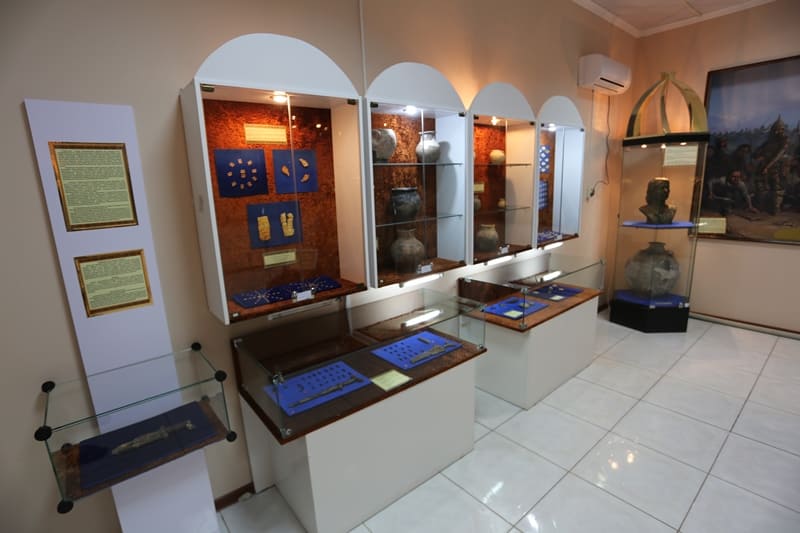
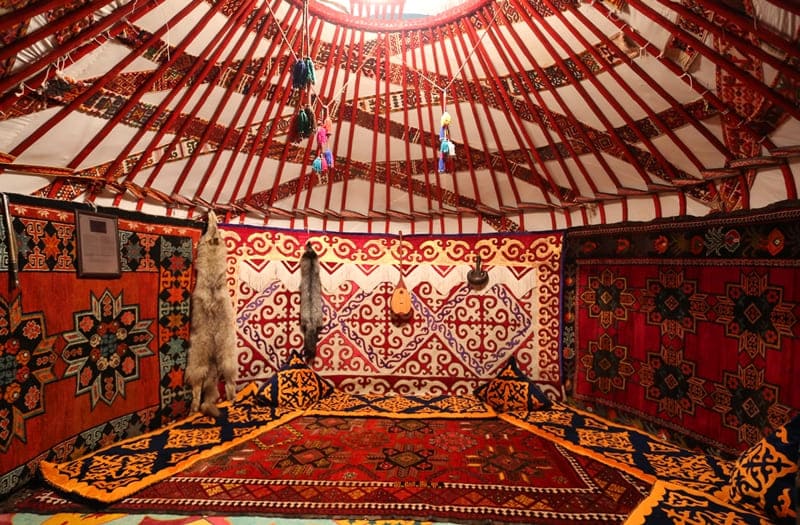
The museum is a cultural center that conducts extensive research, preservation, and promotion of the history, spiritual, and cultural heritage of Atyrau - one of the sacred corners of Kazakhstan. Having celebrated its 60th anniversary, the museum has its own history, becoming not only a "keeper of antiquities" but also a cultural center for the region.
The museum collection contains over 52,720 exhibits, with an average of 400 new items added annually. The exhibitions feature extensive photographic documentation documenting significant milestones in the modern history of the Caspian region over the years: the development of the oil fields of Emba, Mangyshlak, and Mesopotamia, and the fishing industry of the Ural-Caspian region.
Of great historical value is the exhibition dedicated to the ancient settlement of Sarai-Dzhuk (Saraichik in Russian transcription), which existed in the territory of today's Atyrau region in the XIIth century, during the Mongol invasion. The museum's exhibits are housed in halls dedicated to archeology, ethnography, regional history from the XIIth to the XXth centuries, modern history, the history of culture and literature, "The Riddle of the Century," and "Harmony of the Centuries."
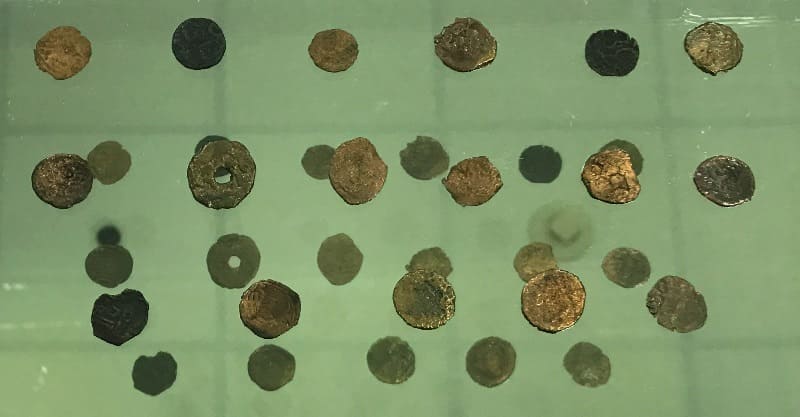
Every year, the museum's collection is replenished by an average of 400 exhibits. The archeology hall also features exhibits from another ancient city, Aktobe-Laeti, located 18 km from Atyrau. These include metal casting molds, beads, ceramics, and XVIth-century coins.
A separate exhibit tells the story of the national liberation movement led by Isatay Taimanov and Makhambet Utemisov. A special exhibition is dedicated to the distinctive musical art of the indigenous people of the Caspian steppes.
Rare exhibits at Atyrau Museum of History and Local History.
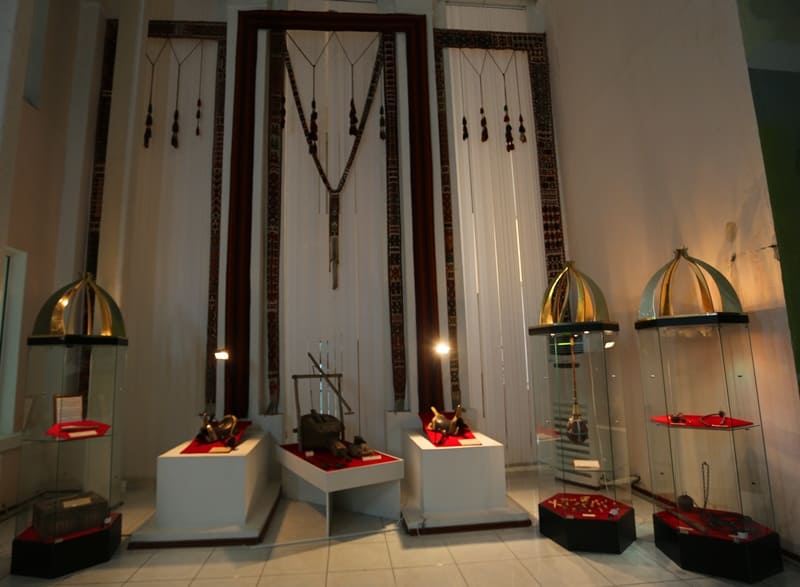
On November 6, 2000, the great Kurmangazy's gun was donated to the regional museum of local history. This truly priceless gift was presented by K. Akhmedyarov. A priceless relic, a museum rarity, is Kurmangazy's dombra with his autograph.
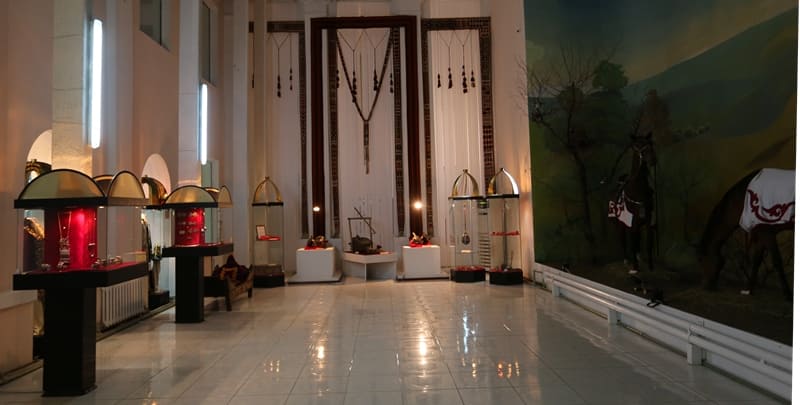
A unique collection of women's jewelry made of precious metal by zerger masters (early XIXth century) is also on display. Of particular interest is the museum's collection of saddles – approximately 40 women's and over 50 men's saddles. The "shoshakbas" saddle features a silver-plated front pommel, with a plate bearing an ornament in the form of gilded trefoils and octofoils enclosed in a solar circle.
The back pommel is decorated with three silver plates featuring a floral pattern executed using the niello technique. The saddle is covered in leather. The front and back pommels of the saddle are composed of bone plates with copper patterned overlays.
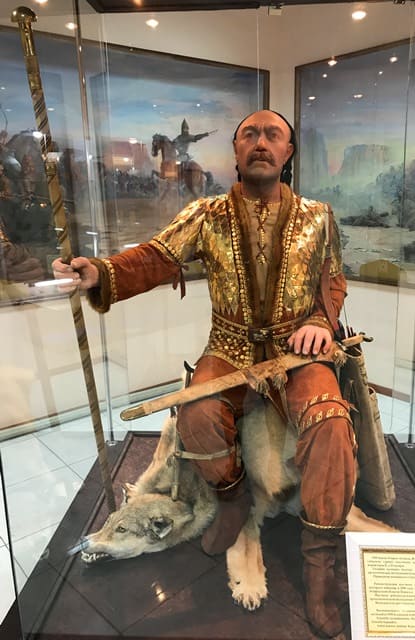
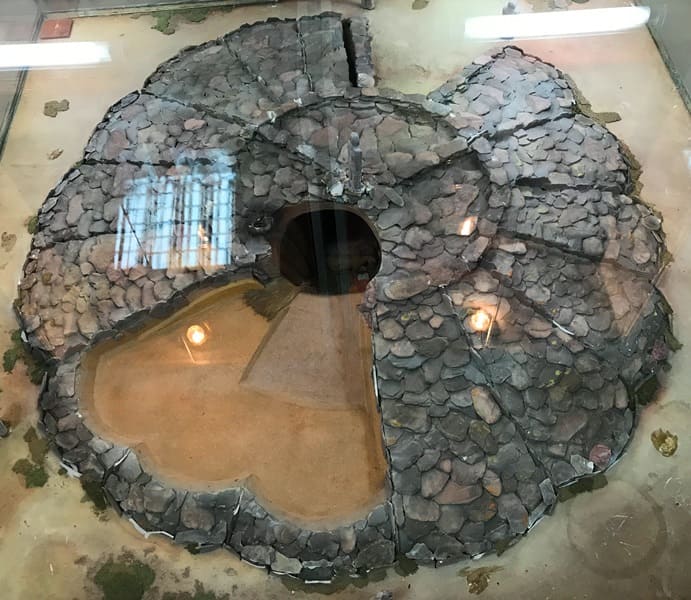
The ornamentation consists of straight lines and circles with dots. The saddle is covered in black leather with an embossed pattern, reinforced with silver nails. One of the museum's most valuable exhibits is the "Golden Man," discovered during archaeological excavations led by Z. Samashev, in In 1999, an excavation was carried out in the Araltobe burial mound in the Zhylyoi district.
Gold plaques that adorned a chieftain's armor, fragments of a staff (asatayak), and the remains of two sacrificed horses and a golden eagle, as well as clay jugs, were found in the mound. Scientists determined that this was the burial of a Sarmatian chieftain who lived in the second century BC. Other burial mounds in Araltobe contained fragments of a dagger, a quiver, arrowheads, clay jugs, and beads.
An iron saber dating from the first century BC to the first century AD was a major discovery for archaeologists. A significant portion of the exhibition also includes items brought back from excavations at the unique ancient site of Saraishyk, a city in the region.
As the headquarters of Batu Khan, the capital of the Nogai Horde, and the center of the Kazakh Khanate, it experienced a period of prosperity during the 13th and 14th centuries under Kasym Khan. One of the most valuable exhibits from this period is a jug found in 1909 at a depth of three meters.
Its uniqueness lies in the inscription preserved on it, in Central Asian Turkish. This is a fragment of a XIIIth-century poem by Zhusup Balasaguni. Particularly valuable exhibits in the applied arts hall include a copy of the camisole of Fatima Khanum, wife of Zhangir Khan, as well as seals of khans and batyrs, and other items related to historical figures of the region.
Branches of Atyrau Museum of History and Local History.
Branches of the Museum of History and Local History are located in the Inder, Isatay, Kyzylkugin, and Kurmangazinsky districts of the region. The regional museum of decorative and applied arts, which contains over 2,000 original works, frequently hosts exhibitions by local artists including Zh. Aralbekov, K. Amanov, K.D. Osniyazov, E. Tokayev, and M. Kisimov.
In December 2000, celebrations were held in Atyrau to mark the 60th anniversary of the regional history and local history museum.
Jewelry at Atyrau History and Local History Museum.
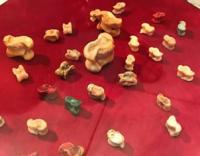
A fascinating part of the collection is traditional Kazakh jewelry from the XVIIIth-XIXth centuries, made of silver, gilded, with natural and semi-precious stones, and colored inlays. Jewelry is a priceless heritage of the Kazakh people and one of the most remarkable forms of artistic expression.
Master jewelers created pieces of astonishing beauty and elegance. The museum's collection includes chest ornaments (onirzhiek), earrings, rings, gilded bracelets, silver boitumars (amulets), buttons, temple ornaments (shekelik), braid ornaments (shashbau), clasps, thimbles, toothpicks, and other items.
Fauna of Atyrau Region at Atyrau Museum.
The fauna of the Atyrau Region is distinguished by its diversity. Some of the species inhabiting the deserts and steppes are listed in the Red Book of Kazakhstan. A distinctive feature of the region is the amazing diversity of birds nesting on the Caspian Sea coast and along the riverbanks.
Among them are rare and protected species such as swans, Dalmatian and Great White pelicans, and flamingos.
Conferences, meetings, and exhibitions at Atyrau Museum of History and Local Lore.
The museum regularly hosts scientific and practical conferences, meetings, ethnographic and thematic exhibitions, anniversary events, and open lessons. One of the museum's significant events is the exhibition "Zhaiyk Zhagalauy Syr Shertedi" ("Secrets of the Shores of Zhaiyk"), which was held in Astana at the Museum of the First President of Kazakhstan.
History of a cast iron cannon in courtyard of museum in Atyrau.
This cast-iron 12-pounder cannon was cast in the XVIIIth century (presumably the XVIIIth century) at Ural foundries. The cannon's barrel retains stamps, which have led historians to believe it was made in Russian foundries. The 12-pounder cast-iron cannon, weighing 1,920 kg, was loaded with 5 kg cannonballs and had a firing range of 200 to 210 meters.
(Presumably at the Kamensk Iron Foundry (founded in 1700-1701) – one of the oldest state-owned enterprises in the Urals, in Kamensk-Uralsky, which was the first to begin casting cannons in 1701. The plant played a key role in supplying the army with ammunition, operating until 1926, and its history is linked to the development of metallurgy and industrial heritage.
According to the decree of the Tobolsk governor, the first cast iron was produced on October 15 (26), 1701. The first plant in the Urals to begin regular production of ammunition and weapons (cannons, mortars) for the needs of the Northern War.
The factory produced cast iron, ammunition, and cannons (until 1819), and later, household utensils and products for the Great Patriotic War. The factory's administration building (1825-1828) is a federal architectural monument. In 1926, the factory closed, and its successors were enterprises producing electric motors and other products.
The cannon is an example of fortress artillery, which was used to arm the garrisons of the Yaitskaya (Ural) Fortified Line. The cast-iron cannon weighs 1920 kg, was loaded with 5 kg cannonballs, and had a firing range of 200 to 210 meters. The thickness of the cast iron flash shelf is about 50 cm, the thickness at the end of the barrel is about 30 cm.
(The flash (shelf) part of the old cannon, located in the courtyard of the Atyrau Museum, refers to the charge ignition system located in the breech (rear) part of the gun. The flash hole is a through channel of small diameter in the upper part of the breech, through which fire was transferred from the match to the main powder charge inside the barrel.
Flash shelf (depression). Around the hole, a small depression ("cup") was often made, where a small amount of fine "primer" powder was poured to facilitate ignition. The depression (cup) is located behind the dolphins (carrying handles) and in front of the grape (a rounded protrusion at the very end of the cannon).
In cast-iron cannons of the 18th century, like the one presented in the museum, the flash hole is often the most vulnerable place. Over time, due to corrosion, it can expand or become clogged with metal oxidation products. If you see the cannon in person, you'll notice this small hole at the top of the "thick" end of the barrel - it was through this hole that the cannon was fired by the defenders of the Yaitskaya Line.
The cannon was discovered by accident in 1936 during construction and excavation work near an oil pumping station and an oil refinery, in the area of the old town (formerly Guryev) in the Zhilokosinsky (now Zhaloisky) district. The station began to actively develop in 1912 with the construction of the region's first oil pipeline, "Dossor-Rakusha-Caspian," built by the Emba company.
Rakusha served as the main transshipment point. Oil from the Dossor field was delivered here via pipeline, after which it was loaded onto sea barges for shipment across the Caspian Sea to refineries in Astrakhan and Baku. By March 1917, Rakusha station had already begun to produce oil.
A factory committee was active, indicating the existence of a well-established workforce and production base. At that time, Rakusha was one of the few places in the region with a developed industrial infrastructure, including tank farms and oil loading docks.
Today, the village of Rakusha is part of the Yerkingala rural district of the city of Atyrau. The historic buildings of the factory have practically disappeared, but the site itself remains an important point in the history of Kazakhstan's first oil. The cast-iron cannon had been buried for a long time, which helped it partially survive despite the effects of corrosion.
The cannon was found and then excavated by the Sartov family: local residents of the Old Town (Guryev), on whose property (in a vegetable garden or courtyard) the cannon was discovered. The find had long been in private ownership, which was not uncommon in those days – ancient cannons were often used in everyday life as hitching posts or foundation elements.
Although the authorities in 1936 demanded that it be handed over The artifact's arrival in the regional center, the lack of transportation, and the find's "private status" delayed the process. The Sarts essentially kept the cannon until the local museum was established.
Fifty rubles in 1940 was a significant sum for the family budget (for comparison, it was approximately 1/6-1/10 of the average monthly worker's salary at the time). The payment of 50 rubles to the Sarts allowed the museum to officially register the cannon as a state exhibit.
This purchase became one of the first major stock transactions of the newly opened Gurevsky Regional Museum of Local History. The cannon, which belonged to the Sarts, was transformed from "yard iron" into the number one item in the museum's collection.
This story explains why the exhibit has been preserved in such good condition - it was looked after as a valuable asset even before it fell into the hands of historians. The cannon, which now stands at the entrance to the Atyrau Regional Museum, almost left Gurevsky at the end of the 1940s. 1930s.
According to a publication in the Prikaspiyskaya Pravda newspaper from September 1936, events unfolded as follows: Request from Uralsk: "The regional museum (then based in Uralsk, the administrative center of the West Kazakhstan region) requested the transfer of a valuable artifact - an ancient cast-iron cannon found in the Gurevsky district."
A transportation problem arose, and the museum then officially approached Gurevsky organizations with a request to organize the delivery of the cannon. However, at that time, transportation of such a large quantity was difficult. Transporting the heavy load (the cannon weighs over 2 tons) was an extremely difficult task due to the lack of suitable equipment and poor roads.
Despite the directive, the cannon remained in Guryev. Later, when the Guryev (now Atyrau) Regional History and Local History Museum was officially opened in 1940, this exhibit took center stage. The fact that the cannon was intended to be taken as a "valuable exhibit" underscores its rarity.
It was the preservation of its structural elements, including the touchhole (through which the cannon was fired), that made it a fully-fledged military-historical monument, not just a piece of metal. Today, the cannon is considered the museum's signature feature.
It is one of the most popular photographic objects among museum visitors, symbolizing the city's transition from a wooden fortress founded by the Guryev brothers to a major administrative center. It commemorates not only the military history of the XVIIIth century but also the perseverance of local historians who managed to preserve the artifact in their city.
The cannon is installed at the entrance to the museum as a symbol of the region's military history. It recalls the times when the city of Guryev (now Atyrau) was an important outpost on the Caspian Sea, protecting trade routes.
Alexander Petrov.
Address of Atyrau Museum of History and Local Lore:
B. Momyshuly Street, 3
Hours:
9:00 AM to 6:00 PM,
lunch from 1:00 PM to 2:00 PM
Closed: Monday, the last day of the month is a cleaning day.
Phones:
+7 (7122) 32 81 36
+7 (7122) 32 13 89
Geographical coordinates of Atyrau Museum of History and Local Lore: N47°06'25 E51°55'26





Authority:
Alexander Petrov..
www.atyrau-city.kz
https://culturemap.kz/ru/object/atyrauskiiy-oblastnoiy-istoriko-kraevedcheskiiy-muzeiy
Photos by:
Alexander Petrov.