




You are here
Rare plant species in Burabay Nature Park.
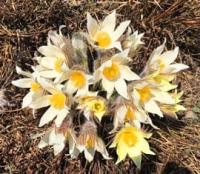
Rare plant species in Kazakhstan.
"There is no doubt about the natural origin of the alder in this area. This species occupies its characteristic habitats here, with deep snow cover and constant abundant moisture from springs, growing alongside its usual companions."
Gorchakovsky, P.L., "Forest Oases of Kazakh Uplands." 1987.
Plants of Kazakh Uplands.
This article presents information on the distribution of rare plants listed in the Red Data Book of Kazakhstan in the "Burabay" National Park (Central Kazakhstan): Adonis vernalis L., Alnus glutinosa (L.) Gaertn., Cypripedium calceolus L., Drosera rotundifolia L., Sphagnum teres (Schimp.) Ångstr.
For each plant species listed, the general range, distribution in Kazakhstan, and growing conditions within the natural park are described. The vast expanses of Central Kazakhstan are characterized by melkosopochnik (low, highly dissected mountain ranges rising above the smooth surface of the Mesozoic peneplain formed on the vast Kazakh Shield).
The entire territory is located in the steppe subregion of the Holarctic. The Kokche Tau Upland, located in the northern part of Central Kazakhstan, has been characterized by its relief and microclimate, creating favorable conditions for the preservation of boreal elements of the Holarctic flora, a topic of ongoing interest to botanists.
This territory is characterized by granite lowlands with numerous lakes, surrounded by pine and birch forests. The area around Lake Borovoe is particularly diverse in flora. A state nature reserve was established here in 1935, and in 2000, the "Burabay" National Nature Park was established on its former territory.
This area has been visited repeatedly by botanists Z.V. Karamysheva and E.I. Rachkovskaya. The results of botanical research in the steppe part of the Kazakh Uplands are summarized and a detailed description of the Kokchetav botanical-geographical district is provided.
The floristic diversity of the Kokchetau Upland is quite extensive; 757 plant species are listed for the "Burabay" National Park, 95 of which are considered rare and in need of protection. These include the lichen Cladonia rangiferina (L.) F.H. Wigg., the moss Sphagnum teres (Schimp.) Ångstr, and 93 species of higher vascular plants, 68 of which are boreal relics.
However, the current distribution and population status of these species within the national park remain virtually unstudied. The aim of our research is to study the distribution of rare and endangered plants within "Burabay" National Park.
Materials and Methods for Plant Research in "Burabay" Park.
Floristic studies conducted within "Burabay" National Park in 2010 (May - June) and 2011 (June) allowed us to clarify the distribution of several rare plants. The collected material is housed in the herbarium of the Kuzbass Botanical Garden (KUZ), the herbarium of Kostanay University, and the "Burabay" National Park.
The authors are grateful to A.E. Nozhinkov for identifying the bryophyte collections. The Latin names of higher plants are given according to S.A. Abdulina, and the names of bryophytes are given in accordance with the "Checklist of Mosses of East Europe and North Asia."
Results of Plant Research in "Burabay" Nature Park.
Sphagnum teres (Schimp.) Ångstr. is widespread in the arctic and boreal zones of the Holarctic, and in the mountains, extending as far as Southern Europe, the Caucasus, Tibet, and Japan. In southeastern Western Siberia, it grows in mesotrophic sedge and hypnum and sedge and sphagnum bogs and sparse forests of poor lowland and transitional bogs, and less commonly in forested sphagnum bogs.
A very rare species for Central Asia and Kazakhstan. It is listed in the Red Book of the Kazakh SSR for the Karkaraly Mountains. P.L. Gorchakovsky noted this species in the Borovsky forest area, particularly in the Shchuchye Lake peat bog, where it was found in a hummocky, hollow bog.
We discovered a population of Sphagnum teres on the shore of Lake Maloye Karasye (Karasu), in the 3rd quarter of the Barmashinsky forestry. The area is approximately 1,000 square meters. Sphagnum forms a floating bed along the shore, where Comarum palustre L., Menyanthes trifod., Carex buxbaumii Wahlenb., C. lasiocarpa Ehrh., C. limosa L., C. loliacea L., and C. vaginata Tausch.
Other bryophyte species also occur here: Aulacomnium palustre (Hedw.) Schwaegr., Dicranum polysetum Sw., Pleurozium schreberi (Brid.) Mitt., Pohlia nutans (Hedw.) Lindb., Polytrichum strictum Sw., Ptilium crista-castrensis (Hedw.) De Not., Sphagnum fuscum (Schimp.) Klinggr., Sphagnum warnstorfii Russ., Tetraphis pellucida Hedw.
Cypripedium calceolus L. is a Holarctic species common in Eurasia and North America. In Kazakhstan, Cypripedium calceolus is very rare – in the Irtysh and Semipalatinsk pine forest regions, as well as in the Altai Mountains. V.F. Semenov noted this species for the Kokchetav Upland. According to Z.V. According to Karamysheva and E.I. Rachkovskaya, the only collection of this species within the Kazakh Uplands was made by Ignatov and Piotrovsky in 1902 on the shore of Lake Katarkol.
P.L. Gorchakovsky recorded the limestone slipper in the Borovsky forest area: 1.5 kilometers northeast of the village of Barmashino, in a birch forest on peaty soil, near a spring, near Lake Katarkol.
We have identified six habitats for this species:
1. 3 kilometers east of the village of Katarkol, 2nd quarter of the Katarkol forestry. The population coordinates are 52.95030° N, 070.52148° E, area – 100 square meters. The population is located in a pine-birch forest. The shrub layer is not pronounced.
Rubus saxatilis L. dominates the herbaceous layer, with a projective cover of 80%. Cypripedium calceolus occurs in small, loose groups. During the population survey on June 3, 2011, the beginning of flowering was observed.
2. 3.5 kilometers east of the village of Katarkol, Quarter 4 of the Katarkol Forestry. The population coordinates are 52.98173° N, 070.51619° E; the area is approximately 1,000 square meters. The population is part of a birch-pine forest. The shrub layer is not distinct; isolated specimens of Ribes nigrum L. are present.
The total projective cover of the herbaceous layer varies between 25 and 32%. Rubus saxatilis dominates in some areas, while Filipendula ulmaria (L.) Maxim., Sanguisorba officinalis L., and Moneses uniflora (L.) A. Gray are also common. Four separate Cypripedium calceolus loci were found, each comprising six, fifteen, eleven, and four clumps. Almost all plants were generative and in the early flowering stage.
3. 2.5 kilometers northeast, east of Shchuchinsk, in the 211th quarter of the Barmashinsky forestry. Population coordinates are 52.96242° N, 70.35434° E; area is 200 square meters. Cypripedium calceolus grows in sparse aspen forests without a distinct shrub layer. The projective cover of the herbaceous layer is 34%.
The dominant species is Filipendula ulmaria; other species include Rubus saxatilis, Serratula coronata L., Sanguisorba officinalis, and Melica nutans L. The population is sparse—only seven clumps were found, two of which included generative individuals.
4. On the outskirts of Shchuchinsk, in the 216th quarter of the Barmashinsky forestry (52.96830° N, 70.27809° E), the area is 10 square meters. Three separate clumps (all generative individuals) were found in a stream floodplain with sparse shrub thickets of Padus avium Mill., Sorbus sibirica Hedl., Ribes nigrum, and Rosa majalis Herrm.
The herbaceous layer is formed by Angelica sylvestris L., Rubus saxatilis, Equisetum sylvaticum L., Filipendula ulmaria, and Pleurospermum uralense Hoffm.
5. Location: 2.5 kilometers northeast, east of Burabay village, in the 15th quarter of the Mirny forestry (53.09061° N, 70.38353° E), area – 1,200 square meters. The population is located in a birch forest. Single specimens of Cotoneaster melanocarpus Fisch. ex Blytt and Ribes nigrum are found in the undergrowth.
The herbaceous layer is dominated by Rubus saxatilis, with a projective cover of 20%. Cypripedium calceolus occurs in groups (158 clumps in total).
6. Another Cypripedium calceolus location needs confirmation. Several specimens were discovered in June 2010 south of the village of Burabay, along the eastern shore of Lake Borovoe, in the 14th quarter of the Borovskoye forestry. In 2011, we were unable to find any plants.They may have been exterminated, as The alders were located very close to the settlement, practically next to the highway connecting the village of Burabay and the city of Shchuchinsk.
Research has shown that Cypripedium calceolus is found quite regularly within the national park in well-drained pine-birch, birch-aspen, and aspen forests. The clump-like arrangement of the plants is noteworthy, due to the high anthropogenic load throughout the national park.
Some populations are located near the city of Shchuchinsk in areas of intense recreational use. These populations require special attention and protection. Alnus glutinosa (L.) Gaertn. The species' range is western Eurasian – it is found in North Africa, Europe, Asia Minor, and the Caucasus.
In Kazakhstan, alder is found significantly separated from its main range. In the Red Data Book of Kazakhstan, the species is listed for the vicinity of Martuk Station along the Ilek River, near Lake Koshmurun and the village of Toguzaksky in Kostanay Oblast, and in the Yermentau, Karkaraly, and Bayanaul Mountains.
Nearby locations are listed for the southern Kurgan Oblast. A location of Alnus glutinosa in the Borovsky Massif on the outskirts of Shchuchinsk (Barmashino village) in Quarter 8 of the Barmashinsky Experimental Forestry was described in detail by P.L. Gorchakovsky in 1986.
In a deep valley of a spring-fed stream, 20 individuals were found in a swampy birch-aspen-pine forest. The soil is orthotrophic, with a hummocky surface. The largest trees are six, 16-18 meters tall, with a diameter at breast height of 20-24 cm, and are approximately 60 years old.
The remaining trees are younger and smaller. The understory consisted of Ribes nigrum and Padus avium. The grass cover consisted of: Thelypteris palustris, Scirpus sylvaticus, Lysimachia vulgaris L., Urtica dioica L., Geum rivale L., Equisetum hyemale L., Equisetum sylvaticum, Equisetum pratense Ehrh., and Filipendula ulmaria.
The moss cover consisted of Pleurozium schreberi and Climacium dendroides (Hedw.) Web. et Mohr. P.L. Gorchakovsky noted that there was a deadfall of old, dead specimens 28 cm in diameter. "There is no doubt," wrote P.L. Gorchakovsky, "about the natural origin of the alder at this point."
"This species occupies its characteristic habitats here, with deep snow cover and constant abundant moisture from springs, growing alongside its usual companions" [5. P. 83]. Currently, this habitat is located near a dam blocking a stream, near a forestry college with an extensive arboretum.
According to the latest forest inventory, the site belongs to the 216th quarter of the Barmashinsky forestry. We discovered 13 alder trees, 18 - 20 meters tall, bearing fruit, part of a swampy birch-aspen-pine forest covering an area of 1,600 square meters.
The soils are hydromorphic and excessively moist. The average diameter of Alnus glutinosa at breast height is 25 cm ± 2.4 (min 12 cm, max 36 cm). Seed regeneration was not observed; stump shoots were numerous. The understory is dominated by invasive plants: Malus baccata (L.) Borkh., Ulmus laevis Pall., Sorbus sibirica Hedl., Acer negundo L., and A. campestris L.
The shrub layer is formed by Euonymus europaea L., 30 - 40 cm tall, with a projective cover of 40%; scattered Ribes nigrum bushes are also present. The herbaceous layer is formed by Geum aleppicum Jacq., Geranium pratense L., Vicia sepium L., Rubus saxatilis, Urtica dioica, Chelidonum majus L., Mentha arvensis L., Ranunculus repens L., Humulus lupulus L., Angelica sylvestris, Solidago dahurica Kitag., and others.
A complete change in the floristic composition of the woody plants in the understory is noteworthy. The increase in the proportion of alien plants has completely changed the structure of alder stands. The most aggressive is Euonymus europaea, which actively displaces native species from the shrub layer, forming dense thickets.
The proportion of weedy species has increased in the herbaceous layer. This is undoubtedly a consequence of increased anthropogenic impact on the Alnus glutinosa cenopopulation. The proximity of the Borovsk Forestry Technical School (college), founded in the XIXth century, and the extensive arboretum surrounding it, which has existed for about a hundred years, raises doubts about the natural origin of Alnus glutinosa populations.
On the other hand, alder is found in nearby mountain ranges – the Ermentau Mountains, where there are 76 hectares of alder forests, and the Bayanaul Mountains, where there are over 500 hectares of alder forests. Alder was noted in the Karkaraly Mountains in the early XXth century by S.E. Kucherovskaya [16, 17], but no further collections were made [18].
Adonis vernalis L. General distribution: from Europe to Eastern Siberia. In Kazakhstan, it is found in the Tobol-Ishim, Irtysh, Caspian regions, and in Altai [14]. It is cited for the Kokchetav district in the work of V.F. Semenov [4]. P.L. Gorchakovsky [5] notes Adonis vernalis in the Imantavsky and Borovsky forest areas. In 1943, I.N. Olovyannikova [19] assessed the reserves of Adonis vernalis within the Borovoe Nature Reserve.
She classifies Adonis as a medicinal plant found in relatively large quantities within the reserve. The map [19] shows 14 locations of Adonis vernalis. The greatest number of locations is located in the Zolotobor-Lysogorsky hill district. I.N. Olovyannikova [19] notes that Adonis vernalis is mostly found on the gentle slopes of the eastern exposures of steppe hills and in spirea thickets.
The population density is 4 - 5 individuals per 1 square meter, weighing 19 - 20 grams of fresh weight per 1 square meter. The plant is listed in the Red Data Book of Kazakhstan [13]; it has been noted that in the northern Kokchetav (Akmola) region, it is found as single individuals and in small groups.
Z.V. Karamysheva and E.I. Rachkovskaya [6], when processing the flora of the steppe part of the Kazakh Uplands, rightly excluded this species from the list on the grounds that they did not see herbarium material. We have noted the following locations of Adonis vernalis: - 1 kilometer northwest of the village of Zolotoy Bor, Zolotobor forestry, 40th quarter, where Adonis vernalis grows in a sparse birch forest (10 B).
The area is level and well-watered. The density of birch stands is 0.3. In the undergrowth there are isolated bushes of Salix caprea L. and Rosa aciculais Lindl. The grass cover is mixed grasses. The herbaceous layer is dominated by Calamagrostis epigeios (L.) Roth, Poa angustifolia L., Elytrigia repens (L.) Nevski, Bromopsis inermis (Leyss.) Holub, and Stipa pennata L.
Among the forbs, Rubus saxatilis, Fragaria viridis Duch., Galium boreale L., Filipendula vulgaris Moench, Serratula coronata L., Campanula wolgensis P. Smirn, and Iris sibirica L. are abundant. Adonis vernalis population density is 2-3 individuals per square meter near the village of Bulandy, Bulandinsky Forestry, Quarter 89.
Here, Adonis vernalis is found in vast clearings among sparse pine-birch forest (7S2B1I). The site is level, in places excessively moistened by spring floods. The stand density is 0.4. The understory includes isolated old Salix sp. bushes, while the shrub layer is represented by Rosa acicularis, Lonicera tatarica L., and Crataegus altaica Ledeb. ex Loud.
The herbaceous cover is mixed grasses and herbs. Calamagrostis epigeios, Elytrigia repens, and Melica nutans dominate the herbaceous layer. Artemisia seri- cea Web. is abundant among the forbs. ex Stechm., Artemisia pontica L., Phlomis tuberosa L., Seseli libanotis (L.) Koch, Stellaria graminea L., Rubus saxatilis, Lathyrus pisiformis L., Filipendula vulgaris, etc.
Drosera rotundifolia L. is a species with a wide Holarctic range, obligately associated with peat bogs in the forest zone of Western Siberia [11]. In the south of Western Siberia, it is equally common in the ryams and fens of raised sphagnum bogs.
In addition, it grows in poor sedge-sphagnum and sedge-hypnum fens of transitional and lowland bogs, sometimes on flat sphagnum hummocks (flowerbeds) in lowland bogs. In Kazakhstan, the round-leaved sundew has been recorded in the Kokchetav, Mugodzhar, and Turgay (Turgay River) districts [14].
V.F. Semenov [4] reported D. rotundifolia for the Kokchetav district. Z.V. Karamysheva and E.I. Rachkovskaya [6] cited this plant only for the Kokchetav Upland, in moss bogs. P.L. Gorchakovsky [5] reported that D. rotundifolia was found in the vicinity of Borovoe Lake near Karasye, Svetly, and Shchuchye Lakes, in sphagnum bogs, ryams, and sogras.
Our research confirmed the location of the round-leaved sundew along the shores of Lake Maloye Karasye. Lake Maloye Karasye (Karasu), Barmashinskoye Forestry, 3rd quarter, overgrown shore. The soil is peat-bog, turning into floating soil. Along the edge, there is a sparse stand (density 0.3-0.4) of Pinus sylvestris L., Betula pubescens Ehrh., and Salix rosmarinifolia L., which is replaced by S. lapponum L. closer to the lake shore.
Drosera rotundifolia is found in moss sphagnum hummocks (moss beds) of Sphagnum teres, along with Comarum palustre, Menyanthes trifoliata, Thelypteris palustris, Phragmites australis, Carex buxbaumii, C. lasiocarpa, C. limosa, C. loliacea, and C. vaginata.
V.F. Semenov [4] reported the presence of D. anglica Huds. in the swamps of Kokchetav district, growing together with D. rotundifolia, but we have not yet discovered this species.
Conclusion on flora of "Burabay" National Park.
It should be noted that the flora of "Burabay" National Park cannot be considered fully studied. The above information on rare and protected species in "Burabay" Park is far from complete. The presence of many rare species requires confirmation.Future studies of the vegetation cover of "Burabay" National Park should focus on understanding the distribution of rare plants and organizing monitoring studies focusing on relict and rare plants.
References:
1. Bulanov S.A., Gorelov S.K. The Urals, Central Kazakhstan, and Central Asia. Geomorphological Regimes of Eurasia. Moscow: Media-PRESS, 2006. pp. 172–203.
2. Beloslyudov B.A. Borovoe State Nature Reserve (natural history report). Proceedings of the Borovoe Nature Reserve. Alma-Ata: Printing House No. 3 of the Printing and Publishing Department under the Council of Ministers of the Kazakh SSR, 1948. pp. 3–13.
3. Shangin, I.P. Diary Notes to the Office of the Kolyvan-Voskresensk Mining Authority on a Journey across the Kirghiz-Kaisatsk Steppe. Barnaul: Publishing House of the Altai State University, 2003. 152 p.
4. Semenov, V.F. List and Table of Distribution of Wild Vascular Plants within the Former Akmola Region. Transactions of the Siberian Institute of Agriculture and Forestry. Omsk, 1928. Vol. 28, Issue 14. pp. 391–462.
5. Gorchakovsky, P.L. Forest Oases of the Kazakh Uplands. Moscow: Nauka, 1987, 160 p.
6. Karamysheva Z.V., Rachkovskaya E.I. Botanical Geography of the Steppe Part of Central Kazakhstan. Leningrad: Nauka, 1973, 278 p.
7. Ivaschenko A.A. Nature Reserves and National Parks of Kazakhstan. Almaty: Almaty Kitap, 2006, 281 p.
8. Abdulina S.A. List of Vascular Plants of Kazakhstan. Almaty: Steka Printing House, 1999, 185 p.
9. Ignatov M.S., Afonina O.M., Ignatova E.A. et al. Checklist of Mosses of East Europe and
North Asia. Arctoa. 2006. Vol. 15. P. 1 – 130.
10. Ignatov M.S., Ignatova E.A. Moss flora of the central part of European Russia. Vol. 1: Spagnaceae–Hedwigiaceae. Moscow: KMK, 2003. 608 p.
11. Lapshina E.D. “Flora of the swamps of the south-east of Western Siberia”. Tomsk: Tomsk University Press, 2003. 296 p.
12. Mamatkulov U.K., Baitulin I.O., Nesterova S.G. Bryophytes of Central Asia and Kazakhstan. Almaty: Institute of Botany and Phytointroduction MN–AS RK, 1998. 232 p.
13. Red Data Book of the Kazakh SSR. Part 2: Plants. Alma-Ata: Nauka, 1981. 240 p.
14. Flora of Kazakhstan. Alma-Ata: Nauka, 1956–1966. Vols. 1–9.
15. Naumenko, N.I. Flora and Vegetation of the Southern Trans-Urals. Kurgan: Kurgan State University Publishing House, 2008. 512 p.
16. Kucherovskaya, S.E. Vegetation of the Karkaraly District. Preliminary Report on Botanical Research in Siberia and Turkestan in 1910. St. Petersburg: Printing House of the Main Botanical Garden, 1911. Pp. 95–102.
17. Kucherovskaya-Rozhanets, S.E. Essays on the Vegetation of the Bayan-Aul-Karkaraly Region. Preliminary report on botanical research in Siberia and Turkestan in 1914. Petrograd: Printing House of the Main Botanical Garden, 1916. pp.
87–205.
18. Kupriyanov, A.N., Mikhailov, V.G. List of plants of the Karkaraly National Park. Botanical Research in Siberia and Kazakhstan: Collection of scientific papers. Kemerovo: Irbis, 2007. Issue 13. pp. 5–37.
19. Olovyannikova, I.N. Medicinal and vitamin-rich plants of the Borovoe Reserve. Proceedings of the Borovoe Reserve. Alma-Ata: Printing House No. 3 of the Printing and Publishing Department under the Council of Ministers of the Kazakh SSR, 1948. pp. 62 – 69.
Authority:
I.A. Khrustaleva, A.N. Kupriyanov, G.Zh. Sultangazina.
Institute of Human Ecology, Siberian Branch of the Russian Academy of Sciences (Kemerovo). Kostanay State University (Kostanay). Bulletin of Tomsk State University. Biology. 2012. No. 4 (20). pp. 118 – 126.