




Вы здесь
Timur's Throne Stone - Kuktash.
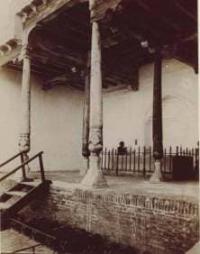
Enthronement Ceremonies of Rulers of Central Asian Dynasties.
"God has placed the reins in my hands so that I may direct the movements of the kingdom of this world."
Book of Victories. Miracles of Fate. The History of Timur.
Samarkand, a Symbol of Power.
Kuktash (from the Turkic words kök - "blue" and tash - "stone") is a famous throne stone associated with the name of the great commander and ruler of Central Asia, Timur. This stone was a symbol of supreme power and was used in the solemn enthronement ceremonies of the rulers of Central Asia for several centuries.
Kuktash is a large monolithic stone block of a bluish-gray hue. According to legend, it was installed in Timur's palace in Samarkand, the capital of the vast empire established by the conqueror in the late 14th century. The stone served as a kind of throne on which the most important state ceremonies were held.
After Timur's death, the stone retained its symbolic significance. From the XVth to the XIXth centuries, enthronement ceremonies for rulers of various Central Asian dynasties were held on Kuktash. Thus, it became a unique symbol of the continuity of power, linking the Timurid era with subsequent state formations in the region.
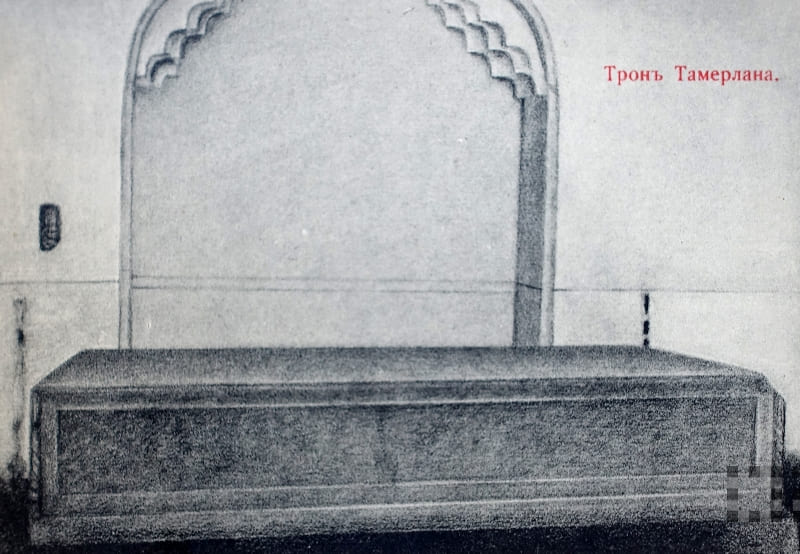
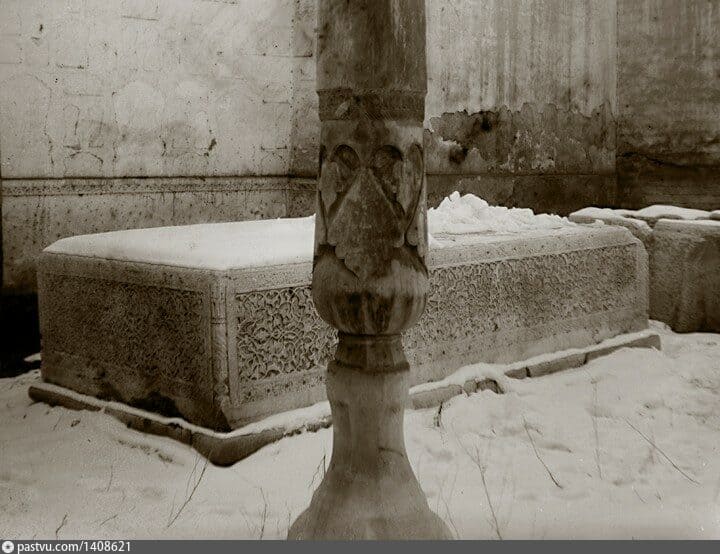
Kuktash is a large, bluish-gray stone slab made of durable marble or limestone. The stone is rectangular and carefully crafted. Its approximate dimensions are about 2 meters long, 1-1.2 meters wide, and 30-40 centimeters thick. It rested on a special dais in the throne room of the palace and served as the base for the throne.
During ceremonies, the ruler sat or stood on it, symbolizing the legitimacy of power and a connection to the traditions of the Timurid state. Kuktash was originally located in the throne room of Timur's palace complex. It is believed to have been located within the Samarkand citadel, in the area of the Registan fortress, where government buildings and palaces were located.
It was here that the most important state ceremonies took place: ambassadorial receptions, military conferences, and ceremonial coronations. In the XXth century, Kuktash's fate was complicated. After the establishment of Soviet power, many of Samarkand's historic buildings were destroyed.
In the 1920s, the former palace of the Bukhara emirs, where Kuktash was located, was finally destroyed. The stone itself was moved several times. Kuktash is one of Samarkand's historical relics. It recalls the powerful times of Timur's empire and the ancient coronation traditions of Central Asian rulers.
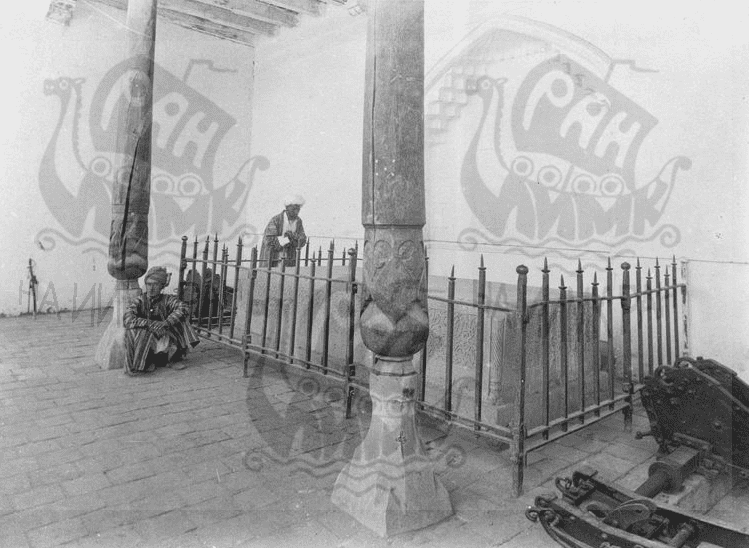
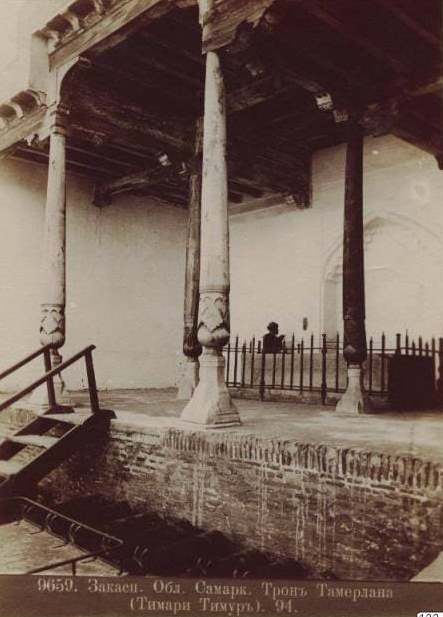
Today, this stone can be seen in the courtyard of the Gur-Emir mausoleum in Samarkand, next to the tomb of Timur himself, whose legacy lives on in the region's history.
Ancient tradition of Kuktash throne and white felt.
Historians often regard the Kuktash throne stone as a symbol of the ancient tradition of asserting power, rooted in the political culture of the Turkic and nomadic peoples of Central Asia. Although the stone itself is associated with the era of Timur and his capital, Samarkand, the concept of an enthronement ceremony is much older.
Many Turkic peoples had a special rite of election. The new khan or ruler was raised on a white felt cloth held by representatives of noble families. White symbolized the purity of power and the blessing of heaven. After this, the ruler was ceremoniously raised above the ground and seated in a place of honor - a throne or dais.
This ritual signified the recognition of power by all the nobility and the people. When Timur established his empire in the XIVth century, he drew heavily on the traditions of steppe political culture. Therefore, the symbolism of power retained elements of ancient rituals.
In Samarkand, the throne stone of Kuktash served as such a sacred site. During the coronation, the ruler first participated in a traditional ritual with white felt and then took his place on the stone throne. Interestingly, Kuktash became a unique fusion of two cultural traditions.
On the one hand, it was an ancient nomadic ritual of recognition of power. On the other, it was a palace ceremony of sedentary civilizations, where the ruler was confirmed on the throne in the capital. Because of this, Samarkand was long considered the symbolic center of power in the region.
Even the rulers of the Emirate of Bukhara, whose capital was Bukhara, held coronation ceremonies here, on Kuktash.
Coronation ceremonies at Kuktash stone.
Samarkand was rightfully considered the city of coronations. Even after the region's political center shifted to Bukhara and the state known as the Emirate of Bukhara emerged, Samarkand continued to retain special symbolic significance. It was here that Kuktash, a relic from the era of Timur, was located.
Therefore, many rulers considered it important to confirm their power in Samarkand, demonstrating their continuity with the great conqueror and his dynasty. The Kuktash throne stone played an important role in the political and symbolic life of Central Asia.
For several centuries, it served as the site of a special rite - the confirmation of the new ruler's power. These ceremonies took place in Samarkand, which since the time of Timur had been considered the sacred center of statehood. According to tradition, during the coronation, the new ruler did more than simply ascend the throne. He was ceremoniously lifted and seated on Kuktash by representatives of the nobility, clergy, and military elite.
This act symbolized the consent of the various classes to recognize the authority of the new ruler. This was followed by prayers, the recitation of blessings, and the proclamation of the new ruler. Representatives of the nobility swore an oath of allegiance, and heralds announced the accession to the throne. Solemn coronation ceremonies of many rulers took place on Kuktash.
Even during the period of the Emirate of Bukhara, whose capital was Bukhara, some emirs held their accession ceremonies in Samarkand, on this historic stone. Particularly famous are the ceremonies performed by the Bukharan emirs of the Manghit dynasty - Haydar, Nasrullah, and Muzaffar.
Although they ruled from Bukhara, they held their coronation rites in Samarkand, on Kuktash. The last known ceremony took place in 1861, when Emir Muzaffar ascended the throne. After this, political and historical circumstances changed, and the ancient tradition ceased to exist.
Kuktash became more than just an item of palace decoration, but a symbol of the legitimacy of power. Its accession signified recognition of the ruler as the heir to an ancient tradition of statehood, dating back to both the era of Timur and earlier steppe customs.
Legend of Nadir Shah.
Timur, who created a vast empire with its capital in Samarkand in the XIVth century, placed great emphasis on symbols of power. One such symbol was the famous Kuktash throne stone, or "Blue Stone." A well-known historical legend is associated with the throne stone.
In the XVIIIth century, the Persian ruler Nadir Shah, during his campaign in Central Asia, ordered the Kuktash to be taken to Iran as a trophy. However, according to legend, immediately after the stone left Samarkand, Nadir Shah began to suffer misfortunes: illness, mutinies in the army, and other disasters.
The stone was considered sacred to Samarkand and should not leave the city. Fearing these ill omens, the Shah ordered its return. While being transported, the stone allegedly cracked, and this fracture can still be seen today.
Authority:
Alexander Petrov