




You are here
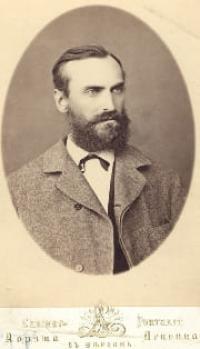
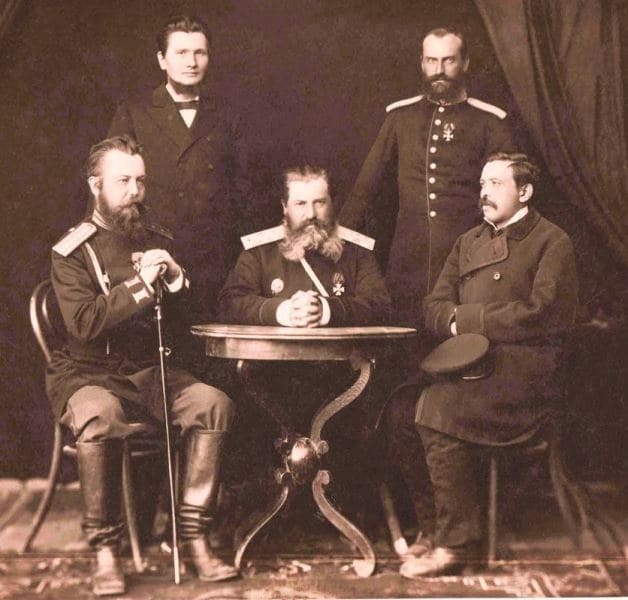
Archaeologist and ethnographer N. N. Pantusov.
Archaeology of Semirechye.
"There isn't a single path or gorge in the Almaty region that he hasn't visited – a tall, lean man with a noble appearance. A good botanist, he always described and studied plants he encountered for the first time. A good geologist, he paid attention to soil structure and terrain. He actively studied the customs and way of life of the Kazakhs. He cared about the well-being and beauty of the city of Verny."
A. Volodev. "Chronicler from Semirechye."
Research by N. Pantusov.
Nikolai Nikolaevich Pantusov (1849-1909) – Russian ethnographer, orientalist, folklorist, geographer, writer, and archaeologist of Central Asia and Kazakhstan. N. N. Pantusov was born in Nikolaev, Kherson Governorate, on May 11, 1849. In 1867, he graduated with a silver medal from the 7th St. Petersburg Gymnasium; in 1871, he graduated from the Faculty of Oriental Languages at St. Petersburg University, specializing in Arabic-Persian-Turkish-Tatar studies. He studied under the renowned professor V. V. Grigoriev.
He taught for a time at the Odessa Richelieu Lyceum, where he wrote his master's thesis on the "labels" issued by the khans of the Golden Horde to Russian clergy. Along with a gold medal for his thesis on Arabic geographical literature, Nikolai Pantusov received the right to remain in the university department to prepare for a professorship.
However, he chose service. He was assigned to the chancery of the governor of the Turkestan region, where for 36 years he combined government service with academic pursuits. From 1874, he lived in Verny for over 30 years. He held senior positions in the Semirechye regional government, overseeing administrative commissions, congresses of Kazakh biys, educational institutions, libraries, and printing houses.
He was a member of the Turkestan and Semirechye statistical committees, the Russian Archaeological Society, and the Archaeological Commission, and oversaw the work of congresses of Kazakh biys. In the 1880s, he was the head of the Kuldja chancery, where he founded a school for translators from Turkic languages.
Serving as a special assignment official in the Semirechye regional administration allowed him to travel extensively throughout Semirechye, during which he collected and compiled a wealth of ethnographic material on the daily life and folklore of the Kazakhs and Uyghurs.
Several of Pantusov's articles are devoted to the archeology of Semirechye. Pantusov compiled a valuable economic and geographical description of the Kuldzha region and wrote a number of historical and geographical works: "Examples of Kyrgyz Folk Literature," "Antiquities of the Kapalsky District" (1899), and "Information from Arab Geographers of Asia" (1909).
He studied the archeology, ethnography, folklore, and geography of the Semirechye region, as well as Uzbek, Kazakh, and other languages. He published "Materials for the Study of the Kazakh-Kirghiz Dialect," which included Kazakh proverbs, fairy tales, songs, and popular beliefs. He also published the text of the legend "Kozy Korpesh and Bayan Sulu," and described the heroes' graves.
Pantusov's achievement was the discovery of the dilapidated grave and mausoleum of Shokan Valikhanov, of which he left a detailed description. On April 19, 1889, N. N. Pantusov became a full member of the Moscow Archaeological Society, and on October 30, 1896, he was confirmed as an associate member of the Imperial Russian Archaeological Society.
Apparently, after N. N. Pantusov's death, he left behind a large amount of unpublished scientific material, which he had spent decades collecting, but no one had any say in disposing of it. Pantusov was particularly interested in the study of rock carvings and inscriptions and their decipherment.
He excavated burial mounds: two on the right bank of the Vesnovka River and one between the Karasu River and Bolshaya Almatinka. Pantusov is the author of the following studies: "Archaeological Journey to the Semirechye Region," "The City of Almalyk and the Mazar of Tughluk-Temurkhan," "Notes on the Antiquities of the Semirechye Region," and others.
In 1898, on Pantusov's initiative, the Semirechye Regional Museum was founded, based on his archaeological and ethnographic collections, which were later incorporated into the collections of the Central State Museum of the Republic of Kazakhstan.
For example, the museum's archaeological collections contain a collection of tombstones with crosses and Syriac inscriptions from an ancient Nestorian cemetery near Pishpek, dating back to the 4th-13th centuries. Pantusov's discovery and study of Nestorian Christian cemeteries became one of the first reliable confirmations of the existence of ancient Christianity in Central Asia.
The museum also houses part of Pantusov's photo collection - photos of Verny's intelligentsia, a series of portraits of local residents in national dress - Kazakhs, Russians, Uyghurs, and Dungans - as well as photographs of the interiors of public buildings and religious structures.
It is a known fact that Pantusov was one of the benefactors who funded the construction of the Orphanage in Verny in 1892, designed by P. Gurde and still standing today.
From A. Volodev's article "The Chronicler from Semirechye."
"There isn't a path or a gorge in the Almaty region that he hasn't visited - a tall, lean man with a noble appearance. A good botanist, he always described and studied plants he encountered for the first time. A good geologist, he paid attention to soil structure and terrain.
He actively studied the customs and way of life of the Kazakhs. He cared about the well-being and beauty of Verny."
Today, the Central State Museum of Kazakhstan houses only a portion of N.N. Pantusov's photographic collection. The most complete collection of photographs depicting the city's architecture from the late 20th century has survived. There are photographs of Vernoye's intelligentsia, a series of portraits in national dress – Kazakhs, Russians, Uyghurs, and Dungans.
There are also photographs of the interiors of public buildings, religious structures, fragments of wooden ornaments, and sculptural groups. Pantusov considered it especially important to show posterity the architecture of his city. Following P. Zenkov, he repeatedly argued that building with raw brick was impossible, and that a factory capable of producing high-quality fired building material was needed.
The year of the earthquake – 1887 – proved the truth of their words. Pantusov did not keep a diary. This is unfortunate, because, as contemporaries attest, he possessed the rare gift of filling each day to the brim with frenetic activity and greatly enjoyed adventures of all kinds.
N.N. Pantusov's Scientific Activity.
Combining his academic interests with his military service, Nikolai Nikolaevich Pantusov managed to study the archeology, ethnography, folklore, and geography of the Semirechye region; he also mastered the Uzbek, Kazakh, and Uyghur languages.
He tirelessly collected materials on the history and everyday life of the peoples of Central Asia; he studied Asian numismatics, manuscripts, and architecture, and maintained an active correspondence with scholarly communities and museums in the capital.
His publication of samples of the Taranchi dialect in the New Uyghur language was a major contribution to science. For his work on Taranchi songs, N.N. Pantusov was awarded a small gold medal by the Russian Geographical Society. Samples of the Kazakh and Uzbek languages were also collected and published:
"Materials for the Study of the Kazakh-Kyrgyz Dialect" in six parts, which included Kazakh proverbs, fairy tales, songs, and popular beliefs; "The Monument to Kozu-Kerpech and Bayan-Sol" with the text of a Kazakh legend and a description of the heroes' graves; Fergana fragments from the manuscript "Notes of Sultan Baber"; a partial description of the archives of the Kokand khans.
Pantusov also showed an interest in archaeological sites: he studied rock paintings and inscriptions and deciphered them; he organized three excavations of burial mounds—two on the right bank of the Vesnovka River and one between the Karasu and Bolshaya Almatinka Rivers. He was also an avid collector.
In 1898, on Pantusov's initiative, the Semirechye Regional Museum was founded, based on his own archaeological and ethnographic collection, which later became part of the collections of the Central State Museum of Kazakhstan. Pantusov's photographic portraits of the residents of Verny are also kept there.
In archaeology, his name is widely known for the discovery and study of Christian cemeteries with stone tombstones in Semirechye. In particular, the museum's archaeological collection houses his collection of tombstones from the IVth-XIIIth centuries, bearing crosses and Syriac inscriptions from an ancient Nestorian cemetery located near Bishkek.
These tombstones were among the first evidence of the existence of Christian communities in Turkestan during the pre-Mongol period. N. N. Pantusov authored 111 publications. He was often the first scholarly publisher of the materials he discovered, such as the works of the Uyghur poet Bilal Nazim.
Other publications of considerable interest to his contemporaries include:
"Fergana, according to the Notes of Sultan Baber"; "Tarikhi Shahrohi: History of the Rulers of Fergana." The work of Mullah Niyazi Muhammad bin Ashur Muhammad, Khokandsa";
"Antiquities of Central Asia. I. Chinese victory monument on Mount Gedyn-Shan. II. Stone Burkhan in the Tokmak district of the Semirechye region";
"Archaeological trip to the Semirechye region" "Region",
"The City of Almalyk and the Mazar of Tughluk-Temurkhan",
"Notes on the Antiquity of the Semirechye Region", and others.
Publications by N.N. Pantusov.
In 1872, Nikolai Nikolaevich Pantusov arrived in the region. After visiting several cities in the Turkestan region on official business, he served as a special assignment official in the Semirechye region administration from 1883 to 1908. He was interested in the numerous antiquities, literature, and history of the peoples of Central Asia.
In the 1970s, many of his articles on ethnography, numismatics, and archaeology appeared in the "Turkestan News." The 4th issue of the collection "Materials for Statistics of the Turkestan Region" (1875) included his "Statistical Information on the Kuldzhinsky District," "Materials for Trade and Industrial Statistics, the Asian Population of Tashkent, Compiled from the 1873 Zyakta Books," and "Trade and Caravan Routes in the Turkestan Region and Transportation Costs."
In 1881, he published in Kazan the very valuable "Information on the Kuldzhinsky District for 1871-1877" (1881).
Later, he published:
1) "Materials for the Study of the Kazakh-Kirghiz Dialect" in 7 issues (1899-1903),
2) Examples of Kyrgyz Folk Literature, Collected and Translated (1909),
3) Examples of Taranchi Folk Literature, Collected and Translated (1909)
4) Materials for the Study of the Taranchi Dialect of the Ili District in 9 issues (1897-1907),
5) Taranchi Songs (1890).
In addition, he published source studies: "Tarikhi-Shakhrokh. History of the Rulers of Fergana" (1905), "Fergana According to the Notes of Sultan Babur (1896)." In 1908, Nikolai Nikolaevich retired and returned to Nikolaev, where he died the following year.
He died on May 11, 1909. He was buried in the Pantusov family crypt in the Nikolaev necropolis.
Authority:
Overview of Russian Travels and Expeditions to Central Asia. Part III, 1869-1880.
Compiled by O. V. Maslova, PhD in History. Tashkent, 1962.
https://ru.ruwiki.ru/wiki