




You are here
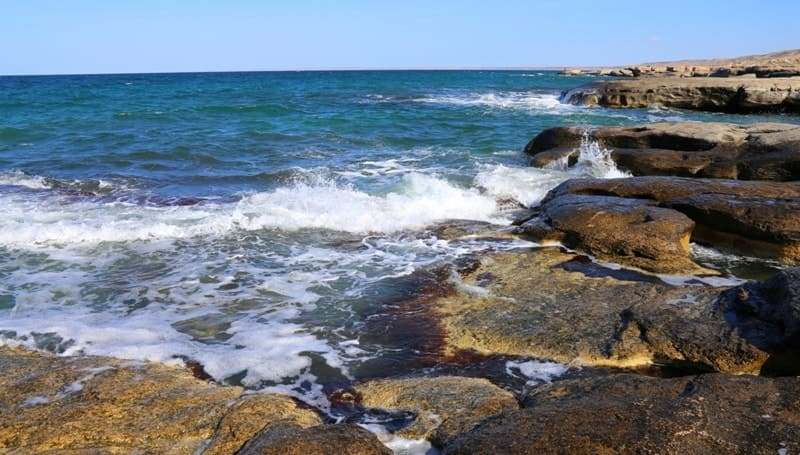
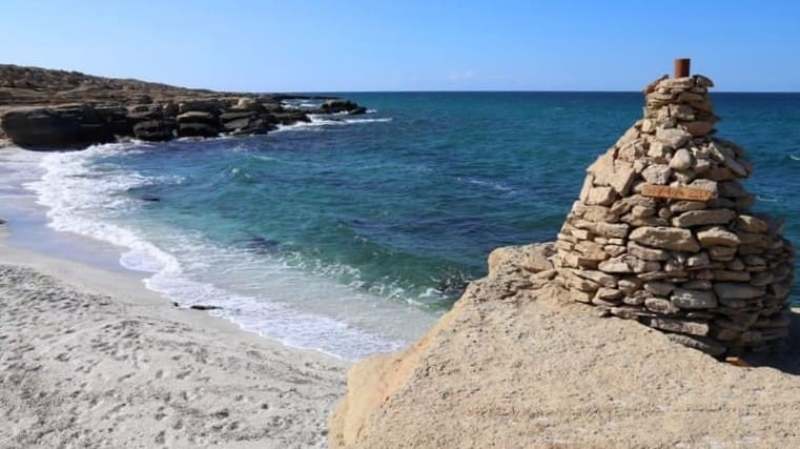
Caspian Sea in Kazakhstan.
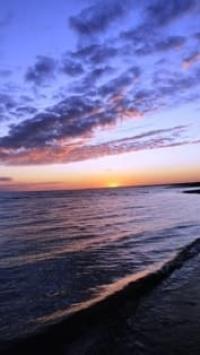
Holiday Tours Mangyshlak.
"Near Tabaristan lies the sea of the Jurjan harbor; the city of Abaskun, from which the sea takes its name, is situated upon it. It then stretches toward Tabaristan, the land of Daylam, Shirban, Bab al-Abwab (Derbent), the region of the Alans, and subsequently the Khazars - where the Itil River flows into it - continuing toward the lands of the Oghuz, before returning to Abaskun. It is referred to by the names of all the regions that border it; however, it is known to us as the Sea of the Khazars, while the ancients called it the Sea of Jurjan - Ptolemy, for instance, referred to it as the Hyrcanian Sea. It is not connected to any other sea."
Abu Rayhan al-Biruni, medieval polymath, from “Book on Determination of Coordinates of Localities for Refinement of Distances Between Settlements” ("Geodesy"), 1025 AD (416 AH).
Trip to Caspian Sea Mangyshlak.
Largest endorheic (landlocked) lake on Earth, situated between Europe and Asia. Due to its immense size, it is termed a "sea." It acquired its current name in the mid-16th century, derived from the "Caspi" (Kaspi) people who once inhabited the Transcaucasus region; the name is still preserved in the Georgian city of Kaspi.
Throughout history, the sea has been known by more than 60 different names, including the Hyrcanian Sea (Ist century), the Khazar Sea (IInd–Xth centuries), and the Khvalynsk Sea (Xth–XIIIth centuries). These names were bestowed by the various peoples who have lived in the region over the past 3,000 years.
The Caspian Sea became separated from the Black Sea due to the uplift of the Earth's crust at the end of the Neogene period - a time that can be considered the era of the Caspian Sea's formation. The total surface area of the Caspian Sea is 390,000 sq. km.
Its surface lies 26.5 meters below sea level. The sea stretches 1,200 km from north to south, with a maximum width of 435 km and a minimum width of 193 km. The coastline of the Caspian Sea spans 7,000 km, and its waters border five different states.
In Kazakhstan, the Caspian Sea washes against the western part of the country and holds immense economic, ecological, and tourism-related significance. Kazakhstan possesses the longest coastline among the five Caspian littoral states - exceeding 2,300 kilometers.
Technically, the Caspian is the world’s largest enclosed inland body of water (a lake); however, due to its vast size, the presence of oceanic crust on its floor, and its brackish water, it is referred to as a sea. Its salinity is approximately one-third that of the World Ocean.
The sea borders two regions of Kazakhstan: the Mangystau Region - characterized by deep waters and rocky or sandy beaches - and the Atyrau Region, which features a shallow, marshy northern area, including the delta of the Ural River. The city of Aktau serves as the only full-fledged seaside resort and the largest port along the coast.
Kazakhstan accounts for 29% (2,340 km) of the coastline, followed by Turkmenistan (21%), Azerbaijan (20%), Russia (16%), and the Islamic Republic of Iran (14%). Based on the topography of its basin floor, the Caspian Sea is divided into three sections. The boundary of the northern section runs along the Mangystau Peninsula.
The central section extends from there to the threshold of the Absheron Peninsula, while the remaining territory constitutes the southern section. The northern part is shallow, with a predominant depth of 5 m (the deepest point being 26 m), and accounts for 24% of the sea's total area.
The central part, with an average depth of 200 m and a maximum depth of 788 m, covers 36% of the total area. The southern part is the deepest, with an average depth of 345 m and a maximum depth of 1025 m, occupying 40% of the total area. The relatively shallow northern and north-central parts of the sea fall within Kazakhstan's territory.
There are few islands, with a total area of 2,045 sq. km. Of these, 88% are located within the territory of Kazakhstan. The largest islands belonging to Kazakhstan in the Caspian Sea are Kulaly (73 sq. km) and Morskoy (65 sq. km), both part of the Tyuleniy Archipelago.
On the eastern side, large peninsulas such as Mangystau (including the Tyupkaragan Peninsula) and Buzachi extend into the Caspian; there are also more bays along the eastern coast, including the Mangystau and Kazakh bays. The Caspian Sea spans two climatic zones.
In the north, it lies between the sharply continental and moderately continental climates of the temperate zone; the southwest features a subtropical climate, while the east is characterized by the continental desert climate of Central Asia. In summer, the surface of the Caspian heats up significantly, and despite the sea's great meridional extent, the temperature remains fairly uniform across all parts, ranging from +24°C to +26°C.
Winter temperatures vary considerably. In the north, the winter is cold, with an average January temperature of -7°C to -11°C. In the central part, it is +1°C to +5°C, and in the south, +8°C to +10°C. Along the eastern coast, the winter across its entire breadth, it is colder than along the western coast.
During the winter months, only the shallow northern part of the Caspian Sea freezes, with ice reaching thicknesses of up to two meters. In winter, surface water temperatures range from -1°C in the north to +10°C–+11°C in the south. In August, temperatures across most of the sea vary between +24°C and +28°C.
Water salinity is most variable in the Northern Caspian, increasing from 0.2–2‰ near the mouths of the Volga and Ural rivers to 10–12‰ at the boundary with the Middle Caspian. In the central and southern regions, salinity remains relatively constant (13-14‰).
The sea level is subject to constant fluctuations. Between 1830 and 1929, the level of the Caspian remained between -25.5 and -26.6 meters. Beginning in the 1930s, the sea level dropped sharply (to -29 meters). In 1978, the level began to rise, reaching -26.5 meters by 1995.
The sea once again inundated the coastal zone: by 4-5 km near the Volga delta, by 6-12 km near the Ural delta, by 35–40 km in the vicinity of the Karaton and Tengiz oil fields, by 40–45 km near Prorva, and by 4–10 km near the Buzachi Peninsula.
This recent rise in sea level is attributed to climatic conditions. It is 45% dependent on river inflow, 16% on precipitation falling onto its surface, 25% on a reduction in the rate of evaporation from the sea surface, and 14% on the restricted flow of seawater into the Kara-Bogaz-Gol Bay.
The rivers that flow into the lake bring in large quantities of nutrients, which is why the Caspian Sea is rich in fish and seals. The presence of seals indicates that the sea is connected to the Arctic Ocean. Both fish and seals are of great commercial importance.
Among the most valuable fish species are the sturgeon family (stellate sturgeon, Russian sturgeon, and beluga); the Caspian Sea accounts for over 80% of the world's annual sturgeon catch. Kazakhstan is responsible for 40% of the sturgeon harvest in the Caspian.
The region is home to more than 500 plant species and 769 animal species, including 55 species of fish - representing 53% of all fish species found throughout the republic. The most valuable fish is the beluga, which can reach 3.5 meters in length and weigh up to 1 ton, with a lifespan of up to 100 years.
The Russian sturgeon reaches 2.3 meters in length and weighs 100 kg, while the stellate sturgeon grows to 2.2 meters and weighs between 40 and 80 kg. Other fish found in the Caspian include common carp and Caspian roach. Today, a vast number of bird species can be observed along the Caspian coast.
Every year, 2 million birds of commercial significance arrive on the eastern shores of the Caspian alone, and up to 3 million waterfowl spend the winter in the region. A large-scale seawater desalination plant has been installed in the city of Aktau, and the ports of the Caspian Sea have been upgraded to meet modern standards.
A maritime fleet has been established, and trade relations have been developed with other nations. Port cities such as Atyrau, Fort-Shevchenko, and Aktau are located along the coast. The Kazakhstani section of the Caspian Sea attracts tourists with its unique combination of the desert landscapes of Mangystau and the azure waters of the sea.
In recent years, infrastructure in the area has been developing rapidly. Modern five-star hotels - including Rixos Water World Aktau - have been built, and the area has been further developed. ...the famous Rock Trail, which offers a walking path directly above the sea.
Other popular, picturesque spots include the Blue Bay (known for its snow-white sand and crystal-clear water), Cape Melovoy, and the beaches at the Kenderli resort area in the southern part of the region. The swimming season on the Caspian Sea is short compared to that of more southern seas; the water warms up by mid-June and remains warm until the end of August or mid-September (averaging +22…+26 °C).
One of the primary issues facing the Caspian Sea in recent decades is its progressive decline in water levels. Residents of Aktau and scientists have observed that the coastline has receded by tens or even hundreds of meters in some areas, a result of climate change and a reduction in the flow from the rivers that feed the sea (the Volga and the Ural).
To study this issue, the government of Kazakhstan is providing targeted grants and establishing specialized research institutes.
Geographical coordinates of Caspian Sea in Kazakhstan: N45°35'38 E50°59'55


Authority:
A.G. Isachenko, A.A. Shlyarnikov. Nature of the World: "Landscapes." Moscow, Mysl, 1989.
Photos by:
Alexaander Petrov.