



You are here
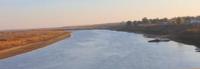
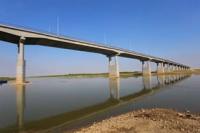
Ural River in Kazakhstan
Forwarding Kazakhstan tours.
"The Ural River flows freely and thoughtlessly, first in the mountains, then in the forest-steppe, and from Uralsk, almost in a straight line, slightly curving, as a fresh river surface, across the steppes, and then across the deserts. The fresh body of the river is boundless, gently and steadily, with an irresistible force, it flows toward the free, distant Caspian Sea."
Academician N.P. Dubinin.
Individual Kazakhstan tours.
Ural River originates in Ural Mountains of Russian Federation, flows into the northern part of the Caspian Sea, and flows through the territory of Kazakhstan through the following territories: Burlin, Chingirlau, Baiterek, Akzhaik districts, the territory of the Ural city administration of the West Kazakhstan region, Inder, Makhambet districts, and the territory of the city administration of Atyrau in the Atyrau region.
For 139 kilometers, Ural River serves as a border river; state border between Russian Federation and Republic of Kazakhstan runs along middle of riverbed. After 139 kilometers, the river gradually changes direction and turns southwest. The Ural River's transition to Kazakhstan is located 11.8 kilometers northwest of the village of Burlin and 6.8 kilometers east of the village of Kirsanovo in the Baiterek District of the West Kazakhstan Region.
History of Ural River.
The Ural (until 1775 – Yaik, Legislative: Yayyk; Bashkir, Kazakh: Zhayyk) is a river in Eastern Europe, flowing through Russia and Kazakhstan before emptying into the Caspian Sea. It is the third-longest river in Europe, surpassed only by the Volga and the Danube. Its length is 2,428 km.
The drainage basin area is 231,000 square kilometers. The average water discharge near the village of Kushum (Baiterek District of the West Kazakhstan Region) is 400 cubic meters per second. The river is primarily fed by melting snow (60-70%). The contribution of precipitation is relatively small.
History of Ural River's name.
The old name (before 1775) was Yaik. The ancient name is mentioned by Ptolemy as Daix. The hydronym is of Turkic origin (jajyk - "spread out, wide"). The river's old name has been preserved in the Kazakh, Nogai, and Bashkir languages. In some texts, the river is referred to as the Rimn (Rhymnus fluvius), which is also attributed to the Volga, Emba, Bolshoi Uzen, and Maly Uzen.
On maps by medieval European cartographers, the modern Ural River was often indicated as Rhymnus or Rhymnicus. The first mention in surviving Russian chronicles dates back to 1140: "Mstislav drove the Polovtsi beyond the Don, beyond the Volga, beyond the Yaik."
In Russia, the name Yaik was changed to Ural in 1775 by decree of Catherine the Great, following the suppression of the Peasants' War led by Pugachev, in which the Bashkirs and Yaik Cossacks actively participated. The name of the mountainous region was taken as the basis.
Geography of Ural River.
It originates on the slopes of Kruglaya Sopka in the Uraltau Range in the Uchalinsky District of Bashkortostan. Here, it has an average width of 60 to 80 meters and flows like a typical mountain river. It then flows into the Yamankhaz Swamp. Below Verkhneuralsk, its course is typical of a flatland river.
Between Magnitogorsk and Orsk, the banks are steep and rocky, and the bottom is full of rapids. After Orsk, the river turns sharply west and flows through a 45-kilometer-long canyon in the Guberlinsky Mountains. After Uralsk, the river widens and has numerous lakes and tributaries.
Near its mouth, the river divides into two branches, creating vast marshy areas.
Pyotr Rychkov wrote in his book "Orenburg Topography":
- "The Yaik reaches its peak beyond the Ural Mountains on the Siberian road, in the Kuvakan volost, from a mountain called Kalgan Tau, which means the outermost or remaining mountain in the Urals."
At first, the Ural flows south, but upon encountering the elevated plateau of the Kazakh steppe, it turns sharply northwest. Beyond Orenburg, it changes direction to the southwest. Near the city of Uralsk, the river makes another sharp bend to the south and, in this main direction, meandering alternately west and east, flows into the Caspian Sea.
The mouth of the Ural River divides into several branches and gradually becomes shallower. This type of delta naturally forms on slow-moving rivers that carry a lot of sediment and flow into a calm sea. In 1769, Pallas counted nineteen branches, some of which were separated by the Ural River 660 meters above its mouth. In 1821, there were only nine, and in 1846, only three: Yaitskoye, Zolotinskoye, and Peretasknoye.
By the late 1850s and early 1860s, almost no branches with a constant current separated from the Ural River as far as the city of Guryev (now Atyrau). The first branch to separate from the main channel on the left was the Peretask, which divided into the Peretasknoye and Aleksashkin channels.
Further downstream, the Ural River divided into two branches - the Zolotinsky and Yaitsky - both of which had two mouths: the Bolshoe and Maloe Yaitskoe, and the Bolshoe and Staroe Zolotinskoe. Another branch, the Bukharka, branched off from the Zolotinsky branch to the east, flowing into the sea between Peretask and Zolotoy.
The Ural River's water level from its headwaters to Orsk is approximately 0.9 meters per kilometer, from Orsk to Uralsk it is no more than 30 centimeters per kilometer, and even less further downstream. The channel's width is generally narrow but varied.
The Ural River's bed is rocky in its upper reaches, while most of its course is clayey and sandy, with rocky ridges occurring within the Ural region. Near Uralsk, the riverbed is lined with small pebbles, some of which are larger near the "White Hills."
A special type of pebbles made of dense clay is also found in some areas of the lower Ural River (in "Burnt Onion"). The Ural River's course is quite meandering and forms numerous loops. When the water level is low, the river frequently changes its main channel throughout its length, carving out new channels, leaving deep pools, or "oxbow lakes," in all directions.
Thanks to the Ural River's variable flow, many Cossack villages that once stood along the river subsequently ended up on oxbow lakes. Residents of other villages were forced to resettle to new locations only because their old ruins were gradually undermined and washed away by the river.
The Ural Valley is cut on both sides by oxbow lakes, narrow channels, widened channels, lakes, and small lakes; during the spring floods caused by the melting snow in the Ural Mountains, all of them fill with water, which remains in some until the following year. In spring, tributaries carry a mass of meltwater into the Ural, causing the river to overflow its banks. In places where the banks are gentle, the river spreads for 3 to 7 kilometers.
The Ural is poorly navigable. The Iriklinskoye Reservoir is formed on the river.
Ecology and Fishing on Ural River
The river is home to sturgeon, stellate sturgeon, carp, catfish, pike perch, bream, perch, and chebak. In his "Travels through Various Provinces of the Russian State," Pallas noted the "untold abundance" of stellate sturgeon in the river and also mentioned beluga and sterlet, which were hunted by the Cossacks.
Anadromous fish that enter the Ural include beluga, whitefish, sturgeon, and stellate sturgeon. Semi-anadromous fish include roach, bream, carp, and pike perch. Permanent and semi-anadromous species include perch, roach, crucian carp, rudd, burbot, ruff, gudgeon, carp, pike, catfish, goby, and others.
Grayling, taimen, trout, and others are found in the upper reaches of the river. A water pipeline runs from the river to the oil fields. An artesian basin is located between the Ural and Emba rivers.
Tributes of Ural River.
Most tributaries flow into it from the right side, facing the Obshchy Syrt River. Notable examples include the Artazym, Bolshoy Kizil, Tanalyk, Guberlya, Sakmara, Kindelya, and Irtek. In the West Kazakhstan Region, several shallow rivers flow downstream of the Irtek, including the Rubezhka, at whose mouth the first Yaik Cossack settlements were located.
The Sakmara, which has the largest water supply on the right, originates in Bashkortostan. The following rivers flow into the Ural River from the left: the Gumbeyka, Suunduk, Bolshoy Kumak, Or, Ilek, Utva, Barbasheva (Barbastau), and Solyanka, which is visible only in the spring and dries up in the summer.
Ural river on border Between Asia and Europe.
The Ural River is a natural waterway border between Asia and Europe in its upper reaches in Russia. The border passes through the cities of Verkhneuralsk and Magnitogorsk in the Chelyabinsk Region. In Kazakhstan, the geographical border between Europe and Asia runs south of Orsk along the Mugodzhary Mountains.
Thus, the Ural River is an inland European river; only the Russian upper reaches of the river, east of the Ural Mountains, belong to Asia. Preliminary results of a 2010 expedition by the Russian Geographical Society to Kazakhstan (the desert and Ustyurt Plateau) showed that drawing the border between Europe and Asia along the Ural River, as well as along the Emba, lacks sufficient scientific basis.
The fact is that south of Zlatoust, the Ural Mountains, having lost their axis, disintegrate into several parts, and then the mountains gradually disappear altogether, meaning the main reference point for drawing the border disappears. The Ural and Emba Rivers divide nothing, as the terrain they cross is identical.
Flowing through the Caspian Lowland, the Ural becomes a flat river with a wide valley, forming broad floodplains, old riverbeds, and small lakes. The river's banks often feature steep sections composed of sand and clay. At its mouth, the Ural divides into two branches.
The river is fed primarily by meltwater and floods in the spring. The average annual discharge is 400 m³/s (near the village of Kushum), 80% of which occurs in the spring. Water levels in the middle and lower reaches rise to 9-10 meters. The Ural's main tributaries are the Sakmara, Chagan, Ilek, and Or.
The tributaries of the Olenti, Buldyrty, Kaldygayty, Uil, and Sagyz dry up before reaching the Ural. Dozens of irrigation structures have been built on the Ural River—Naryn, Baksai, Primorsk, and others. A water pipeline runs from the Ural to the Emba oil fields.
The Ural is convenient for navigation. Sturgeon, stellate sturgeon, carp, catfish, pike perch, bream, perch, and chebak are found in the Ural. The river is 2,428 km long, with 1,100 km within the republic. It is the third-longest river in Europe, after the Volga and the Danube.
This powerful waterway crosses the Caspian Lowland from north to south and forms part of the geographic border between Europe and Asia. This powerful waterway crosses the Caspian Lowland from north to south and forms part of the geographic border between Europe and Asia.
The Ural is a relatively calm river, without rapids, but there are 99 riffles along its route from Uralsk to Guryev. The wind also makes navigation difficult, sometimes blowing so hard that you have to stop. Up to 50 species of fish inhabit the river, including sturgeon, beluga, asp, carp, catfish, pike, pike-perch, and stellate sturgeon.
Black grouse, wood pigeons, turtle doves, wood pigeons, wood grouse, and partridges inhabit the forested banks. Wildlife is also abundant, including hares and foxes. Wolf dens are found in the thicket, and moose are also common. Beyond the city of Atyrau, the Ural River divides into branches: the Yaitsky (shallow, with treeless banks and an abundance of fish) and the Zolotoy (navigable, with sandy beaches).
The Zolotoy branch opens into an artificial canal that connects the Ural to the Caspian Sea. The end of the Zolotoy branch is the mouth of the Ural. Here, the reeds stand like a wall, where the Ural River flows into the Caspian Sea. The Ural is a relatively calm river, without rapids, but along the entire route from Uralsk to Guryev, there are 99 riffles.
The wind also makes navigation difficult, sometimes blowing so strongly that you have to stop moving. Inattentive tourists, especially those on rafts, can be swept into impassable channels by the current, making it difficult to escape.
Geographic coordinates of Ural River in Kazakhstan: N49°34'38 E51°35'18
Geographical coordinates of beginning of Ural River in Republic of Kazakhstan: N51°27'21 E52°33'54
Geographical coordinates of mouth of Ural River: N46°49'48 E51°31'46
Authority:
A.G. Isachenko, A.A. Shlyarnikov. Nature of the World. "Landscapes," Moscow, Mysl, 1989.
https://ru.wikipedia.org/wiki/%D0%A3%D1%80%D0%B0%D0%BB_(%D1%80%D0%B5%D0%BA%D0%B0)
Photos by:
Alexander Petrov.