



You are here
Eduard Ivanovich Gavrilov.

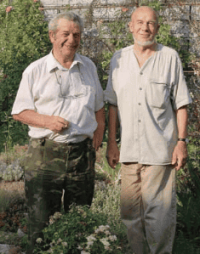
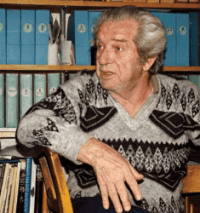
History of Ornithology in Kazakhstan.
"This was facilitated by the boundless energy of Eduard Ivanovich Gavrilov, who, by 1970, had shifted his focus entirely to the study of bird migration directing almost the entire staff of his laboratory toward this subject. By the end of the 1970s, the laboratory had doubled in size compared to 1967. It was precisely during the visit of some guests that Eduard Ivanovich and I manually produced the first thousand bird-ringing bands for small birds in Kazakhstan (constructing the device used for this task required a great deal of time and effort on his part)."
A. F. Kovshar, "History oe Founding o Chokpak Ornithological Station," Autumn 2017. https://www.chokpak.kz/
Study of Birds in Kazakhstan.
Eduard Ivanovich Gavrilov dedicated his entire professional life to the study of the birds of Kazakhstan. Over the course of more than half a century, he reached heights that any creative individual might dream of: he served as Kazakhstan’s leading ornithologist for decades, was a laureate of the State Prize of Kazakhstan, and was an honorary member of the Menzbir Ornithological Society.
For many years, he led the ornithological community in Kazakhstan and oversaw research on bird migration across a vast "Central Region" a territory encompassing not only Kazakhstan but also Western Siberia and all of Central Asia. He was a professor, a Doctor of Biological Sciences, and the author of hundreds of scientific publications, including numerous monographs, manuals, reference books, and popular science essays on birds.
Last October, he would have turned 80.
Childhood and Youth-Voronezh, 1933-1955.
Eduard Ivanovich was born on October 8, 1933, in the city of Voronezh (Russia), not far from the famous Don River. The rich, quintessential Central Russian landscape captured his heart from a young age; by the time he entered the Faculty of Biology at Voronezh University, he was already a committed naturalist.
There, he gained knowledge from prominent ornithologists: I. I. Barabash-Nikiforov, who headed the Department of Zoology at the time, and L. L. Semago an exceptional zoologist and nature writer whose books, A Hundred Encounters with Nature and Aristocrats of the Sky, went through several editions and remain as fresh and engaging today as when they were first written.
It was this man, Lyonka Semago whom Eduard later introduced to all of us at an ornithological conference in Ashgabat in 1969 who served as his primary mentor in the field of ornithology. Just a month ago, A. D. Numerov, a lecturer at the same university, discovered a student term paper by Gavrilov in the archives and shared an electronic copy with me.
Across 26 pages of a school notebook, written in a tentative hand bearing no resemblance to the handwriting of Eduard Ivanovich that we know so well third-year student Edik Gavrilov details his original observations of the nesting life of the sand martin, gathered through hours of watching a nest chamber from a specially dug, trench-like hide.
Twenty years later, this same method was successfully employed by Yura Kotyukov at the Oka Nature Reserve to study the nesting habits of the common kingfisher. But when he showed me these little trenches along the steep banks of the Pra and Oka rivers back in the 1980s, I didn’t yet know that this same method had been used many years earlier by a student named Eduard Gavrilov.
It was here in Voronezh that Gavrilov married Evgeniya Fyodorovna Bredikhina, and in 1953, their first son, Sergey, was born. Meanwhile, having completed the mandatory military training camps as all university students did at the time Eduard graduated from Voronezh University with honors and moved with his entire family to Western Kazakhstan for work.
Work within the Anti-Plague Service, Chapayevo, 1956-1959.
Eduard began his study of the birds of Kazakhstan in 1956, after graduating from the Department of Zoology at Voronezh University and taking a position as a zoologist at the Chapayevo branch of the Ural Anti-Plague Station in the West Kazakhstan Region.
However, neither the study of rodents nor, certainly, the practical work involved in their extermination could satisfy someone who was, to his very core, an ornithologist. Eduard began corresponding with Igor Alexandrovich Dolgushin, a leading figure among Kazakhstani ornithologists.
In the autumn of 1957, he sent Dolgushin an outline for his proposed research on birds a plan he had already shared with I. B. Volchanetsky (the author of what was, at the time, the most comprehensive publication on the birds of the Volga-Ural interfluve).
Many years later, Eduard entrusted me with the letters he had received from I. A. Dolgushin letters that had served as a vital source of support and encouragement for the young ornithologist back then. In addition to practical advice such as how to distinguish between black terns and white-winged terns, or between the females of the yellow-headed and yellow wagtails Igor Alexandrovich also wrote these prophetic words to Eduard, which were very much needed at the time:
“Now let’s go a little into the field of psychology. I don’t like that you have started to develop some kind of pessimism. Dear man! Look at life soberly and be able to see not only the negative side of it. There is always negativity in life - life is full of all sorts of things and it always turns out far from ideally.
But if you see only the dark sides in it, then it’s better to hang yourself right away. You look at the positive. You live in an almost unknown country and every day, every hour you see something that humanity does not even know about. You are a capitalist, a millionaire, a rich man!
You have the opportunity to travel and collect material, to observe what no one has ever seen and, moreover, no one will ever see. For this is today, and tomorrow it will be something else, or something else. All these are values, and they must be used.
You are young, you have your whole life ahead of you. Gain experience now, look with all your eyes, sharpen all your senses.”
Having received such moral support, Edik, in parallel with fulfilling his main duties of counting rodents and taking preventive measures to reduce their numbers, began to actively study the bird fauna of the Ural Valley and the Volga-Ural interfluve together with zoologists from other anti-plague departments and detachments.
Over the course of several years, they managed to collect a huge amount of factual material for those times, which was subsequently supplemented by observations from other authors and published in several major issues. These publications formed the basis of modern knowledge of avifauna.
Volga-Ural interfluve. Institute of Plant Protection, Kargalinka, 1959-1963.
In the spring of 1959, the Gavrilov family, with two sons (their second son Andrei was born in Chapaevo), moved to the city of Alma-Ata, where Eduard’s father, Ivan Ivanovich Gavrilov, worked as a physical education teacher in one of the schools.
From March 1959 to December 1964, Eduard Ivanovich worked at the Institute of Plant Protection of the Ministry of Agriculture of the Kazakh SSR (Alma-Ata) and without interruption of work studied in graduate school at the Institute of Zoology of the Academy of Sciences of the Kazakh SSR (1960-1963) under the guidance of I. A. Dolgushin.
When in the fall of the same 1959 I first came from the Aksu-Dzhabagly reserve to Igor Aleksandrovich, he said that I should definitely meet Edik Gavrilov, with whom we have a lot in common. However, since Edik lived and worked not in the city itself, but in Kargalinka, we could not meet at Dolgushin, sometimes warming up for only a few minutes.
And only chance brought us together only two years later. At this time, Edik was intensively studying the biology of the Spanish sparrow and developing measures to combat it, which became his postgraduate topic and was in full accordance with the main theme of KazIZR.
One after another, his articles were published - and not only in the Bulletin of Agricultural Science, but also abroad. Reprints of one of these articles, published in India, mistakenly ended up in the Aksu-Dzhabagly nature reserve, where his namesake V. T. Gavrilov once worked.
This was the beginning of our correspondence with Edik - he was very happy that the prints were found.
And the first personal meeting took place only in Lvov at a conference Eduard Ivanovich’s postgraduate studies end with the defense of his thesis on the topic:
“The Spanish sparrow in Kazakhstan and measures to combat it.”
In the same and coming years, Eduard publishes all the rich factual material collected on the topic of his dissertation in the domestic and foreign scientific press. Without exaggeration, we can say that it was after these publications that the Spanish sparrow became one of the most studied passerine birds of our fauna (at the same time, E. N. Golovanova in Russia and G. S. Umrikhina in Kyrgyzstan were studying biology and developing measures to combat this species).
But these were the years of the so-called Khrushchev Thaw, which took very strange turns in the field of science. Guided by the main slogan “We didn’t graduate from universities!”, the head of state periodically attacked either avant-garde artists or scientists who allegedly deal with all sorts of nonsense.
Alexey Pavlovich Krapivny, who studied the biology of white and black storks in Belarus, received his share of criticism; zoologists of the Altai Nature Reserve received their share of criticism for their observations of the squirrel. And many borzopists, inspired by the example of Khrushchev “himself,” considered it a great success to unearth something like this and create a satirical masterpiece.
This cup has not passed and the work on studying the biology of the Spanish sparrow in Kazakhstan has not passed. In A satirical piece titled "Arias of a Spanish Sparrow" appeared in the magazine Shmel ("The Bumblebee"). Although the satire was primarily aimed at the Institute’s director, Zh. T. Dzhiembayev, the sparrow was chosen for the title likely because the journalist deemed it a more "compelling" subject.
This piece caused Eduard Ivanovich a great deal of distress; the head of the Human Resources Department at the Academy of Sciences of the Kazakh SSR even used it as a pretext to deny him a position at the Institute of Zoology. The issue was only resolved thanks to Igor Alexandrovich Dolgushin, who risked a confrontation with the President of the Academy of Sciences himself, Sh. Ch. Chokin.
Institute of Zoology, Academy of Sciences of the Kazakh SSR, Alma-Ata (1964-2011). Fieldwork in the high-altitude regions of the Tien-Shan, 1965.
Upon joining the Institute of Zoology in December 1964, Eduard Ivanovich enthusiastically took part in a long-term study of high-altitude bird biology an initiative organized by Dolgushin to gather data for the comprehensive work “Birds of Kazakhstan”.
It was here that he first encountered such remarkable species as the juniper-dwelling hawfinch and rosefinch, the pale and black-throated accentors, the rufous-breasted accentor, the azure tit, and many others. Throughout the summer of 1965, Eduard as part of a team of ornithologists devoted himself to studying the breeding biology of passerine birds in the high-altitude zone of the Zailiskiy Alatau, near Big Almaty Lake.
Hundreds of mountain bird nests many of which were entirely unstudied at the time provided invaluable material for this compendium and served as the foundation for a number of scientific papers. As someone engaged in similar work in the high-altitude regions of the Talas Alatau, I could only admire the well-coordinated efforts of this remarkable team, led by such masters of nest-finding as E. I. Gavrilov and E. F. Rodionov (the group also included I. A. Dolgushin, M. A. Kuzmina, M. N. Korelov, and I. F. Borodikhin).
The abstracts for the Fourth All-Union Ornithological Conference (held in Alma-Ata in September 1965) an event Eduard Ivanovich helped organize and conduct featured a series of co-authored papers on these species; soon after, detailed articles describing their biology were also published.
Expedition to the Southern Altai (Lake Markakol), 1966.
In the spring of 1966, Edik as he was known traveled to the Southern Altai with a group of ornithologists from the laboratory to conduct fieldwork at Lake Markakol. This expedition had long been envisioned by I. A. Dolgushin, though he was ultimately unable to participate due to his health.
During this expedition, the team gathered extensive data on the distribution and biology of birds in the Markakol Basin, which later formed the basis for accounts of several Altai bird species. Sadly, Igor Alexandrovich passed away while the expedition was still underway, and Eduard Ivanovich had to return urgently to Alma-Ata for the funeral.
It was there that we made a pact: come what may, the following year we would find a red-fronted serin’s nest in the Big Almaty Gorge something Igor Alexandrovich had been dreaming of during his final year.
Story of Red-Fronted Serin in Big Almaty Gorge (1967).
This story, which reached the press thanks to TASS correspondent Osip Ivanovich Ognev, quickly became known throughout the Soviet Union and caused quite a stir among Soviet ornithologists. It is mentioned repeatedly in the memoirs of various ornithologists and described in detail by Eduard Ivanovich in his essay "The Red-Fronted Serin: A World First," which appeared in the popular book "Pink Gulls and Black Cranes", published in Leningrad in 1985.
In short, after the spring field season at Chokpak concluded, Edik and I as previously agreed headed up to the Bolshaya Almatinskaya Gorge in mid-June. We set up two small tents near the treeline and spent two weeks tracking a pair of red-fronted serins that were building a nest in a rock face.
We then made several attempts to reach the clutch of eggs eggs that had never before been described by science. Yuri Golodov’s first attempt was unsuccessful, as was a second attempt by two mountaineering instructors. It was only on the third try when we managed to bring an entire group of military mountaineering instructors to the cliff that we finally succeeded in reaching the nest and its clutch of eggs.
It is worth noting that, even now 45 years later this remains the only such nest discovery known to science. Completion of the compendium "Birds of Kazakhstan" – Alma-Ata, 1967-1974. In 1966, following the death of I. A. Dolgushin, Eduard became the head of the Ornithology Laboratory, a position he held for nearly a quarter of a century until 1990.
Together with the laboratory, he inherited an extremely important task - an unfinished multi-volume summary of the birds of Kazakhstan. In parallel with the organization of the first ornithological station for the study of bird migrations on Chokpak, it was necessary to organize a team of authors to write the remaining sections of the report and to obtain from high authorities the inclusion of already written manuscripts in the publication plans.
Here the young manager's extraordinary organizational skills were revealed. Investing all his irrepressible energy into his work, he finds reliable assistants in each of the two most important areas: in the Chokpak detachment these are I.F. Borodikhin and E.F. Rodionov, in publishing - first M.N. Korelov, then A.F. Kovshar.
The manager's calculation turned out to be correct. The Chokpak station, despite the fact that in the early years Eduard Ivanovich himself devoted a lot of effort and time to the expeditionary survey of other promising places for studying migrations, firmly “found its feet”, and the summary, having turned from a three-volume into a five-volume, was published without delay (1970, 1972, 1974).
Four years later, she was awarded the State Prize of Kazakhstan (1978), and this was a well-deserved reward for the team of authors, in particular Eduard as one of the main authors.
Chokpak and migration topics. Middle region of the USSR. 1966-1990
While I.F. Borodikhin and E.F. Rodionov were “bringing to mind” the Chokpak trap, Eduard Ivanovich was in a hurry to use literally every minute of his free time to explore new territories with a view to organizing stationary traps there too. So, in the spring of 1967, he, together with Yu. N. Grachev, worked in the lower reaches of the Chu River, in the spring of 1968 in Ayakkalkan on the Ili River, then with V.V. Khrokov examines the Dzungarian Gate. Beginning in the fall of 1968, E.I. spends all spring and autumn field seasons at Chokpak.
Here the methods of counting, catching and ringing birds are worked out and finally; The production of Kazakhstan's own rings is being organized, and mass catching and ringing of birds is being established. By 1970, when ornithologists from other Central Asian republics became involved in the migration topic, Chokpak was already the flagship of ringing in the region (it was here that Yanushevich held the first symposium in April 1970) and did not yield primacy over the next 25 years.
Eduard Ivanovich is one of the most authoritative ideologists on migration topics in the region, and after the departure of A.I. Yanushevich, he is also the official scientific director of the entire Central Asian-West Siberian Commission for the Study of Bird Migration.
At the annual meetings of this commission, held in different cities - from Ashgabat to Novosibirsk, reports are heard, plans for upcoming work to study migration, establish mass trapping and ringing are developed and discussed. More than one and a half million birds have been captured in the region over the years.
The increase in returns allowed us to begin analyzing the results. In 1978, Eduard Ivanovich organizes and conducts the Second All-Union Conference on Bird Migration in Alma-Ata. He himself is a participant in all (except the first) all-Union ornithological conferences, as well as the XVIII International Ornithological Congress (Moscow, 1982), a member of the All-Union Ornithological Committee, a member of the Central Council of the All-Union Ornithological Society and a member of the Presidium of the Kazakhstan-Central Asian Zoological Society, a member of the editorial board of the collection "Ornithology" and the Kazakhstan Zoological Journal Selevinia.
As a result of the analysis of the rich material accumulated on the territory of Kazakhstan on bird migrations, Eduard Ivanovich publishes the monograph “Seasonal migrations of birds on the territory of Kazakhstan” (1979), on which he defended his doctoral dissertation in April 1980, and a year later received the title of professor.
From May 1980 to April 1987, Eduard Ivanovich, while remaining the head of the ornithology laboratory, is the deputy director of the Institute of Zoology for science. And at this time he does not stop his scientific activities: in parallel with Chokpak, he organizes the Sorbulak and Ural hospitals, sends ornithological teams throughout Central Kazakhstan, works in Turgai, Betpakdala and other places.
Organizes regular publications of the collections “Bird Migrations in Asia”, which are published almost annually in one of the cities of the so-called Middle Region. Some of them are edited by E.I. (1976, 1983, 1986). In addition, he is the editor of three laboratory ornithological collections - “News of Ornithology of Kazakhstan” (1968), “Biology of Birds in Kazakhstan” (1978) and “Fauna and Biology of Birds of Kazakhstan” (1993).
Eduard Ivanovich paid great attention to the training of scientific personnel. Under his leadership, 11 candidate's theses on ornithology were defended. For many years he was a member of the specialized council for the defense of dissertations at the Institute of Zoology, for a number of years he was deputy chairman of this council.
An important trait of Eduard Ivanovich is his commitment to the timely publication of his research findings. He has authored over 300 works, the vast majority of which are devoted to ornithology. While Eduard Ivanovich has produced relatively few popular science publications, pieces such as "Birds Flying Over the Chokpak Pass" or "The Red-fronted Serin: A World First" are of great interest to a general audience.
Of particular note is his "Electronic Field Guide to the Birds of Kazakhstan," which he refined periodically between 1999 and 2005 a period that also saw the compilation of a checklist of the birds of Kazakhstan and various field expeditions, including those with Lars Svensson.
From 1990, Eduard Ivanovich served as the chief research fellow at the Animal Ringing Center. Having handed over the leadership of the center to his successor, Andrey, he was able to devote himself entirely to scientific work. During this period, he published his research findings, broadening his scope from faunistics to the morphology and systematics of birds with his interest in systematics emerging precisely during these years.
He frequently conducted fieldwork alongside ornithologists from abroad, including Lars Svensson, the renowned author of bird identification guides. Of great significance is his comprehensive review of the avifauna of Kazakhstan, the results of which were published in the book “Fauna and Distribution of Birds of Kazakhstan” (1999).
This work was later translated into English in collaboration with A. E. Gavrilov and published by the "Tethys" society in 2005. Eduard Ivanovich’s excessive trusting nature played a cruel trick on him: having provided an electronic copy of his manuscript to a foreign ornithologist with the intention of improving the quality of its English translation he eventually discovered that a book based on his own texts had been published under someone else’s name.
On this anniversary, I do not even wish to mention the name of this "individual." Unfortunately, this was not the only misfortune to cast a shadow over Eduard Ivanovich’s final years. A severe illness left him bedridden for nearly five years; after 2006, he was able to visit the institute only a couple of times specifically to attend academic council meetings for thesis defenses.
He was even unable to attend the centenary celebration of his own beloved mentor an event we held on March 29-30, 2008 though some of the visiting ornithologists were able to call on him at his home. Over the course of a scientific career spanning more than half a century, Eduard Ivanovich contributed a tremendous amount to the field of ornithology in Kazakhstan.
His achievements include the completion of the five-volume “Birds of Kazakhstan”, the establishment of a research program focused on bird migration across this vast region a program he led for a quarter of a century as well as his leadership of the republic’s primary ornithological research group, the training of a new generation of ornithologists, and his comprehensive review of Kazakhstan’s avifauna at the end of the XXth century.
These accomplishments stand as a testament to Eduard Ivanovich’s indomitable energy. However, a special monument to him remains in the form of the Chokpak Ornithological Station, which recently celebrated its 45th anniversary. We must do everything in our power to ensure that future ornithologists know and remember this name Eduard Ivanovich Gavrilov and strive to follow his example.
As for us, his friends and colleagues, we carry his memory with us always and are grateful to fate for that wonderful time...
Key publications:
"On the Incubation Patches of Certain Wader Species During Autumn Migration in Central Kazakhstan," Ornitologiya, Vol. 20 (Moscow, 1985), pp. 181–182;
"On Interrupted Molt of Primary Flight Feathers in the Kentish Plover," Ornitologiya, Vol. 24 (Moscow, 1990), pp. 170–171 (co-authored with E. I. Gavrilov);
"Birds," in The Animal World of Lake Balkhash” (Almaty, 1998), pp. 119-140 (co-authored with E. I. Gavrilov). A. K.
Authority:
Anatoly Kovshar, Doctor of Biological Sciences, Professor, President of the Menzbir Ornithological Society. “Veter Stranstviy”, Kazakhstan, March-April 2014.
https://veters.kz/
https://zmmu.msu.ru/menzbir/publ/Gavrilov.pdf