




You are here
R. Muradov on M.E. Masson.
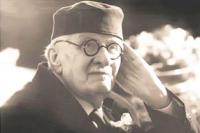
Outstanding Archaeologists of XXth Century.
"Turkestan - now Central Asia - is my second homeland. Raised by the great culture of the Russian people, I grew up and formed myself in Samarkand. Its monuments shaped my destiny and my path as a specialist. Vasily Lavrentyevich Vyatkin, a colorful figure against the backdrop of the Registan madrassas, with his basso profundo, the sounds of his octave shimmering in waves under the Gurimir vault (as he is remembered by many who walked with him among the monuments) - he captivated me with the antiquity of Samarkand, so alive in this ancient city. And from 1913 onward, I participated in some of his projects and independently led tours of the monuments. … He taught me to love them selflessly, and I am very grateful to him for that” .
(E.V. Rtveladze, 2012, p. 90).
Archaeological Works of M. Masson in Turkmenistan.
In Search of Lost Time.
December 4, 2022, marked the 125th anniversary of the birth of Mikhail Evgenievich Masson – a scholar whose name is familiar to anyone who has studied or simply taken an interest in the history of Turkmenistan. He was a man of extraordinary destiny, who not only became one of the pioneers of archaeology throughout Central Asia but also founded his own scientific school.
In science, such achievements are only possible for a select few – people endowed with a special gift to lead and discover new horizons. During his long life (he lived for nearly 90 years), the scientist traveled thousands of kilometers across the mountains and deserts of Central Asia, discovered dozens, if not hundreds, of historical and cultural monuments, and published approximately four hundred scientific papers, written between his studies at the Department of Archaeology he founded at Tashkent University and field seasons excavating various ancient sites.
Along with numerous short notes, which he himself called "chickens," he authored a significant number of problematic articles and monographs. Yet, his greatest achievement was the South Turkmenistan Archaeological Complex Expedition (STACE).
Established on his initiative in 1945, it operated for half a century: for the first twenty years, under the direct leadership of Academician Mikhail Masson, and then, after his retirement, management passed to his students. It was thanks to STACE that Turkmenistan's most remarkable archaeological discoveries were made.
The renowned archaeologist's path to recognition and success was long and arduous. As often happens, a happy coincidence determined his fate. His very origins were unusual: his paternal ancestor, a Scotsman named Mason, moved to France, married a Frenchwoman, and "Frenchified" his surname.
Their son, Jacques Masson, married an Englishwoman, Sarah White, and their grandson, Louis, moved to Russia and married a Russian woman, Raisa Okun, from Pskov. They became Mikhail Masson's grandparents. His father, Evgeny Masson, was working as a topographer in Samarkand when his mother, Antonina Shpakovskaya, of Russian-Ukrainian descent, went to give birth to her son with her relatives in St. Petersburg.
The year was 1897. The future archaeologist was named after Mikhail of Chernigov, a 13th-century Kievan prince who was executed by the Mongols for refusing to worship their idols and later canonized by the Russian Orthodox Church. When the infant grew stronger, his mother returned with him to Samarkand, where Mika, as he was known at home and among his peers, spent his childhood.
While still a teenager, he met and befriended Vasily Vyatkin, an amateur archaeologist and official of the Samarkand Regional Administration, whom he later called his "godfather" in archaeology. He was an extraordinary man, a scholar of Eastern history, fluent in local languages and Arabic script. He undoubtedly had a profound influence on the young Masson and infected him with his passion for antiquities.
It was in Vyatkin's house that Mika first met Academician Vasily Bartold. He listened avidly to the conversations of those around him and read prolifically. Despite his early passion for history, Mikhail, at his father's insistence, enrolled in the Petrograd Polytechnic Institute's civil engineering department after graduating from high school.
He excelled academically, but continued to dream of archaeology. World War I was raging, and in 1917, along with other students, Masson, having dropped out, was drafted into the army. He completed artillery training, but found himself fighting on the front lines of the Civil War.
Wounded in battle, he was discharged from the army and returned to his native Samarkand. And then his professional biography began. While looking for work, he unexpectedly received an offer to head the Samarkand Museum of Local History.
On the one hand, it's not surprising that the new government entrusted such a position to a very young man, rather than to an "old-regime" specialist, of whom there were still many in Samarkand. On the other hand, the museum staff consisted of only two people: the director himself and a retired soldier who served as the entire technical staff.
But even together, they contributed significantly to the museum's functioning. As Masson's biographer, Doctor of Historical Sciences Viktor Pilipko, writes, from the very first months of his independent service, he participated in all archaeological research in Samarkand.
This helped him master the skills of practical field archaeology. Overall, the Samarkand period was a time of apprenticeship, a period of transition from amateur local history to professional scientific research. Even then, Mikhail Masson proved himself not only a diligent student but also an independent, creative individual with obvious organizational skills and charismatic leadership.
During those years, he intensively pursued self-education to fill gaps in his fundamental knowledge - he never had the chance to graduate from university. In addition to his independent and systematic study, personal contact with many eminent orientalists of the time was extremely helpful, and this, of course, contributed to his professional growth.
After moving to Tashkent, Mikhail Masson found work at the Main Historical Museum, where he was assigned to head the numismatics department. "This branch of historical science was still little known to him at the time," writes Viktor Pilipko, "but Masson demonstrated his inherent ability to quickly grasp the essence of any new subject and quickly became a leading, or rather, the only, Central Asian specialist in this field." Nevertheless, in 1927, he was dismissed from the museum, following the custom of the time, citing a lack of political maturity, a commitment to "pure science," and a disconnect from the pressing issues of the day.
With such a character reference, the young scholar only managed to secure a position as librarian at the Geological Committee - an institution very far removed from archaeology. But the determined Masson found his niche here, too. For nearly a decade, he studied the history of mining in Central Asia.
Conscientiously collaborating with geologists, he used his numerous trips to various, often inaccessible corners of the region to collect not only geological but also archaeological data. For example, in 1929, he visited Turkmenistan for the first time.
He participated in the exploration of the Sumbar River valley and surveyed the Misrian plateau between the western slopes of the Kopetdag and the Caspian Sea, where he discovered an unknown archaeological culture from the Late Bronze Age, later studied by his son and known as the "archaic Dehistan culture."
In 1936, Mikhail Masson was awarded a doctorate in archaeology based on his published works. This title was initiated by prominent figures in Russian oriental studies, academicians Joseph Orbeli and Vasily Struve. Their support allowed Masson to return to archaeological institutions and engage in more active research.
His authority had grown so much by this time that in 1939 he was invited to Ashgabad to address a number of scientific issues facing the Institute of History of Turkmenistan, as well as to evaluate the work of Ashgabat's only professional archaeologist, Alexander Marushchenko.
In the 1930s, this unique specialist carried out the first excavations of the Parthian sites of Nisa, now included on the UNESCO World Heritage List, and was the first to determine their ancient age and discover the main architectural structures within their territory.
Masson highly praised his achievements and became convinced of the outstanding significance of Nisa and the potential for its excavation. The local Institute of History's resources - material and personnel - were too limited to organize regular and large-scale excavations at Nisa, so Masson conceived the idea of creating a large-scale, comprehensive expedition to study traces of Parthian culture, not only in Nisa but also in other areas of southern Turkmenistan.
The war interrupted these plans, and they were only resumed in 1945. The original idea of organizing the Parthian Expedition was realized on a larger scale: it was decided not to limit itself to the Parthian period, but to study the entire ancient history of Southern Turkmenistan, as the Khorezm Expedition, led by Sergei Tolstov, had already been successfully operating in the north of the republic.
In the fall of 1946, the first field season of the UTAKE took place. This expedition fully justified the word "comprehensive" in its name. Although Mikhail Masson himself had never been involved in prehistoric archaeology, he did everything he could to promote this field.
Not only was it nominally present in the expedition's thematic area, but it was also represented by worthy researchers. Among them were academicians Alexei Okladnikov and Boris Kuftin, and among the archaeologists who emerged from "Masson's nest" are such distinguished scholars as his son Vadim Masson, as well as Boris Litvinsky, Elena Davidovich, Viktor Sarianidi, Yuri Buryakov, Viktor Pilipko, Edward Rtveladze, Rustam Suleimanov, Terkesh Khodzhaniyazov, and many others.
Thanks to the UTAKE, the archaeological sites of Turkmenistan - Dzheitun, Namazga-Depe, Altyn-Depe, and Kara-Depe - gained worldwide renown. Large-scale excavations were conducted at all of these settlements, culminating in remarkable discoveries.
For many decades, these settlements became benchmarks for the study of ancient agricultural cultures throughout the Middle East. Ancient Margiana was discovered in the 1950s, and Vadim Masson's monograph, "The Ancient Agricultural Culture of Margiana," was published. It has since served as the definitive work on the Early Iron Age in Central Asia, and no equivalent has yet been found.
Mikhail Masson's work in the study of the classical era was marked by outstanding achievements. He chose the site of Old Nisa as his first excavation site in Turkmenistan, and his research immediately yielded exceptionally valuable finds. These include magnificent works of Hellenistic sculpture, the largest collection of Parthian written documents, and unique rhyton cups.
Impressive successes were also achieved in the study of architectural monuments. Along with Nisa, Masson spent many years excavating another important site in southern Turkmenistan - Merv, a true metropolis of the Ancient and Medieval East.
To study its mighty fortress walls, which stood for approximately 1,500 years, archaeologists had to dig a trench over 20 meters deep. They examined administrative buildings within the Merv citadel, known as Erk-Kala, as well as residential and artisan quarters within Gyaur-Kala, the pre-Islamic part of the city.
Masson's monograph, "Medieval Trade Routes from Merv to Khorezm and Transoxiana," published in 1966, has already acquired particular relevance. It became a crucial source for UNESCO experts preparing the nomination of the Turkmen section of the Silk Road for the World Heritage List.
Thanks to the work of the UTAKE, key architectural monuments of the Seljuk and later periods have been identified in a vast area of old oases stretching from the Caspian Sea to the Amu Darya, and Mikhail Masson's wife, Academician Galina Pugachenkova, played a special role in this.
Over the years, he faced considerable controversy due to accusations of "fostering nepotism in science." But all these accusations proved unfounded. In his relationships with those closest to him, he adhered to the same principle: "Science above all else."
Yes, with his authority and organizational capabilities, he significantly facilitated the entry of his son and wife into science, but this was only the initial support for the most worthy candidates. Subsequently, they even surpassed their mentor in their own scientific achievements, confirming the timeliness of the support that facilitated the early development of their talents.
Mikhail Masson's contribution to the study of Turkmenistan's past was duly recognized by the government of the republic and the scientific community. In 1951, he became a full member of the Academy of Sciences of the Turkmen SSR. Under his editorship, 19 volumes of the UTACE proceedings were published in Ashgabad, and he himself left behind a truly vast scientific legacy.
His students believe that if he had only pursued pure academic scholarship, he would certainly have produced more seminal works, but he essentially sacrificed his individual scholarly creativity for the other aspects of his multifaceted talent. Be that as it may, he continues to live in the memory of new generations of historians and in his timeless books.
Authority:
Ruslan Muradov. 2022 N11-12 (212-213)
https://www.turkmenistaninfo.ru/?page_id=6&type=article&elem_id=page_6/magazine_292/2414&lang_id=ru