






You are here
On traditional hunting of saiga antelopes by Kazakhs in XIXth c.
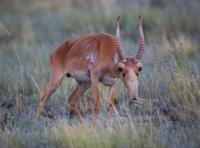
History of saiga antelopes in Kazakhstan.
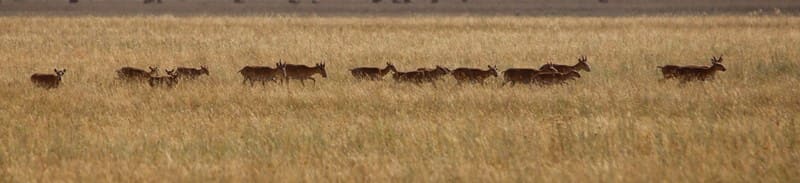
"Herds of these animals are extremely numerous in the Kyrgyz-Kazakh steppes, sometimes reaching - or so it is said - up to ten thousand head."
Alexey Levshin, “Description of Kyrgyz-Kazakh (or Kyrgyz-Kaisak) Hordes and Steppes”. 1832.
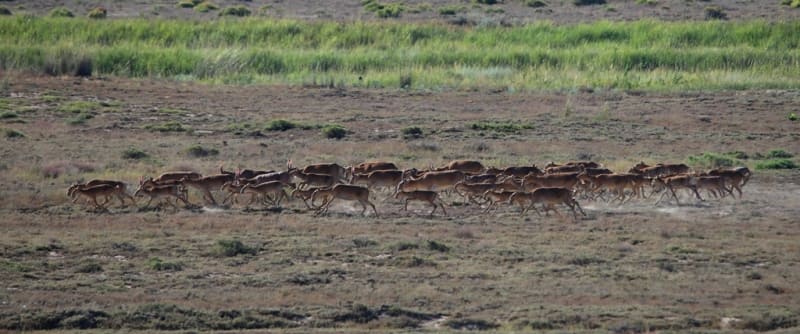
"...in the Kazakh lands, there were so many saiga antelopes that, in some places, their herds covered the entire steppe."
A. Pishchevich, military researcher and topographer, “An Outline of Orenburg Region”, 1884.
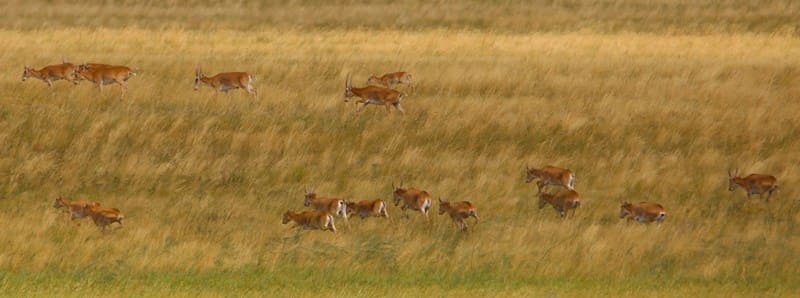
Photographing saiga antelopes in Central Kazakhstan.
Traditional saiga hunting among the Kazakhs in the XIXth century - often referred to as *kiik aulau* or *saigakshylyk* - differed significantly from the hunting of other ungulates. It required an intimate knowledge of the steppe, the habits of the animals, their migratory routes, and their anatomical characteristics.
Key features and methods of hunting during that period:
1. Hunting saiga antelopes from ambush at watering holes (*keruert* or *bukpa*).
Saiga antelopes are highly dependent on water, especially during the arid summer months. Kazakh hunters skillfully exploited this vulnerability:
They constructed shelters near steppe lakes, springs, or salt licks, digging concealed pits or building small parapets out of stone or earth, known as *tasa*.
Camouflage: Hunters would lie in wait long before dawn, as saiga antelopes possess an extraordinary sense of smell and keen eyesight. Hunting was primarily conducted using antique matchlock or flintlock muskets (*bilteli myltyq*), with shots fired at close range.
2. Kazakh drive hunting for saiga antelope, utilizing the natural terrain (*qarauyl* and *qağys*).
Since the saiga is the fastest animal in the steppe, pursuing it openly on horseback was futile. Instead, a drive-hunting tactic was employed: a group of mounted drivers (*qağuşylar*) would carefully steer the herd - from a distance - into narrow ravines, hollows, or toward steep riverbanks.
Ambushed marksmen - at the end of such a natural corridor, hidden hunters would lie in wait for the saiga. Due to the unique structure of their eyes, saiga antelopes have poor vision directly in front of them while running, often noticing danger too late.
3. Kazakh hunting for saiga using birds of prey and *tazy* (greyhounds).
This was the most aristocratic and sporting form of hunting, though less productive than drive hunting:
Using golden eagles - large steppe golden eagles were trained to hunt saiga. The bird would be released from an elevated position. A saiga can reach speeds of up to 80 km/h, but the golden eagle would dive from above, blinding the animal with its wings and pinning it down with its talons until the hunter arrived.
Using *tazy* dogs - the Kazakh *tazy* (greyhound) is one of the few dog breeds in the world capable of competing with a saiga in speed over short distances. Hunters took great care of their Tazy hounds, often transporting them on horseback in special baskets until a herd was spotted; this ensured the dogs conserved their energy for the decisive final sprint.
The Kazakhs’ utilization of weather conditions when hunting saiga antelopes.
In the open steppe, the saiga is elusive; however, during the winter - when deep snow accumulated or a hard, icy crust (*koktaygak*) formed - the saiga’s slender legs would break through the surface Sharp ice would lacerate their limbs. During such periods, hunters could easily overtake them on horseback; however, traditional steppe customs often frowned upon the excessive slaughter of defenseless animals during harsh winters.
A sacred regard and a "hunter’s ethic" - prior to the onset of a large-scale commercial boom (mid-to-late XIXth century), when Chinese and Russian merchants began purchasing saiga horns in bulk - the Kazakh people held a sacred view of the saiga.
Saigas were considered *kiyeli ang* - sacred animals under the protection of Kambar-ata, a spirit of the steppe. There was a strict taboo against killing females and their newborn young (during the early summer, a period known as *kuralai*). Hunting was conducted strictly for the sustenance of one’s kin - the meat served as food, while the hides were tanned into high-quality leather for clothing and footwear.
It was only in the latter half of the century that hunting took on a distinctly commercial, export-oriented character. The *kuralai* period (the saiga calving season) is associated with various folk omens and weather patterns in Kazakhstan. The *kuralai* period - which typically falls in the second half of May, between the 15th and the 25th - is a unique natural and climatic phenomenon, deeply embedded in the culture, philosophy, and folk traditions of the Kazakh people.
The word *kuralai* itself refers to a newborn saiga (the calf of this steppe antelope).
The connection between this period, the weather, and folk omens is truly remarkable, as the biology of these animals is intricately intertwined with the meteorology of the steppe.
Weather phenomenon: "Kuralai Salkyny" (The Kuralai Cold Snap).
In Kazakhstan, May is typically a time of steady, warm weather; however, every year - around the middle or end of the month- a sharp, sudden drop in temperature occurs. This is known as "Kuralai Salkyny" (the Kuralai cold). Signs of this phenomenon include clouds gathering in the sky, the rise of a strong, piercing wind, and the onset of prolonged, heavy rains.
In the northern and central regions, there may even be brief spells of snow or hail. The reason for this phenomenon: millions of saiga antelopes give birth simultaneously over the course of just a few days. The mothers leave their newborns lying directly on the bare ground.
A strong, icy wind is essential to dry the damp fur of the newborn saiga calves; without this wind, the young would be vulnerable to the scorching sun or the damp conditions.
Kazakh folk wisdom regarding wind and sandstorms.
Traditional observers noted that just before the birthing season begins, the steppe seems to fall silent, followed by the arrival of a powerful blizzard or dust storm. The biological significance: hunters and nomads observed that saiga antelopes always give birth facing into the wind. The dust and strong winds serve to "mask" the scent of the newborns and any traces of blood on the ground, thereby protecting the defenseless young from predators - such as steppe wolves, foxes, and eagles - that rely on scent and sound to locate their prey.
Kazakh folk belief regarding rain: The cleansing of the steppe.
The Kazakh people believed that the rains occurring during the "Kuralai" period were a blessing from the Heavens (Tengri). The meaning behind this omen lies in the belief that a spring downpour washes away the traces of childbirth from the earth, cleanses the steppe, and provides a powerful boost to the growth of the lush grass - essential for nursing female saiga antelopes to produce milk. If heavy rain fell during this period, it was seen as a harbinger of abundant vegetation, a summer of plenty, and prosperity for the livestock of the nomads.
The sacred significance of "Kuralai Salkyny" (The Kuralai Cold Snap) and its associated prohibitions. For traditional Kazakh society, the "Kuralai" period was a time of absolute taboo: A ban on hunting and noise: during these 10–12 days, it was strictly forbidden in the steppe not only to hunt but even to make loud noises or ride horses near the areas where the saiga antelopes gave birth.
It was considered a grave sin (*obal*) to disturb or harm a defenseless saiga calf. A symbol of beauty: because of the saiga calf’s incredibly large, moist, black, and expressive eyes, a distinct metaphor emerged in Kazakh poetry and culture. Even today, a beautiful young woman with expressive eyes is referred to as having *“Quralai köz”* - eyes like those of a saiga calf.
Nomads of the XIXth century used to say:
“The saiga is livestock that belongs to God Himself; it has no master among men.”
Therefore, the *“Quralai”* (the birthing season) was perceived as a sacred act of nature’s renewal - a phenomenon that humans were meant to observe only with humility and respect. Clothing and household items made by the Kazakhs from saiga hide and horns in the XIXth century.
In the XIXth century, saiga hides and horns served as highly valuable raw materials for Kazakh craftspeople. Thanks to the unique natural properties of these materials, items fashioned from them were exceptionally strong, lightweight, and durable.
Clothing and household items made from saiga hide and horns. Items made from hide: saiga hide was prized even more highly than the hides of domestic livestock due to its density, softness, and water-resistant qualities. *“Küderi”* (suede): the Kazakhs skillfully processed saiga hides, transforming them into an incredibly fine, soft, yellowish suede known as *küderi*.
It was used to craft expensive, ornate garments for the nobility, *batyrs* (warriors), and *sal-seri* (poet-singers). *Küderi shalbar* (suede trousers) were a particular source of pride for men. They were embellished with intricate hand-embroidery using silk threads.
Such trousers did not chafe the skin during long periods in the saddle, provided protection against steppe winds, and remained resistant to light rain. Outerwear and footwear: Hides from young saiga antelopes were fashioned into lightweight spring jackets and sleeveless vests.
The tougher hides of adult males were used to create durable footwear, such as *mäsi* (soft-soled boots) and *kebis* (leather overshoes). Household items (*torsyk* and *saba*): Saiga hide was ideally suited for creating lightweight, durable vessels for nomadic life.
It was used to make *torsyks* - leather flasks for *kumis* (fermented mare’s milk) and *shubat* (fermented camel’s milk) - which warriors and herders would secure to their saddles. *Kumis* stored in a saiga-hide *torsyk* stayed cool for a long time and acquired a distinctive, refined flavor.
Items made from horns: The horns of male saiga antelopes consist of a robust keratin that becomes pliable when heated. This allowed artisans - known as *üishi* (craftsmen working with organic materials) and *zerger* (jewelers/metalworkers) - to fashion elegant objects:
Weapon components: The horns were used to craft sturdy handles for knives, whips (*qamshy*), and combat daggers. Tableware and combs: By steaming and straightening the horn, craftsmen could carve items such as *ozhau* (ladles), delicate hair combs for women, and decorative inlays for storage chests.
Cradles and musical instruments - wooden components of children’s cradles (*besik*) and musical instruments (such as the *dombra* and *kobyz*) were inlaid with plates made from horn, which lent them a sense of prestige and imbued them with a protective, sacred significance.
Saiga antelope horns from Kazakhstan in folk medicine and trade with China during the XIXth century. Role in Eastern and folk medicine - in the XIXth century, the Kazakhs themselves rarely used saiga horns for medicinal purposes, employing them only as a powder to treat high fevers or as a protective amulet.
However, they were well aware that for their neighbors, the Chinese, this material held a sacred, medicinal value. In traditional Chinese medicine, saiga horn (*Ling Yang Jiao*) was considered one of the "golden" (remedies) ...medicines, alongside ginseng and maral (red deer) antlers.
Powdered horns were believed to:
Bring down even the most severe fevers and flush out toxins. Treat liver diseases and purify the blood. Help with strokes, convulsions, and headaches, and normalize the internal energy known as "Qi." Export boom and trade with China – demand from China transformed saiga hunting from a traditional subsistence activity into a ruthless commercial enterprise.
The XIXth century saw a massive export boom. Trade routes – the Kazakhs hunted saiga in the steppes and sold the horns to Russian, Tatar, and Central Asian merchants at major trade fairs (such as the Koyandy Fair near Karkaralinsk or in Semipalatinsk).
From there, caravans traveled to border outposts - to Kyakhta (on the Mongolian border, south of Lake Baikal) or directly to Chuguchak and Kulja (in Xinjiang, China, via the Dzungarian Gate). Volumes and prices – the scale of this trade astonished observers of the time.
Horns were sold in pairs. A single pair of fine, mature horns could fetch a staggering sum in China - enough to be bartered for several high-quality horses, or for bolts of expensive silk and quantities of tea. Ecological consequences – as noted in XIXth-century chronicles, in the year 1855 alone, more than 66,000 pairs of horns were officially exported through customs.
By the end of the XIXth century, this unchecked exploitation had brought the saiga - whose herds once roamed the entire steppe - to the brink of total extinction, with their range shrinking drastically to the most remote, semi-arid regions. Today, the saiga population in Kazakhstan has been successfully restored and is under strict protection.
The Story of the Saiga’s Rescue in the XXth Century.
This stands as one of the most dramatic and successful examples of recovering an endangered species globally. By the turn of the century, a population that once numbered in the millions had been almost entirely wiped out.
The rescue of the saiga unfolded in several key stages:
1. The Point of Catastrophe: The Early XXth Century.
By 1917-1920, following years of uncontrolled slaughter for their horns and meat, the saiga in Kazakhstan stood on the verge of total extinction. Zoologists estimated that no more than a few thousand - some sources suggest only a few hundred - individuals remained across the vast steppe.
The surviving animals retreated into the most remote, waterless, and inaccessible corners of the Betpak-Dala semi-desert and the sands near the Aral Sea. Many scientists at the time openly declared that the species was doomed to vanish.
2. Soviet Bans and Strict Measures (1919–1950s).
The rescue began with unprecedented legislative and enforcement actions:
An Absolute Ban (1919) - One of the first nature-conservation decrees issued by the Soviet authorities (followed by a 1921 resolution from the Kazakh ASSR) imposed a total ban on hunting saiga, punishable by severe criminal penalties. The Establishment of Nature Reserves - During the 1930s, a network of specially protected natural areas was created across Kazakhstan.
The Barsakelmes Nature Reserve (on an island in the Aral Sea) and the Kurgaldzhino Nature Reserve played a crucial role, serving as safe zones for the antelopes to breed. Enforcement-based protection: A state wildlife inspection service was established.
Poaching was punished with actual prison sentences. Under this strict control, the population began to grow - slowly, but surely.
3. The "Golden Age" and scientific management (1950s-1980s).
By the 1950s, a true ecological miracle had occurred: the saiga population in Kazakhstan recovered to 1 million individuals, and by the 1970s, it reached a peak of approximately 1.2–2 million animals. Saigas once again filled the steppes. Regulated harvesting:
The species was no longer considered endangered. To prevent the herds from overgrazing pastures or competing with livestock, the state authorized strictly regulated harvesting. A state-owned enterprise, "Okhotzooprom," was established to monitor population numbers, manage meat production, and oversee the export of horns - all strictly within the limits of scientifically determined quotas.
Aerial surveys: Scientists from the Institute of Zoology of Kazakhstan developed unique methods for counting the animals using helicopters and fixed-wing aircraft, tracking their migrations across the entire republic.
4. The second catastrophe: The collapse of the USSR and the 1990s.
The end of the XXth century nearly proved fatal for the saiga. With the collapse of the USSR in 1991, the rigid system of nature conservation also fell apart. Poaching chaos: Driven by a deep economic crisis, rural unemployment, and the opening of borders with China, a massive, criminal-scale slaughter of saigas began.
Poachers utilized high-speed motorcycles and off-road vehicles. Gender imbalance: Hunting targeted almost exclusively the males, driven by the demand for their horns. This resulted in a situation where almost no males remained in the herds, leaving the females unable to reproduce.
Between 1998 and 2003, the saiga population in Kazakhstan plummeted by 98%, with only about 21,000 individuals remaining. The species was once again added to the Red Book, classified as "critically endangered."
The state of the saiga population in Kazakhstan at the end of the XXth century.
The XXth century demonstrated that the saiga is a remarkably resilient creature with an immense reproductive potential (thanks to the frequent birth of twins). At the same time, however, the species is completely defenseless against firearms and high-speed vehicles.
The saiga survived the XXth century solely due to the firm resolve of the state and the efforts of biologists, who literally pulled the species back from the brink of extinction. Today, in the 21st century, Kazakhstan has achieved a second "ecological miracle" by increasing the saiga population from 20,000 to a record-breaking several million individuals.




Authority and photographs by:
Alexander Petrov.