




You are here
Birth of a Central Asian Archaeologist.
Samarkand, a City of Antiquities.
"You'll find all sorts of things in these stories:
Truth and lies are mixed up."
Street Tours of Samarkand.
Once, more than a quarter of a century ago, I happened to hear a student say:
"The most living thing about Samarkand is its dead antiquity."
The idea, of course, was incorrect even then. But to some extent, at the time, its apt imagery could not be denied. In pre-revolutionary times, the small, new European part of Samarkand was mostly a cozy and tidy bureaucratic town, lacking anything special, extraordinary, vibrant, significant, vibrant, or interesting that could captivate and engage young people.
The old part of Samarkand (or, as they called it, the "old city") largely reflected the economic side of city life, supported by branches of various banks, the feverish profit-seeking activity of large trading firms, and the bustling retail trade of the bazaar.
But in its appearance, silhouette, and layout, the air of antiquity was prevalent.
It was its distinctive character.
Many centuries of existence had transformed Samarkand into a city of antiquities. Here, after the conquest of Turkestan by Russian troops, the first archaeological excavations in the region began. Here, from the Afrasiab settlement, abandoned in the XIIIth century, and from its surrounding areas, a large number of small and large ancient artifacts were annually unearthed after spring erosion and various excavation operations.
As early as 1874, the first small archaeological museum in Central Asia was established here, though it remained in existence for only a short time (until 1883). It was later revived in 1898. The archaeological finds arriving at the bazaar, coupled with a certain demand from people coming to the region to live and numerous tourists, gave rise to a unique and vibrant antiques market with its inevitable evil - counterfeiting.
Ethnographic glazed utensils, made by contemporary kulals (ceramists), were skillfully given an antique appearance by boiling them in oily water with various additives. Glazed Persian facing tiles, bearing various images, most often of epic heroes, were washed in special solutions for the same purpose and, after firing, were treated by rubbing a brownish powder into the small cracks - craquelure.
The most skilled counterfeiter was the Bukharan Jewish antiquarian David Yusupov. It seems that only Shakaryants, a grain collector and buyer of all sorts of "antiques," disdained all this, taking them abroad on his annual grain-gathering trips to Greece, Italy, and other Western European countries.
The most talented and enterprising of the indigenous forgers was undoubtedly the very capable Sabir, who primarily counterfeited local antiquities. He was particularly skilled at the so-called "pre-Muslim" terracotta figurines. Having obtained several ancient clay molds – kalyps - for imprinting them, he used them to create his own replicas, achieving great perfection in the art of forgery.
Sabir sold them at a "reasonable price," charging 20 kopecks or less for the image of an animal, and 50 kopecks to 1 ruble for figurines depicting humans. As a result, his products became widespread and were represented in almost all museums that had been collecting Central Asian antiquities since the late XIXth century, including the Hermitage.
They were acquired by the Hermitage as part of the collection of Professor N.I. Veselovsky, who, during his visits to Samarkand, always bought numerous archaeological items at the bazaar, along with some of Sabir's works, unaware of their true origin.
The Samarkand antique market was a very successful place for counterfeit ancient coins. Not limited to importing them primarily from Persia, Peshawar, Pondicherry, and Bombay, and taking into account local demand, the local "antikachi," who often also served as willing guides to the monuments, produced cast Greco-Bactrian coins and other such items.
These were called "pre-Muslim" because they were the most popular among European buyers. These counterfeits were especially numerous, particularly of the large Greco-Bactrian tetradrachms of two types of Eucratides the Great (c. 175-156 BCE).
A particular Samarkand specialty was the counterfeiting of large and small Jerusalem shekel coins from the IInd century BCE. These were rather crudely cast, but were readily purchased by local Bukharan Jews not as supposed ancient numismatic objects, but as medallions bearing sacred images and texts written in Hebrew.
Tourists, often highly trusting of bazaar guides, also came across them. Among the latter, Khadzhi Khadzhimuradov enjoyed the greatest popularity just before the revolution. He immediately commanded the respect of tourists by claiming to be personally acquainted with the artist V.V. Vereshchagin, for whom he supposedly posed for his painting "Door in Tamerlane's Palace in Samarkand," "if the gentlemen - the Turis - know this painting."
The "Turis" hastened to declare that they remembered it and indeed recognized him, Khadzhimuradov, in one of the two warriors. Respect was won, and it seems that none of the tourists considered the possibility that Khadzhi Khadzhimuradov could not have been alive when Vereshchagin painted this work in 1868.
In any case, this kind of introduction upon first acquaintance greatly contributed to his success in selling tourists all sorts of fakes, taking advantage of the opportune moment of distraction while they were exploring the local sights. In Samarkand, the largest local archaeological and numismatic private collections of the last century - those of Bezukladnikov, Fadeev, Petrov-Borzny, and Barshevsky - and of our own century - were formed from the countless finds of genuine archaeological objects.
These collections were held by engineer Poslavsky, engineer Kastalsky, artist Stolyarov, and Vyatkin. These people of various professions, who had no connection to archaeology before coming to Samarkand, were transformed into antique collectors and amateur archaeologists by the very environment, especially the well-known ancient architectural monuments.
I grew up with them, too.
It was impossible not to notice them. Before the revolution, however, attitudes toward them varied. In the 1970s and 1980s, abandoned ancient marble tombstones, which had occasionally found their way into steps, barriers, and bridges in the European part of the city.
Much was spent on new construction using beautiful antique baked bricks, sometimes even dismantling the last remnants of ruins from former buildings. Elements of tiled decorations were stolen, sometimes presented as souvenirs to "distinguished guests" and foreigners.
The latter, such as the Englishman Henry Lansdel (1884), did not hesitate to even express gratitude in print for the opportunity to take various Samarkand tiles home with them. At the end of the last century, there was, among other things, a small house in the European part of the city whose "barbarian owner" used tiles from one of the monuments to decorate the door on the facade.
Along with such cases, there are also known measures to repair and protect them from destruction. In the absence of a special government agency overseeing such matters, some of these undertakings never went beyond paper orders from the administration.
Nevertheless, older Turkestanis from the Russian intelligentsia valued these monuments and loved to visit them on Sundays, especially the group of mausoleums surrounding the revered Shakhi Zinda tomb and the beautiful park nearby. Groups would arrive here in several cabs, like a picnic, and stay for several hours.
The monuments were examined with polite restraint, without inappropriate, witty remarks, and with attention to the explanations given by either the sheikh or the tour guide. We children were particularly impressed by the decorum, decorum, quiet, and tidiness of the interiors.
Having thoroughly admired the beautiful ornamentation, the soft colors of the interior wall paintings, and the vibrant tiled surfaces, we would descend and settle down on rugs and carpets right on the ground in the garden near the teahouse to drink tea and snack on the food we'd brought.
Alcohol was not permitted. In my five-year-old memory, my first encounter with "Shakhzinda" was marred by an unpleasant incident when a clumsy adult tour participant tripped over a boiling samovar near me, scalding, fortunately, only my left arm from shoulder to wrist.
While removing my sailor suit, they picked at several blisters that had risen from the burn. It was painful, but I didn't cry and patiently endured the procedure of having my arm completely doused with egg whites, which the friendly old teahouse owner performed on me.
With my hand bandaged, oblivious to the itching, I rode home that evening, sitting silently on the small bench of the phaeton, utterly enchanted by everything I'd seen and overwhelmed by the explanations I'd heard, of which only a fraction had reached me.
The impression of something unforgettably wondrous had firmly imprinted itself on the child's soul. As adults later reported, in my dreams I often dreamed of the mausoleums of "Shakhzinda," connecting them with the tales of Scheherazade I'd read.
After that, I often visited the Afrasiab fortress, its various architectural monuments, including the "Shakhzinda" that had so immediately captivated me. I especially remember the visit when we, elementary school students, became engrossed in playing Romans and Carthaginians.
"Shahzinda" was considered the center of Carthage's territory. The "Romans" were waging a very energetic offensive. I, one of the "Carthaginian" leaders, had to quickly run, hiding from the enemy and reaching "our own," to warn them of the "enemy's" patrol.
Danger was approaching catastrophically fast. I ran through an ancient Muslim cemetery, not paying attention to where I was stepping... and suddenly fell through the ground, slamming my feet into some rotten vault, breaking through, and found myself sitting in a fairly deep pit on the bones of a skeleton.
The first thought that came to mind was about the fate of my squad, which would now, without warning, inevitably be captured. When the dust settled somewhat, I realized that I had first fallen into a relatively recent pit and then found myself in an even more ancient burial chamber.
Above me, a wonderful spring sky shone blue. My plywood shield was broken, my wooden dagger was missing, but my wooden sword was intact. I couldn't get out on my own, but to avoid revealing my location and being captured by the "Romans," I remained silent, clutching the hilt of my only weapon.
It seemed like about an hour had passed, probably less, when the cries of the "Carthaginians" and their enemies began to ring out from different directions almost simultaneously:
"Mika! Mika! Where are you? Answer!"
I answered, but apparently the sounds from the depths were faint. Fifteen or twenty minutes passed before my hiding place was finally discovered. They brought ropes and used them to pull me out. I grabbed several fragments of dirty-blue ceramic with black designs from the grave in my pocket.
I took them home with me and later realized they belonged to the Mongol era. The adults joked that I had received an "archaeological baptism" in the dust of an ancient grave. In fact, it happened earlier, and my "godfather" in Central Asian archaeology was Vasily Lavrentievich Vyatkin, an amateur archaeologist, a former teacher at Russian-native schools, and then an official at the Samarkand Regional Government.
He immediately captivated me with his Socratic appearance, his small but powerfully stocky figure, his demeanor of simple dignity, his deep profundo bass, and his knowledge of things I couldn't find anywhere else. It was during a schoolboy excursion to the small museum at the Regional Government.
It occupied just one room at the end of a corridor and was filled, crammed, hung, and cluttered with a wide variety of objects, without any particular systematization. Here were: in the right corner, a large painting by S.M. Dudin, "Dervish"; next to it, under a glass case, stood a stuffed mountain goat; stuffed birds hung on the wall; Below them, on the table, sat a small model of a lime kiln, and behind it were cardboard boxes with small metal objects from the Afrasiab settlement sewn onto them (part of the Barschevsky collection).
In the center of the room towered bulky black "pyramids" with glass cups containing grain samples from across Russia, sent for sowing in the experimental field. On the tables lay several bricks, carved unglazed slabs, tiles from the Ishrat Khana mausoleum, and other archaeological artifacts. In flat window frames, under glass, rested mineral samples with hopelessly mixed-up labels on cotton wool.
The room was musty, damp, dusty, and slightly mysterious from the drawn dark curtains and the pile of not always understandable objects. The museum didn't have a single intact object or even a shard of local medieval glazed pottery. The tour was led by the school's director, State Councilor Vasily Demyanovich Krymsky.
There were no more than twenty students. We were received by V.L. Vyatkin himself, then considered the museum's unpaid curator, wearing a shabby uniform with silver-look metal buttons that didn't sparkle. I looked at his black beard, his huge wart, his large, broad forehead, made even larger by his bald head.
I listened attentively to his explanations, but in my excitement, I missed much, preoccupied with my own thoughts. "He knows everything. Everything!" I thought as I left the dimly lit room and stepped onto the brightly sunlit Urgutskaya Street. And listening to my story about the museum excursion, I was interrupted by:
"Don't keep talking about Vyatkin. Tell me what happened in the museum itself."
But I wasn't particularly keen to share what happened there for various reasons. First, I'd missed a lot; second, I didn't understand some of the explanations; and third, there had been an incident there that I didn't like to remember, out of respect for the honor of my school.
The fact is that, despite the director's presence, several students, passing by a worktable with copper coins scattered on it, decided, in their childish way, to take some of them as souvenirs of their visit to the museum. The theft was discovered shortly after we left.
The regional administration informed the school director of this, and most of the "missing" items were quickly recovered from the culprits. Only two or three clubs were missing. But I was terribly ashamed and hurt by the behavior of my classmates in the "temple of science," as I, in my inexperience, perceived the Kunstkamera museum of the Statistical Committee of the Samarkand Region.
The consequence was that the director no longer dared to take the students there on excursions, to avoid similar incidents. In 1908 and 1909, I attended V.L. Vyatkin's excavations of the XVth-century suburban observatory, built by order of Ulugh Beg.
Only much later did I appreciate the full beauty of the local landscape, with the clear-flowing Obi-Rakhmat ditch flowing through a picturesque, winding bed along the rocky southern slope of the Chupan-ata hill. Then I was completely captivated by the excavation work itself.
We reverently walked along the irregular, crooked, and unevenly dug muddy trenches. We descended steps of baked bricks into a deep crevice, where we saw two arched barriers with marble slabs laid on them - a gigantic astronomical measuring instrument, then known as a quadrant.
I remember a pile of glazed bricks, particularly black ones, and pieces of majolica tiles. We saw a circular wall, exposed in several places, encircling almost the entire summit of the observatory hill. We listened to V.L.'s leisurely explanations. Vyatkina, of which one episode was particularly vivid: before the work began, local Muslim women prevented excavations at the site of the observatory ruins, believing it to be a sacred site called "Childukhtaron," where the legendary forty maidens were supposedly buried. As evidence, they pointed to a brick-like sufa with a niche - a chiragdon - for lighting candles and lamps in honor of the revered dead.
The argument eventually erupted into a fight, in which, not allowing themselves, as was customary for men, to actively resist the women, the workers were injured. Only the arrival of a bailiff, a Tajik volost administrator, and two local aksakals quelled the "women's rebellion," and the excavations soon documented the theory about the graves of the notorious maidens. In general, I understood nothing about the haphazardly scattered, sometimes intersecting trenches themselves, and this only deepened my admiration for V.L. Vyatkin, who, it seemed, understood and foresaw everything.
Later, he began to occasionally take me on Sundays to his excavations at the Afrasiab site. On other days, he was busy with work and could only go to archaeological work during his vacation, which he took every three years and spent in Samarkand.
Early in the morning, I would stop by his apartment at No. 8 Petrovskaya Street, decline tea, and patiently wait for Vasily Lavrentyevich to drink and eat, after which we would both set out on foot for the long journey across the fortress esplanade.
Awaiting us at the site were two or three workers, one of whom was invariably the faithful searcher, Abdu Vahid Kuknari. We examined their recent work, standing near them for three or four hours; then, taking the most interesting finds and giving them three rubles in advance, we headed home through the entire old town.
Here, when V.L. Vyatkin appeared, he was greeted respectfully in many places by bearded locals, folding their hands over their stomachs and leaning slightly forward. Along the way, V.L. Vyatkin would always stop at the book market, browsing ancient manuscripts and oriental lithographs.
He didn't haggle much when buying them: the sellers quickly gave in. On weekdays, I was sent to supervise the workers, which they themselves probably didn't really need. No special excavation technique was used. They often dug in the spot designated by the searcher, Abdu Wahid.
They would reach the floor of the room, clear it inside, select items without any documentation, and deliver them to V.L.'s apartment. Vyatkina. My duties were more like those of a foreman. I probably learned more from the experienced ones. Prospectors and, in any case, listened very attentively to what they said during work and during breaks about their "archaeological" practice.
Everything was said, both instructive and useless, funny and sad.
But this was the truth.
One day, Usman Kadyrov, who worked for Vasily Lavrentievich and, like many of our excavators, was preoccupied with thoughts about the possibility of finding gold during excavations, had a very real dream in which he came across a clay jug, or khum, buried in the floor of a room being excavated, filled with silver coins.
Arriving at the excavation site in the morning, he shared his dream. Everyone, including Abdu Vahid, reacted with calm skepticism. Imagine their amazement when, two hours later, a khum was indeed discovered in the floor of Usman's trench.
A frenzy ensued. All other work was suspended. The mardikers vied with each other to offer their services to Kadyrov, but he resolutely declined any outside help, digging and clearing the hut himself under the greedy gaze of the others. As the clean earth was ejected from the hut's interior, everyone's mood of impatient anticipation sank further and further.
A barrage of caustic and offensive jokes rained down on Usman. Approaching the bottom of the hut, he himself began to realize that the large silver treasure was probably missing, but deep down he still hoped that perhaps at least a few coins lay at the very bottom.
A few minutes later, this hope, too, was dashed. Nevertheless, the dream proved prophetic and fulfilling. Returning home disappointed, Kadyrov received notice from relatives of his childless uncle, who lived in Katta-Kurgan, that he had died and left him 2,000 Bukharan silver tenega, then in circulation at the Russian government's established exchange rate of 15 kopecks.
My selfless work and archaeological interests were once rewarded with a material reward by V.L. Vyatkin. One day, I brought him another batch of shards. He welcomed me into the storage room of his collection. It was a medium-sized room in the house with a separate entrance from the black hallway.
It had only one window opposite the door. Roughly finished, unpainted wooden shelves - racks of various sizes and styles - rose almost to the ceiling along the walls. In the middle stood two tables, used for household chores. Not all archaeological objects that could be reassembled from fragments had been glued together.
There were almost no pre-plastered objects. The objects were placed and stacked on shelves without any attempt at display. Some cups stood upright, freestanding. Others were piled on top of each other. There was no labeling, and the objects themselves bore no codes or markings indicating their origin.
Only the owner himself remembered this, arranging them on the shelves according to their location, from one nail to the next. Over time, some were forgotten. Nails disappeared. Some objects were misplaced, mistakenly moved by the archaeologist himself or the cook, who shared the room with him.
And it often happened that Vasily Lavrentyevich could not find the archaeological objects that had been lost somewhere. Sometimes, the latter disappeared entirely. There was an incident when a hen sitting on eggs in the same room, startled by something, jumped onto one of the shelves and knocked over five items in a pile.
To prevent "Vasya" from getting angry and upset needlessly, Vyatkin's wife, the cheerful and giggly Elizaveta Afanasyevna, swept the resulting archaeological battle into a dustpan and dumped it in the garbage pit. Unfortunately, this method of protecting the archaeologist from unnecessary disturbances in the house was often resorted to.
In this same room, sacred to me, where the lack of light, and even more so the dust and disorder, made it difficult to see anything in detail, I stood on the memorable day of receiving the unexpected award, when Vasily Lavrentyevich, reaching for a single intact, only slightly cracked, unglazed cup from the "pre-Muslim period," pulled it out and thrust it into my hand, saying,
"Well, here you are. As a reward."
My legs trembled with excitement. In the cup lay two more ordinary, later medieval lamps of green glaze with broken handles. Joyful and filled with pride, I solemnly carried these archaeological objects home, making a long detour to walk with them along two main streets - Katta-Kurganskaya and Kaufmanskaya (formerly Konstantinovskaya) - and then through the "Old Park" in the hope of meeting "understanding people" or At least the schoolgirls, who might have some reaction to the newly acquired reward.
At home, I placed all the objects on my small desk and immediately set about "improving" them. I didn't know how to properly evaluate things. Objects of "pre-Islamic" unglazed Central Asian ceramics were of little value at the time, due to the complete ignorance of local collectors.
Only now, recalling the object given to me, do I realize that I was then the owner of a Sogdian bowl from the immediate pre-Arab period. Back then, it was a complete mystery to me, as it was to everyone else. Vyalkin didn't tell me how to handle antiques, nor did he teach me anything about archeology.
So, in my ignorance, I first of all, armed with a rasp, filed down the remains of the chipped handles on the chirags, cleaned everything up smooth, and painted the exposed glaze surface with green watercolor. Then, believing the unglazed bowl to be too plain, I painted it with ornaments in the style of ancient Cretan vases, based on an illustration in a book.
Only three years later did I realize the absurdity of what I had done and tried every means possible to wash off and clean off my own watercolor painting. I succeeded to a certain extent, with the exception of removing the red paint, which had penetrated deeply into the surface of the vessel and left pale pinkish stains on its overall yellowish-gray background.
A few years later, I took all three pieces to Petrograd as a gift to the elderly astronomy enthusiast, mineralogist, and composer Vasily Vasilyevich Yastrebtsev, a friend of N.A. Rimsky-Korsakov, whose biography he was then writing. Since then, for reasons of principle, I have never assembled my own archaeological or numismatic collection. V.L. Vyatkin's authority grew even more in my eyes when the French linguist Gauthier arrived from Paris to study the Yaghnobi language in connection with the compilation of the first Sogdian grammar.
He would sit for hours in the Samarkand archaeologist's apartment, engaging in animated conversations with him in Persian, and occasionally jotting down something from his words in his expedition notebooks.
"The Russian teaches the French,"
I proudly shared my impressions with the other high school students. Some time later, the First World War broke out, and upon hearing of it, the French scholar descended from the mountains of Yagnob to Samarkand, took a circuitous route through Persia to Paris as a reserve lieutenant, joined the army, and soon died at Verdun.
I was especially proud of my teacher in 1916, when Academician Vasily Vladimirovich Bartold, who had been sent to Turkestan, his wife, the sister of Professor V.A. Zhukovsky, and Vasily Lavrentyevich were sitting one evening in Vyatkin's courtyard drinking tea under the spreading elm trees.
Both the orientalist and the archaeologist talked incessantly, jumping from one topic to another. Apparently, they both had many questions. I, perched at the end of the table, listened silently and attentively. Suddenly, I noticed that Vasily Vladimirovich was clearly embarrassed.
A little more, and he began to interrogate Vyatkin for various details about the life of some sheikh. In the end, he admitted that he knew nothing of what he had heard before, had made an unintentional error in his work, acknowledged Vasily Lavrentyevich's correctness, and would discuss all of this at an appropriate opportunity in his future publications.
This episode was later greatly exaggerated by many patriotic Samarkand residents, who even went so far as to say that V.V. Bartold had come practically to study with a Samarkand archaeologist. But already several years before, I had been most drawn to the marvelous architectural monuments of Samarkand themselves.
I read everything I could get my hands on about them. I went many times to listen to V.L. Vyatkin's explanations during various excursions and wrote down everything I heard. I sketched individual ornaments, even in color, took measurements of less-studied monuments, made schematic plans of them, made engravings of inscriptions, and recorded survey data.
At first, with my little black donkey, Jimka, later replaced by a brand-new Rossiya semi-road bicycle, and my constant companion, a large dog named Gop or Gopka (a cross between a shepherd and a mongrel), I was already well known to the sheikhs of the mausoleums and the residents of the madrassas as a serious young man nicknamed Mika-bay, who cherished nothing on the monuments and worked diligently to study the past.
The Muslim clergy granted me access to places and premises where entry was restricted. As a result, a rather substantial and somewhat chaotic store of information about Samarkand's antiquity accumulated in my memory and notebooks. I later had to reject a great deal of it as having been accepted too uncritically.
Already at the age of 14, I wrote (but, of course, did not publish) a "strict" review of those pages in Volume 1 of Wehrmann's "History of Art of All Times and Nations," where the author, according to Zdenka Schubert, Compared to the Russians.
By 1912, I had already begun leading tours of local monuments independently. This was done, of course, without any compensation, which is why the local market guides, most of whom were profoundly ignorant of history, didn't see me as a competitor and treated me, as did the old-timers, with considerable respect.
Some of them even turned to me for all sorts of consultations. I was used when V.L. Vyatkin was out of town or to assist him when the group of visiting tour participants was more or less numerous. In some cases, a policeman would be sent to the school from the Regional Government or directly from the Governor's House, in a carriage, with a note addressed to the principal, requesting that student Masson be released to accompany him to the monuments of certain individuals. When this coincided with some written class assignment, closing my notebook with an unfinished essay or math test, I left my classmates, doomed to a dull seat in class until the bell rang, with a certain sense of pride. It was with particular pleasure that I led a four-day tour of Kyiv's sixth- and seventh-grade high school students.
Upon first meeting their fellow high school student, who had been appointed their leader, they snorted contemptuously, exchanged anonymous, venomous remarks, and tried to make barbs at me to my face. Everything changed the moment we visited Guri-Mir.
By the end of the fourth day, no one even tried to address me informally. I saw them off to the station. Before the train departed, my right hand ached from the sincere high school handshakes. They thanked me warmly, invited me to Kyiv, and admitted that among their high school students, there was no one so knowledgeable about Kyiv's monuments.
I managed to uphold the honor of the Samarkand Gymnasium. I walked among the monuments with foreigners, observing with interest how differently representatives of each nation behaved. The Germans listened silently and conscientiously to everything I said, and obediently poked around wherever I dragged them.
Then, after a few questions, they, having asked my permission, took off their jackets, pulled out all sorts of rolls, sandwiches, hard-boiled eggs, sausage, ham, and fruit, and right there on the monument, paying no attention to it, cheerfully began devouring the food they had prepared in advance.
The lively, energetic Italians ignored even the brief historical information I provided about the site, approaching me, then retreating, asking the same questions several times, and rushing to take photos, chattering and picturesquely positioned on the monument's windows, doorways, staircases, cornices, and roof.
The prim Englishmen, as if doing them a favor, calmly listened to the verbal explanations, checking everything against the text of Baedekers or other English-language guidebooks, arguing over even the slightest discrepancy with my words, and reluctantly backing down when the English authors were accused of reporting clearly incorrect information.
A certain liveliness among them only emerged in Shakh-i-Zinda, with exclamations mentioning the Alhambra. No, the high-school student Masson was by no means a "dry pedant" and did not pose as a "scholar." Along with his passionate interest in monuments, he would bet 20 cakes to climb the leaning thirty-two-meter minaret of the Ulugh Beg Madrasah, sit on the very edge of its upper platform, dangle his legs, lean over, and sit there for 15 minutes.
However, having won the bet, he was deprived of the opportunity to use his entire winnings due to the excessive size of the five-kopeck cakes from Samsonov's pastry shop, located on Kaufmanskaya Street. But, of course, his main passion was a serious fascination with Samarkand's architectural monuments.
I loved them, even adored them in a special way. More than once, tired from studying or from the worries that come with life, I would rush to my monuments in the evening. I especially enjoyed secluding myself at the Bibi Khanum Mosque. At that time, there was still a rather dangerous "hole" from below onto the southern abutment of the main building's portal.
Risking a fall, I reached the beginning of the internal spiral staircase of the faceted minaret, climbed it to the dilapidated portal arch, lay down on my stomach on the ridge of its key section, and alternately opened and closed my eyes. Below, swifts and swallows were making their evening flight.
The wind would sometimes pull the portal arch back slightly toward the dome, sometimes forward; at times, it seemed as if it would collapse onto the crowns of the mulberry trees growing in the courtyard, and you would fall with it. Knowledge of the monument's past, familiarity with contemporary miniatures, and the legends that shrouded the building in a poetic haze created a special mood.
And in a half-dream, half-hallucinatory state, my imagination vividly recreated the mosque's original appearance. The wondrous sound of the bronze doors of the main gate opening was almost tangible. Through them, crowds of people poured in with a soft noise and the rustle of countless silk robes.
Centuries of Islam. The prayer began, led by several khalfas standing on elevated platforms in various places. And at the end of the solemn Friday prayer, the ruler emerges from the main building with a glittering retinue...
Then everything disappears...
Below, between the trees, only the taut, multicolored silk threads hung here by a neighboring artisan are visible. The swifts and swallows have already departed.
It's getting dark. It's time to leave.
And as you carefully descend, you carry with you a comforting feeling of being in touch with the monument.
Yes, high school student Masson was very fond of the monuments of Samarkand and viewed the architecture of other countries, refracting it through them. When, in the 7th grade, he had to give a report on "The Architecture of Ancient Greece" one evening at the gymnasium for the then-recently introduced course "Classical Culture" by Count Ignatiev, he seemed to do it well.
But the teacher, a classical scholar and Latinist named Semyon Fedotovich Marchenko, was shocked by the excessive parallels with Muslim monuments by Central Asian architects. While receiving me in his office, a candidate for a gold medal for graduating from the gymnasium, the director, V.D. Krymsky, resting his left hand on his hip and shaking his gray head, reproached me with fatherly reproach:
"After all, you're such a capable, talented young man, and you're pursuing archaeology - an old man's business."
I've heard variations on this theme many times from various quarters, including at home. As a result, after graduating from the Samarkand Gymnasium for Men, I applied to the Peter the Great Petrograd Polytechnic Institute, requesting admission to the Civil Engineering Department.
The rationale was that I was a Turkestan native, loved my land, and needed water and canal construction. At that time, training as an irrigation engineer was only possible at the aforementioned institute. Without any interest, though conscientiously, I attended lectures by excellent professors, diligently studying technical drawing, higher mathematics, geodesy, steam boilers, and other specialized subjects.
Fortunately, the World War of 1914-1917 changed everything. I ended up in the army. And after the Revolution, my calling prevailed, and I developed into a Soviet archaeologist.
Thus, life itself corrected what had almost been crippled by outside influences.
Authority:
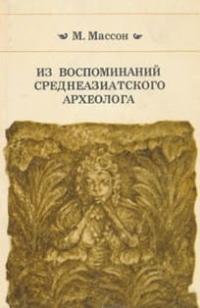
Mikhail Evgenievich Masson. "From the Memoirs of a Central Asian Archaeologist."
Tashkent: Gafur Gulyam Publishing House of Literature and Art. 1976.